In the realm of manufacturing, precision custom components stand as the backbone of numerous industries, from aerospace and automotive to medical devices and electronics. As a seasoned supplier of precision custom components, I’ve witnessed firsthand the intricate processes and cutting – edge technologies that go into creating these vital parts. In this blog, I’ll take you through the journey of how precision custom components are made, sharing insights from my years of experience in the field. Precision Custom Components
Design and Planning Phase
The creation of precision custom components begins long before any machinery starts to hum. It all starts with a detailed design and planning phase. When a client approaches us with a need for a custom component, the first step is to understand their requirements thoroughly. This involves in – depth discussions about the component’s function, the environment in which it will operate, and any specific performance criteria.
We work closely with the client’s engineering team to translate their ideas into a detailed 3D model. Using advanced computer – aided design (CAD) software, we can visualize the component from every angle, making it easier to identify potential design flaws or areas for improvement. This collaborative approach ensures that the final design meets or exceeds the client’s expectations.
Once the design is finalized, we move on to the planning stage. This involves determining the most suitable materials for the component. The choice of material depends on several factors, such as strength, durability, corrosion resistance, and cost. For example, in aerospace applications, lightweight and high – strength materials like titanium or aluminum alloys are often preferred. In medical devices, biocompatible materials such as stainless steel or titanium are commonly used to ensure patient safety.
Material Sourcing
After selecting the appropriate material, the next crucial step is sourcing. We have established a network of reliable suppliers who can provide high – quality raw materials. We conduct strict quality checks on the incoming materials to ensure they meet our exacting standards. This includes verifying the material’s composition, hardness, and other physical properties through various testing methods, such as chemical analysis and hardness testing.
For some components, we may need to source specialty materials that are not readily available. In such cases, we work closely with our suppliers to develop custom – made materials that meet the specific requirements of the component. This may involve modifying the chemical composition or heat – treating the material to achieve the desired properties.
Machining and Manufacturing Processes
Once the materials are sourced and approved, it’s time to start the machining and manufacturing processes. There are several techniques we use to create precision custom components, each with its own advantages and limitations.
CNC Machining
Computer Numerical Control (CNC) machining is one of the most commonly used methods in our manufacturing process. CNC machines are programmed to perform precise cutting, drilling, and milling operations based on the 3D design model. This allows us to achieve extremely high levels of accuracy and repeatability, even for complex geometries.
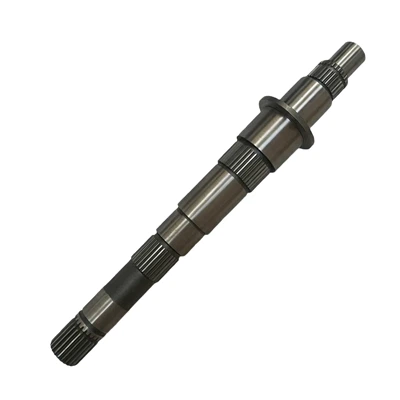
We use a variety of CNC machines, including CNC lathes and CNC milling machines. CNC lathes are ideal for creating cylindrical components, such as shafts and pins. They can rotate the workpiece at high speeds while a cutting tool removes material to create the desired shape. CNC milling machines, on the other hand, are used for more complex shapes and can perform operations such as face milling, end milling, and drilling on multiple axes.
Grinding
Grinding is another important process in the production of precision custom components. It is used to achieve very tight tolerances and a high – quality surface finish. We use both surface grinding and cylindrical grinding machines, depending on the shape of the component. Surface grinding is used to create flat surfaces with a high degree of accuracy, while cylindrical grinding is used for round components.
EDM (Electrical Discharge Machining)
For components with intricate shapes or hard materials that are difficult to machine using traditional methods, we turn to Electrical Discharge Machining (EDM). EDM uses electrical discharges to remove material from the workpiece. There are two main types of EDM: wire EDM and sinker EDM. Wire EDM is used to cut complex shapes by passing a thin wire electrode through the workpiece, while sinker EDM is used to create cavities or holes in the workpiece using a shaped electrode.
Quality Control
Quality control is an integral part of the manufacturing process for precision custom components. We have a comprehensive quality management system in place to ensure that every component meets our strict quality standards. This starts with in – process inspections at every stage of the manufacturing process. Our quality control team uses a variety of measuring tools, such as calipers, micrometers, and coordinate measuring machines (CMMs), to check the dimensions and geometry of the components.
CMMs are particularly important for measuring complex components with high accuracy requirements. These machines use a probe to measure the surface of the component at multiple points, allowing us to verify that it conforms to the design specifications. In addition to dimensional inspections, we also perform non – destructive testing (NDT) on the components to detect any internal flaws or defects. This may include ultrasonic testing, X – ray inspection, or magnetic particle inspection.
Before the components are shipped to the client, they undergo a final inspection to ensure that they are free of any cosmetic defects and meet all the functional requirements. Only after passing this final inspection are the components approved for shipment.
Finishing and Assembly
Once the components are machined and pass the quality control checks, they may undergo various finishing processes. Finishing not only enhances the appearance of the component but also improves its corrosion resistance and wear properties. Common finishing processes include plating, anodizing, and painting.
Plating involves depositing a thin layer of metal, such as nickel or chrome, onto the surface of the component. This can improve the component’s hardness, corrosion resistance, and electrical conductivity. Anodizing is a process used mainly for aluminum components, which creates a protective oxide layer on the surface. Painting is often used for aesthetic purposes or to provide additional protection against the environment.
In some cases, we also offer assembly services. This involves putting together multiple components to create a finished product. We have a team of skilled assembly technicians who use specialized tools and techniques to ensure that the components are assembled correctly and securely.
Continuous Improvement
In the highly competitive field of precision custom component manufacturing, continuous improvement is essential. We are constantly looking for ways to improve our processes, reduce costs, and enhance the quality of our products. This involves investing in the latest technologies and equipment, as well as training our employees to stay up – to – date with the latest industry trends.
We also encourage feedback from our clients. By listening to their suggestions and concerns, we can identify areas for improvement and make the necessary changes to better meet their needs. This commitment to continuous improvement has allowed us to build long – term relationships with our clients and maintain our position as a leading supplier of precision custom components.
Conclusion

The process of making precision custom components is a complex and multi – step journey that requires a combination of advanced technology, skilled craftsmanship, and strict quality control. From the initial design and planning phase to the final finishing and assembly, every step is crucial in ensuring the production of high – quality components that meet the exacting requirements of our clients.
Marine Parts If you are in need of precision custom components for your project, I invite you to reach out to us for a consultation. Our team of experts is ready to work with you to understand your needs and provide you with the best solutions. Whether you are in the aerospace, automotive, medical, or electronics industry, we have the experience and capabilities to deliver the components you need. Let’s start a conversation and explore how we can collaborate to bring your project to life.
References
- ASM Handbook, Volume 16: Machining, ASM International
- Modern Manufacturing Technology, by Mikell P. Groover
- Precision Engineering: Fundamentals and Applications, by S. S. R. Prabhu
Hubei Kangding Machinery Equipment Co., Ltd.
We’re well-known as one of the leading precision custom components manufacturers and suppliers in China, specialized in providing high quality customized products. Please feel free to buy advanced precision custom components for sale here from our factory. For pricelist, contact us now.
Address: Qianchang Industrial Park, Jingshan County, Jingmen City, Hubei Province
E-mail: 339248585@qq.com
WebSite: https://www.cnkangding.com/
