If you’ve ever placed an order for custom injection molded parts and watched your project stall at the material selection phase, you’re not alone. As an injection molded parts supplier who’s navigated hundreds of these decisions over the last 12 years—from a tiny medical device clip for a startup to a massive automotive underhood component for a global manufacturer—I can tell you this: choosing the right material isn’t just about picking the cheapest option or the one that looks closest to your design. It’s the foundation of every part that rolls off our production line, and get it wrong, and no amount of perfect tooling will fix it. Injection Molded Parts
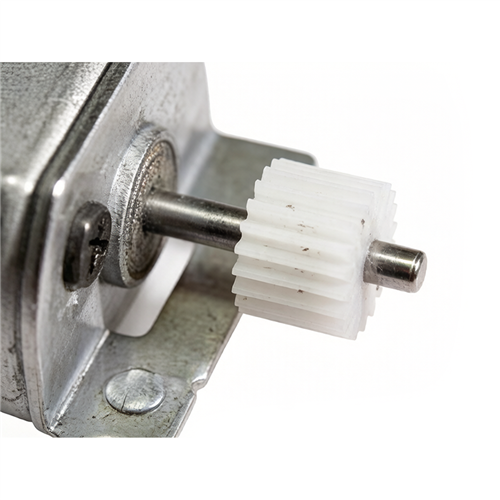
I still remember the mistake I made early in my career. A customer ordered 50,000 small plastic gears for a kitchen appliance, insisting on a low-cost general-purpose polypropylene (PP) because they thought all plastics were the same. We ran the first production batch, and the gears looked great—smooth, uniform, exactly what we’d quoted. Three weeks later, they called in a panic: 12% of the gears had cracked after just 100 uses, and their recall costs were mounting. Turns out, the gears were under constant torsional stress, and PP, while flexible, isn’t tough enough for repeated load cycles. We switched them to a glass-reinforced nylon (PA66) with impact modifier, and the failure rate dropped to 0.02%—but that mistake cost us a few hundred dollars in extra material and a lot of lost sleep over customer trust. That’s why material selection isn’t a box we tick at the start of a project; it’s a collaborative process we walk through with every client, step by step, to avoid those costly missteps.
So let’s break down what actually matters when choosing material for injection molded parts. There’s no one-size-fits-all answer, but there are clear, data-driven factors that should guide every decision.
First, start with the part’s core function and operating environment. This is non-negotiable. If your part is going inside a body, like a surgical tool component, it needs to be biocompatible and able to withstand autoclave sterilization—so general-purpose ABS or PP are out. If it’s an automotive part under the hood, operating at 120°C or higher and exposed to oil and road grime, you need a material that resists high heat and chemical degradation. Even something as simple as a children’s toy has restrictions: it needs to meet ASTM F963 for toy safety, meaning no phthalates or heavy metals.
Let’s get specific with examples. For medical applications, we often use medical-grade polycarbonate (PC) or polysulfone (PSU) because they can be sterilized with ethylene oxide (EtO) or gamma radiation, and they don’t leach harmful chemicals. For outdoor parts, like patio furniture brackets or outdoor lighting housings, we choose UV-stabilized polyethene (PE) or acrylonitrile butadiene styrene (ABS) with UV inhibitors, because standard plastics will fade, become brittle, and crack after a few months of sun exposure. For electrical components, like switch housings or circuit breakers, we use flame-retardant thermoplastics, often UL94 V-0 rated, because they need to meet fire safety standards to prevent electrical hazards.
That initial conversation about where the part lives and what it’s supposed to do eliminates 80% of unsuitable materials right away. But there’s more to it than just function. The second critical factor is manufacturing compatibility. Even if a material is perfect for your part’s job, if it can’t be injection molded efficiently, cost-effectively, or consistently, it’s a bad choice.
Not all thermoplastics behave the same way in a mold. Some have high melt viscosity, meaning they flow slowly and require high injection pressure to fill complex, thin-wall parts. If you have a part with walls thinner than 1mm, a material with high melt flow index (MFI) is ideal—it melts easily and flows evenly into every crevice without warping. Low-MFI materials, like some high-grade nylons, work better for thick, solid parts where strength is more important than ultra-thin walls.
Then there’s shrinkage. Almost all thermoplastics shrink as they cool and solidify in the mold, and the rate varies wildly by material. For example, unmodified PP has a shrinkage rate of 1.5-2.5%, while glass-reinforced nylon has a much lower shrinkage rate, around 0.5-1.5%. If you’re designing a part that needs tight tolerances—say, a gear that has to fit perfectly into a matching component—you need to account for that shrinkage during design, and choose a material with a consistent, predictable shrink rate. I’ve seen clients design a part to exact dimensions using PP, only to end up with parts that are 2mm too small after molding, because they didn’t plan for shrinkage. It’s a fixable issue, but it adds time and cost if it’s not caught early.
Processing requirements also matter. Some materials need special handling: polyether ether ketone (PEEK), a high-performance thermoplastic used in aerospace and medical implants, requires molding temperatures of 360°C or higher, and the mold needs to be heated to 180°C to prevent part distortion. That means if you don’t have the tooling or equipment to handle PEEK, working with a supplier who does is non-negotiable. Other materials, like ABS, can be molded on standard equipment, so they’re a better choice for high-volume projects with tight deadlines.
Third, cost is always a factor, but it’s not just about the price per kilogram of material. Total cost of ownership—including material waste, production yield, secondary operations, and part lifespan—should be the metric you use, not upfront cost. A client once came to us insisting on a $2 per kg PP for a 100,000-unit automotive interior trim piece, which we knew would have a scratch resistance of 2B on the pencil hardness scale, meaning it would scuff easily during assembly and shipping. The alternative was a $3.50 per kg ABS with a scratch resistance of 4H. The upfront cost for PP was lower, but the yield hit 85% because of scuffed parts, and they had to add a secondary coating operation to fix the scratches, adding $0.75 per part. The ABS option had a 98% yield, no secondary operations, and lasted the 10-year lifespan of the vehicle. At the end of the project, the PP option cost them $1.20 more per part than the ABS option.
That’s the trap of choosing the cheapest material. Another example: for high-volume, low-stress parts, general PP might work, but if you’re ordering 1 million parts, a 1% higher failure rate ends up being 10,000 extra parts that you have to scrap or replace. When we walk clients through cost comparisons, we always show them the total cost, not just the material price per kg.
Fourth, mechanical and chemical properties are make-or-break. Do you need a part that’s rigid, or flexible? Tough, or lightweight? Resistant to impact, or to acids? Let’s talk about common tradeoffs. PP is flexible, lightweight, and cheap, but it’s not very strong or heat-resistant. Nylon (PA) is strong, tough, and has good heat resistance, but it absorbs moisture, which can make it swell or lose strength over time if not properly sealed. PC is extremely tough, transparent, and heat-resistant, but it can be prone to stress cracking in environments with certain chemicals, like detergents or alcohol.
We had a client making outdoor water filter housings a few years ago. They initially chose PC because it was transparent, so customers could see the filter level, and thought it would be strong enough for the pressure of water flow. But after testing, we found that when the housings were exposed to the mild chlorine in tap water over time, the PC developed tiny stress cracks that leaked. We switched them to a food-grade HDPE, which is resistant to chlorine, strong enough for water pressure, and still translucent enough to show filter levels. It was a better fit for their operating environment, even though it’s not clear.
Chemical resistance is especially important for parts that come into contact with fuels, cleaning agents, or food. For food contact, you need materials that meet FDA 21 CFR standards, so we only use food-grade PP, PE, or PET for parts that will hold food or beverages. For industrial parts that come into contact with strong acids or bases, we’ll recommend materials like fluoropolymers (PTFE) or high-density PE that don’t break down when exposed to those chemicals.
Fifth, regulatory and compliance requirements can’t be overlooked, especially for parts in industries like medical, automotive, aerospace, or electronics. If your part is for a medical device, it might need to meet ISO 10993 for biocompatibility. For automotive parts, you’ll need to meet OEM standards like UL 94 for flammability, or SAE J200 for material performance. For electrical parts, UL certification for flame resistance is mandatory in most markets.
I can’t tell you how many times clients have come to us with a material that’s perfect for their part’s mechanical properties, but doesn’t meet the regulatory requirements for their industry. For example, a startup making a wearable fitness tracker tried to use a non-flame-retardant ABS for the device’s outer shell, but they needed the part to pass UL 94 V-0 to be sold in North America, so we switched them to a flame-retardant ABS that met the standard without sacrificing the design or cost.
Now, let’s talk about how to put this all together in practice. The best approach is to work closely with your injection molded parts supplier early in the design phase, not after you’ve already finalized the part design. We usually ask new clients to share three key things: what the part does, where it will be used, and what performance standards it needs to meet. From there, we run material screening tests to narrow down the options, and help you balance all the factors: function, manufacturing, cost, properties, and compliance.
For example, let’s say you’re designing a small electronic enclosure for a home thermostat. The part needs to be flame-retardant, able to withstand room temperature variations (0°C to 60°C), resistant to dust and minor impacts, and cheap enough to produce 50,000 units a year. The screening process would start with flame-retardant thermoplastics that meet UL 94 V-0, are rated for that temperature range, and work for thin-wall molding (since enclosures are usually 1-2mm thick). The top candidates would be flame-retardant ABS, flame-retardant PC, and flame-retardant PC/ABS alloy.
We’d then test each of these for shrinkage (to make sure the enclosure fits the internal components), impact resistance (to survive shipping and installation), and cost. Flame-retardant ABS is the cheapest, but it’s less impact-resistant than PC. The PC/ABS alloy has a good balance of impact strength and moldability, and is only slightly more expensive than ABS. For this application, the PC/ABS alloy would be the sweet spot—meets all requirements, works in molding, and has a low total cost.
Of course, there are edge cases that call for more specialized materials. For high-performance aerospace parts, we work with thermoplastics like PEEK or PEKK that are lightweight, heat-resistant up to 250°C, and strong enough to replace metal parts, reducing aircraft weight and fuel use. For consumer goods, we often use recycled plastics now—recycled PP or PET that meets the same performance standards as virgin material, which is a big plus for brands looking to meet sustainability goals. We’ve found that most clients don’t have to compromise on quality when switching to our vetted recycled materials, and it’s a great way to lower environmental impact without raising costs.
A common misconception we hear is that plastic materials are all the same, so it doesn’t matter what you choose. But after 12 years in this industry, I can tell you that two parts that look identical on the outside can perform drastically differently depending on the material. That’s why taking the time to evaluate all these factors is so important—it saves you from costly recalls, production delays, and unhappy customers down the line.
At the end of the day, choosing the right material for injection molded parts is a collaborative decision. As an injection molded parts supplier, we don’t just run your molds—we bring decades of experience, testing capabilities, and industry knowledge to help you make the best choice for your part, your budget, and your timeline. We work with you every step of the way, from material selection through production, to make sure your parts perform exactly as you need them to, the first time.
If you’re working on a new project, or struggling with part performance issues from a material choice that didn’t pan out, we’re here to help. Reach out to us to discuss your injection molded part needs, and we’ll walk you through the material selection process to find the perfect fit for your application.
Injection Molded Parts References:
- Rosato, D. V., & Rosato, M. G. (2000). Injection Molding Handbook. Kluwer Academic Publishers.
- ISO 10993-5:2009. Biological evaluation of medical devices — Part 5: Tests for in vitro cytotoxicity. International Organization for Standardization.
- UL 94:2018. Standard for Safety of Flammability of Plastic Materials for Parts in Devices and Appliances. Underwriters Laboratories.
- Harper, C. A. (2002). Modern Plastics Handbook. McGraw-Hill.
- SAE J200:2020. Material Specification for Thermoplastics for Automotive Interior Components. Society of Automotive Engineers.
Ningbo Xinyu Automotive Electronics Co., Ltd.
With abundant experience, we are one of the most professional injection molded parts manufacturers and suppliers in China. We warmly welcome you to wholesale customized injection molded parts from our factory. If you have any enquiry about quotation, please feel free to email us.
Address: Zhujiadu Village, Sanqizhen, Yuyao City, Zhejiang Province
E-mail: xyautoelec@163.com
WebSite: https://www.xyautoelec.com/
