Let me start this by saying something I hear every single week, sitting behind our counter at the stainless steel warehouse: “Wait, duplex stainless steel? Is that like… two types of steel mixed together?” Stainless Steel
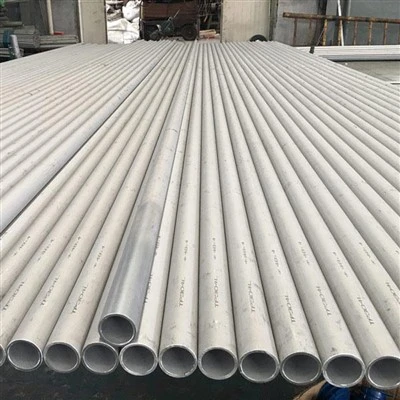
That’s exactly why I’m writing this. For years, most of the stainless steel I sold was either austenitic or ferritic—grades like 304 for kitchen sinks, 316 for marine parts, 430 for trim. Duplex always felt like the quiet, overqualified cousin in the supplier stack. Engineers would ask for it, but most fabricators and even some small warehouse guys I used to work with would just shrug and reach for 304, like it’s a one-size-fits-all fix. Last month, a customer who builds custom agricultural processing equipment stopped by frustrated because his 316L parts kept corroding in the brine rinse cycle, and a fabricator friend told him duplex was the only way to fix it without breaking the bank on higher alloys. That’s when I realized: not enough people know what duplex is, or why it’s the workhorse it is for so many hardworking industries.
Let’s break it down simply, no chemistry degree required. First, if you already know the basics of standard stainless, stick with me. Austenitic stainless steels (300 series) have that face-centered cubic crystal structure, right? They’re soft, weldable, great for corrosion resistance but weak under high stress or at extreme temps. Ferritic (400 series) have a body-centered cubic structure, stronger, more resistant to stress corrosion cracking, but brittle, hard to weld without cracking. Duplex? Its name isn’t marketing fluff. It’s exactly what it sounds like: a perfect 50/50 mix of austenitic and ferritic crystal phases, locked together in every grain of the metal. That dual structure is the superpower, not a flaw.
The alloy mix is how they pull that off. Standard 304 is mostly iron, chromium, nickel, and a touch of carbon. Duplex adds extra chromium (around 22% vs. 18% for 304), more nickel, and key additions like molybdenum and nitrogen. Nitrogen is the secret weapon here—it boosts both strength and corrosion resistance way better than nickel alone. The grade I sell most is 2205 duplex, which is the workhorse for almost every application that’s not basic kitchen gear. There’s also higher grades like 2507 for harsher environments, but 2205 is the workhorse that hits that sweet spot between cost and performance.
Let’s talk about what makes duplex actually useful, because theory is useless without real-world results. First, strength. Compare it to 316L, the go-to “corrosion resistant” stainless steel for marine and chemical work. Duplex 2205 is about twice as strong in tensile yield strength—meaning it can bend, hold weight, and resist deformation without breaking, even under constant pressure. That’s a game-changer for parts that need to be thin to save space but still tough: like piping for oil and gas, or structural brackets for bridges near saltwater. I’ve had a bridge contractor buy 2205 to make support brackets for a new coastal overpass because regular carbon steel would rust through in 10 years, and 316 would be too flimsy to handle the constant wind and traffic loads. They went with duplex because it cut their material weight by 30% compared to using thicker 316, which saved them on installation costs too.
Then there’s corrosion resistance—the reason most engineers reach for stainless in the first place. Let’s put that in context. 304 is great for indoor kitchens, low-moisture environments. 316 is good for mild saltwater, like a boat hull in the open ocean, or mild chemical exposure. Duplex? It handles that plus things 316 can’t. Stress corrosion cracking (SCC) is that nasty, silent failure that happens when metal is under stress and exposed to chloride—like salt from road spray, or brine from food processing. Austenitic grades (304, 316) are terrible for SCC, especially at high temperatures. Ferritic grades are better but still not great. Duplex? Its dual structure almost eliminates SCC. Last year, a seafood processing plant came to me with a problem: their 316L brine tanks were cracking after two years, leaking salt water onto the structural supports and creating a safety hazard. We swapped them for 2205 duplex tanks, and they haven’t had a single crack in 18 months—way below the replacement cycle they were dealing with before. That’s the kind of real win that makes suppliers stand out, not just sell metal.
Don’t get me wrong, duplex isn’t perfect. It has a learning curve for fabricators, which is why some small shops avoid it. It’s a bit harder to cut and weld than 304 or 316, because the dual phases react differently to heat. If you heat it too fast or cool it too slow, you can get unwanted phases like sigma phase, which makes the steel brittle and prone to cracking. But that’s not a downside—it’s a skill set. The good fabricators who work with duplex know how to adjust their tools, use the right filler metal, and control heat during welding. I make a point to walk new fabricators through that when they first order duplex from me, because I don’t want them to blame the steel for their technique.
Another thing that surprises most people: cost. Let’s compare apples to apples. If you need a pipe that can handle a certain pressure and environment, 316 would cost about 20-30% more than duplex 2205 for the same strength. Because duplex is twice as strong, you can use thinner wall thickness, which cuts material cost even more. That’s why it’s so popular in oil and gas pipelines, desalination plants, and chemical processing equipment—operators are always looking to cut long-term costs, not just upfront. I supply 2205 to a desalination plant in Florida that was using expensive exotic alloys for their piping, and switching to duplex cut their annual maintenance and replacement costs by almost 40% in the first year.
Let’s talk about common myths, because I hear them all the time. First myth: “Duplex is only for heavy industrial stuff.” No way. It works for everything from food and beverage to renewable energy. Wind turbine parts near coastal areas use duplex because they need to handle salt spray and the constant stress of wind loads. Even kitchen equipment makers are starting to use it for commercial ovens and dishwashers, because it resists the acid from food and the high heat way better than 304. Second myth: “It’s hard to source.” Wait, no—if you work with a supplier who stocks it (like, ahem, us), it’s as easy to get as 304. I keep 2205 sheets, pipes, bars, and flanges in stock year-round, so my customers don’t have to wait weeks for custom orders. Third myth: “It’s only for extreme environments.” Actually, if you have an application where 316 is working but you’re worried about long-term corrosion or stress, duplex is a great upgrade without the 316 price tag.
Let me wrap this up with a real story that sticks with me, because it’s exactly why I got into supplying stainless steel. A few years back, a small-scale brewer came into my shop, panicking. He had just spent $100,000 on a new brewing system, all made with 304 stainless, and he’d found out that the hops and yeast in his new IPA recipe were slightly acidic, and the 304 was pitting after only a few months. He couldn’t afford to redo the whole system with 316—at the time, that would have added another $30,000 to his budget. I suggested we switch to duplex 2205 for the brewing tanks and lines, which cost him only $12,000 extra total, and the brewmaster told me last month that it’s holding up better than the 300 series ever did. That’s the kind of solution I love providing, not just selling a product.
At the end of the day, duplex stainless steel isn’t some fancy, unobtainable material for aerospace or secret military projects. It’s a versatile, cost-effective workhorse for every industry that relies on stainless steel to do the heavy lifting. It solves problems that standard grades can’t—corrosion, stress, high temperatures—without breaking the bank. It’s no wonder it’s been growing in popularity over the last 20 years, as more engineers and fabricators stop seeing it as a niche grade and start seeing it as the right grade for the job.
If you’re tired of replacing stainless steel parts every two or three years because they rust, crack, or underperform, or if you’re working on a project that needs strength and corrosion resistance without the high cost of exotic alloys, I’m here to help. We stock a full range of duplex stainless steel products, from sheets and pipes to custom-cut parts, and I don’t just sell metal—I make sure you have the info and support to use it right, whether you’re a small brewer, a construction contractor, or a large industrial plant. Reach out to talk through your project, and we can figure out if duplex is the right fit for your needs.
Aluminum Coil References:
- The World Stainless Steel Association. (2022). Duplex Stainless Steels: Properties, Applications, and Global Usage Trends.
- ASM International. (2019). Stainless Steel Degradation: Stress Corrosion Cracking in Aqueous Environments.
- International Organization for Standardization. (2021). ISO 15510: Stainless Steels – Chemical Composition.
- Nickel Institute. (2020). Duplex Stainless Steels: Cost-Benefit Analysis for Industrial Applications.
- American Welding Society. (2021). Guide for Welding Duplex and Super Duplex Stainless Steels.
Wuxi Jin Ming Jian De Industry & Trade Co., Ltd.
Wuxi Jin Ming Jian De Industry & Trade Co., Ltd. is one of the most professional stainless steel manufacturers and suppliers in China, also supports customized service. With abundant experience, we warmly welcome you to wholesale CE approved stainless steel in stock here from our factory. If you have any enquiry about quotation, please feel free to email us.
Address: 2102-2105, Yuexing Building, Guangnan Road, Liangxi District, Wuxi City, Jiangsu Province, China.
E-mail: info@wxjmjdss.com
WebSite: https://www.jmjdsteelexp.com/
