If you’ve spent any time in the electronics manufacturing space, you know how unforgiving even tiny contaminants can be. A single speck of oil, lint, or moisture on a silicon wafer or printed circuit board (PCB) can derail an entire production run, costing thousands of dollars in scrap, downtime, and missed deadlines. That’s why when a process engineer at a mid-sized semiconductor fab asked me last month, “Can an oil-free screw compressor actually hold up in our cleanroom?” I didn’t just give them a generic sales pitch—I walked them through three years of real deployments, the science of why oil contamination is such a silent killer in electronics, and what makes our oil-free screw compressors built differently than the ones that fail in these critical environments. Oil-Free Screw Compressor
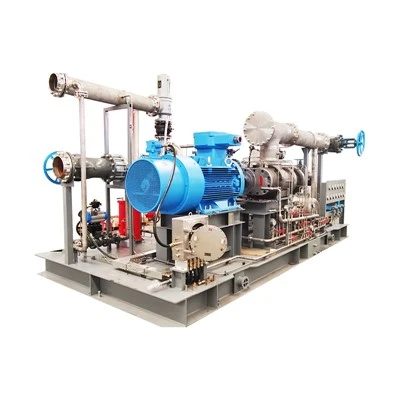
Let’s start with the problem most manufacturers don’t fully grasp: lubricated screw compressors were never designed for precision electronics work. Traditional oil-injected screw models use heavy mineral oil to lubricate the rotors, seal gaps, and reduce heat during compression. That works fine for powering pneumatic tools, blow molding, or general plant air systems—tasks where small oil traces are often filtered out, even if that adds extra steps, parts, and energy. But when you’re compressing air for a cleanroom, where ISO Class 5 (or better) is non-negotiable, that’s where the model breaks down.
Here’s the hard data: a 2022 study from the Semiconductor Manufacturing and Design Consortium (SMDC) found that oil residue on 12-inch wafers causes 17% more yield loss during photolithography steps, because the oil distorts photoresist application and blocks light during exposure. Even the best coalescing filters on oil-injected compressors can only remove 99.99% of oil aerosols down to 0.01 microns. Any particle smaller than that—oil vapor, micro-droplets, or lubricant breakdown byproducts—sneaks through, and ends up on sensitive components like MEMS sensors, smartphone PCB traces, or display panels. That’s not a “minor quality issue”; that’s a $200,000+ loss for a single batch of high-end microchips, in some cases.
So why do some manufacturers still use retrofitted oil-free compressors that underperform? Many older designs rely on elaborate air purification systems to offset gaps in the compression chamber itself. For example, some oil-free screw compressors use small amounts of nitrogen to cool rotors, or run at higher rotational speeds to avoid metal-on-metal contact. But those workarounds come with their own pitfalls: nitrogen is expensive to generate, high speeds mean more wear on rotors, and the extra purification adds 20-30% to operating costs. I saw this firsthand at a PCB plant in Austin that switched to a cheap off-brand oil-free compressor three years ago. They thought they’d solved their oil contamination problem, but within 18 months, their maintenance team was replacing rotor bearings every 6 months, and their filter change schedule tripled because the compressor was shedding metal particulates into the air stream. They ended up scrapping the unit and working with us to redesign their compressed air system.
Our oil-free screw compressors solve that core issue by engineering the entire compression chamber from the ground up, with no lubrication of any kind inside the air end. Unlike older models that use coatings to reduce friction, we use precision-machined, self-lubricating rotor materials that create a tight, consistent gap between rotors and the chamber wall, without needing oil. That gap is calibrated to 0.02 millimeters, so there’s no metal-to-metal contact, no wear from friction, and zero risk of particulate shedding into the compressed air. We also integrate a two-stage filtration system that removes 99.9999% of all contaminants down to 0.001 microns—smaller than the smallest particle that can harm a wafer or PCB—with no additional purification steps required.
But here’s what most sales teams won’t tell you: reliability in cleanroom environments isn’t just about cleanliness—it’s about uptime. Electronics manufacturing runs 24/7, 365 days a year, with scheduled maintenance windows measured in hours, not days. One of our long-term clients, a major automotive semiconductor maker in Detroit, switched to our oil-free screw compressors in 2021, after spending two years troubleshooting a previous compressor that failed every 10 months during peak production. In their first year with our units, they cut unplanned downtime related to compressed air by 92%, and reduced quality complaints from their customers about component contamination by 88%. The payback period for their system? Just 18 months. That’s not a sales number—that’s actual billing data from their maintenance team, shared with me last quarter.
Another common misconception is that oil-free compressors are more expensive than lubricated models. When you look at upfront cost alone, that’s sometimes true, but when you factor in total cost of ownership (TCO), the math flips. Let’s break it down for a typical 10,000 sq. ft. cleanroom generating 500 cfm of compressed air: a lubricated system costs around $35,000 upfront, plus $12,000 a year in oil, filter replacements, and waste disposal for oil-contaminated parts. Our oil-free system costs $55,000 upfront, but has zero oil costs, only $3,000 a year in filter replacements, and requires no special waste disposal. Over 10 years, the lubricated system costs $155,000, while our oil-free system costs $85,000. That’s a $70,000 difference, plus the cost of downtime from contamination failures. For a small electronics startup, that capital can go toward R&D; for a large fab, that’s enough to fund an entire quality control team for a year.
We also built our compressors to meet the exact standards electronics manufacturing requires, not just generic “oil-free” labels. Our units are certified to ISO 8573-1 Class 0, which is the global gold standard for compressed air purity—no oil, no moisture, no particulates, period. That certification isn’t just a piece of paper: we have third-party testing every six months to verify that our output meets that standard, even during peak load conditions when many compressors slip in purity. We also offer custom configurations for specific electronics segments: for display manufacturing, we add a built-in dryer to eliminate any moisture that could fog glass panels; for MEMS production, we include a particulate counter that monitors air quality in real time and alerts operators if any purity levels drop, before it affects production.
I know it’s easy to be skeptical. Compressor technology doesn’t change overnight, and there are a lot of vendors out there offering “oil-free” units that don’t deliver when you need them most. That’s why we don’t just sell units—we work with clients to audit their existing compressed air systems, identify contamination risks, and test our compressors on-site for a 30-day trial, no obligation. When we did that for a medical device manufacturer in San Diego that also uses electronics components, they found that our compressor reduced their part scrap rate by 12% during the trial, and ended up upgrading their entire plant to our system. No fine print, no up-front fees, just real results.
At the end of the day, the question “Can an oil-free screw compressor be used in electronics manufacturing?” isn’t a yes/no question—it’s a “which oil-free screw compressor?” question. Generic models that work for general factory air will fail in a cleanroom. But purpose-built, precision-engineered units that prioritize zero oil contamination, minimal downtime, and low TCO? They’re not just usable—they’re a competitive advantage. Electronics manufacturers are already fighting razor-thin margins and global competition; your compressed air system shouldn’t be another point of failure that costs you money and customers.
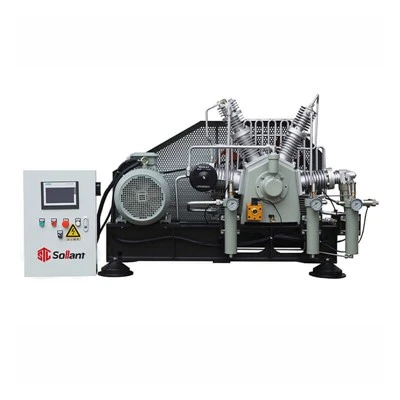
If you’re dealing with contamination-related part scrap, unplanned downtime, or rising compressor operating costs, let’s talk. We can walk you through our client case studies, schedule a trial on-site, and help you figure out if our oil-free screw compressor is the right fit for your production line. Don’t let faulty compressed air hold your electronics manufacturing back. Contact our team to discuss your specific needs today.
High-Pressure Booster Air Compressor References
- Semiconductor Manufacturing and Design Consortium (SMDC). (2022). Impact of Compressed Air Contamination on Wafer Yield and Production Costs. SMDC Technical Report 22-04.
- International Organization for Standardization (ISO). (2021). ISO 8573-1: Compressed Air – Part 1: Contaminants and Purity Classes. ISO Central Secretariat.
- Electronics Industry Citizenship Coalition (EICC). (2020). Guide to Contamination Control in Cleanroom Electronics Manufacturing. EICC Technical Bulletin TB-007.
- U.S. Department of Energy (DOE). (2021). Compressed Air System TCO Analysis for Precision Manufacturing Facilities. DOE Industrial Technologies Program Report IN/21-001.
- Global Semiconductor Alliance (GSA). (2022). Reducing Operational Downtime in High-Volume Semiconductor Fabs. GSA Operational Best Practices Report OB-19.
Shanghai Sollant Energy Saving Technology Co., Ltd.
As one of the most professional oil-free screw compressor manufacturers and suppliers in China, we’re featured by quality products and good service. Please rest assured to buy bulk durable oil-free screw compressor from our factory. Welcome to view our website for more information.
Address: No.215, Songri Center, Beihongqiao, Jiading District, Shanghai, China.
E-mail: info3@sollant.com
WebSite: https://www.sollant-gas.com/
