Hey there, if you’ve got a screw air compressor on your shop floor or at your industrial site, you already know it’s the workhorse that keeps tools running, lines moving, and whole operations from grinding to a halt. But here’s the thing—those bad boys don’t just run forever on their own, right? I’m the guy who’s been selling screw air compressors for years, fixing the ones that got neglected, and walking customers through exactly what they need to do to keep theirs purring along. Today I’m breaking down the common maintenance tasks that actually matter, no fancy jargon, just real-world stuff I’ve seen (and lived) thousands of times. Screw Air Compressor
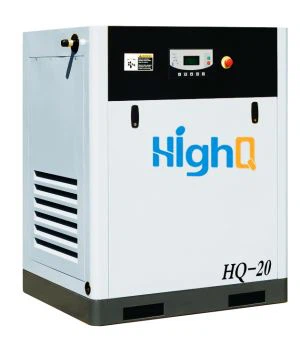
First off, let’s get one thing straight: I’ve seen way too many businesses skip basic checks because they think “if it ain’t making weird noises, it’s fine.” Spoiler alert: By the time you hear a weird noise, you’re already staring at a repair bill that’s way bigger than the $200 of work you could’ve done ahead of time. Screw compressors run nonstop in dusty factories, hot warehouses, or even outdoor sites if they’re set up right—and the tiny stuff you ignore turns into big, costly breakdowns. Let’s dive in, one task at a time, no fluff.
-
Daily Visual & Quick Checks (5 Minutes Max, Do This Every Single Day)
This is the easiest, most skipped step, and it’s where 90% of preventable issues get caught. I tell every new customer: pull up to your compressor first thing every morning, spend 5 minutes, and check three things. First, the pressure gauge. Is it sitting around your operating range? Most screw compressors run best between 100–125 PSI, not spiking to 150 or dropping to 80. If it’s off, that’s a red flag—could be a filter clog or a leak, not just a gauge issue. Second, check the oil level in the sight glass. It should be between the MIN and MAX lines, no exceptions. If it’s below MIN, don’t just top it off and keep going—you might have a leak, and running it low will cook the compressor’s screws, which is a $5k+ job. Third, do a quick visual scan for puddles, loose wires, or weird leaks. Oil leaks on the floor? Air leaks at connections? A frayed wire? None of these will fix themselves. One customer of mine used to skip this, and his compressor seized up because a loose wire tripped a safety that he didn’t notice for three days—cost him 3 days of downtime and a new motor. Don’t be that guy. -
Weekly Filter Checks & Changes (Don’t Wait For The Light)
Air filters, oil filters, and separator filters—these three are non-negotiable. Let’s break ’em down. The air filter is the first line of defense against dust, sawdust, metal shavings, whatever’s floating around your shop. If this clogs, your compressor has to work way harder to suck in air, which spikes energy bills by 10–15% (I’ve measured this) and wears out the screws faster. Most compressors have a service light, but don’t wait for that to change the filter. If you’re in a super dusty environment (like a wood shop or metal fab), check it every week, change it every 200–300 hours. If you’re in a cleaner space, every 400–500 hours. Rule of thumb: if you tap the filter and dust comes pouring out, it’s way past due.
Next, the oil filter. This one keeps gunk and metal particles out of the compressor oil, so it lubricates the screws properly. I see people use generic oil filters all the time—big mistake. Stick to the ones we (and the compressor manufacturer) recommend, because off-brand filters can have bad seals, letting gunk through. Change it every time you change the compressor oil, so that’s usually every 1,000–2,000 hours for most models.
Then there’s the separator filter—this is the one that separates oil from the compressed air, so you don’t get oil in your air tools, paint guns, or whatever you’re running. If this clogs, you get oil carryover, which messes up your end product. I’ve had a customer’s paint job get ruined because he waited too long on the separator filter—he had to redo $10k worth of custom furniture. Change the separator every 2,000–3,000 hours, same as the oil change cycle usually lines up here. Pro tip: If you smell burning oil or see oil in your air line, that’s the separator screaming for attention.
- Monthly: Tighten Connections & Check Belts (If You’ve Got a Belt Drive)
Wait, not all screw compressors have belts, right? Yeah, the newer ones are direct drive, but a lot of mid-range models out there are belt drive, and those belts need love. Once a month, shut the compressor off, unplug it (safety first!), and check the belt tension. If you can twist it more than 90 degrees, it’s too loose, and that will slip, waste energy, and wear out the pulleys. If it’s cracked or frayed, replace it—don’t wait for it to snap mid-shift. I’ve seen a belt snap on a Friday night, shutting down a whole plant for 3 days while we waited for a replacement part. Avoid that.
Also, once a month, go over every connection: air lines, oil lines, electrical connections. Tighten any loose fittings, but don’t overdo it—you’ll crack a line or a seal. Electrical connections are super important too, especially in dusty areas—dust can build up and cause overheating, which is a fire hazard. Wipe those down with a dry cloth (never a wet one!) to keep things tight.
- Quarterly: Check Coolant (Or Oil) & Clean the Heat Exchanger
Screw compressors run hot, so they need proper cooling to keep from overheating. Most of them use compressor oil as the coolant (direct drive ones especially), but some larger models have separate coolant. Either way, check the level and quality every quarter. If it’s brown or gritty, that’s old—drain it and replace it, don’t just top it off. Old oil can’t lubricate or cool properly.
Then there’s the heat exchanger (or radiator, basically). Dirt, dust, and lint build up on this thing, blocking air flow, so the compressor overheats. Once a quarter, turn it off, let it cool completely, and use compressed air (low pressure, so you don’t bend fins) to blow the gunk off the fins. If you use a pressure washer, be super careful—water can get into electrical parts. I had a customer try to pressure wash his heat exchanger and short out the whole control board. Worth the $5 can of compressed air, trust me.
- Semi-Annual: Full Oil Change & Professional Inspection
Every 6 months (or every 2,000–3,000 hours, whichever comes first), do a full oil change. Don’t skip this—old oil breaks down, loses its lubricating properties, and can leave sludge that gums up the works. Use the exact oil we recommend for your compressor model, not a cheaper alternative. Wrong oil will mess up the seals and the screws, leading to way bigger problems.
At the same time, it’s a good idea to have a professional (that’s us, by the way) do a quick inspection. We’ll check for wear on the screws, test pressure levels, make sure the safety valves work, and spot issues you might miss. Most small businesses skip this, but it’s cheap compared to a major repair. Last year, we caught a screw wearing down on a customer’s compressor during a semi-annual check—they fixed it for $800, instead of a $7,000 full screw replacement. That’s the ROI right there.
- Annual: Calibrate Safety Valves & Service Control Systems
Safety valves aren’t just there to look official—they’re the only thing that stops your compressor from exploding if pressure gets too high. Every year, have a pro test and calibrate these valves. Don’t do this yourself unless you know what you’re doing—too much pressure is dangerous, and getting this wrong is a recipe for disaster. Also, calibrate the control system—make sure it’s turning the compressor on and off at the right pressure points, so it’s not running all the time (which wastes energy). I once checked a compressor that was running 24/7 because the control system was set wrong—cost the customer an extra $1,200 a month in electricity just because of that. Common, and easy to fix.
Now, let’s talk about the “I don’t have time for maintenance” crowd. I get it—running a business is busy, and every minute of downtime feels like money lost. But here’s the math: a 1-hour unplanned breakdown costs way more than 4 hours of scheduled maintenance a month. I’ve had customers tell me their compressor runs 8,000 hours a year—doing these simple tasks adds up to less than 20 hours a year, and prevents 90% of major issues.
Also, a quick tip: Keep a maintenance log. Jot down every check, every filter change, every oil change. This helps you track when things are due, and if you have a issue later, you can go back and see if something was missed. We even help our customers set up digital logs now, so it’s easy to set reminders for when filters are due, oil changes, etc.
Wait, one last thing: If you bought your compressor from us (or any reputable supplier), use our parts. Off-brand filters, oil, belts might cost a few bucks less, but they don’t fit right, don’t last, and can void your warranty. I see it all the time—someone buys a cheap filter, it clogs in half the time, and when their compressor breaks, the manufacturer says “voided warranty because you used non-genuine parts.” Don’t do that.

At the end of the day, screw air compressor maintenance isn’t rocket science. It’s consistent, small tasks that add up to a compressor that runs for years, no unexpected breakdowns, no huge repair bills. If you’re not sure where to start, or you need help setting up a maintenance schedule for your specific compressor, hit us up. We’re here for all your parts, service, and maintenance questions, to keep your operations running smoothly. Don’t wait until your compressor dies to reach out—schedule a chat today, and we can walk you through exactly what your unit needs, no pressure, just straight answers.
Scroll Oil-free Compressor References
Compressed Air Best Practices. "Screw Air Compressor Maintenance: A Practical Guide." 2022.
Atlas Copco. "Screw Compressor Maintenance Best Practices for Industrial Applications." 2023.
Kaeser Compressors. "Preventive Maintenance Checklist for Rotary Screw Air Compressors." 2021.
Plant Engineering. "5 Common Maintenance Tasks for Rotary Screw Compressors That Save Money." 2022.
Xiamen HighQ Compressor Co., Ltd.
With over 20 years’ experience, Xiamen HighQ Compressor Co., Ltd. is one of the most professional screw air compressor manufacturers and suppliers in China. We warmly welcome you to buy high quality screw air compressor made in China from our factory. Good service and punctual delivery are available.
Address: 7th F. No.704 Yi Hua Center Xiamen China 361100
E-mail: vincent@hqcompressor.com
WebSite: https://www.hqcompressor.com/
