Hey there, if you’ve ever worked on piping systems, chemical plants, or even basic plumbing, you’ve probably seen flanges—those round, bolted disks that connect pipes, valves, and equipment. But here’s a question I get all the time from folks new to the game: what are flanges actually made of? As a flange supplier who’s been in this game for over a decade, I’ve talked to engineers, plumbers, and project managers who all have the same “wait, there are different materials?” reaction. Let’s break this down like I would over a coffee with a regular client, no stuffy jargon, just the real deal. Flange
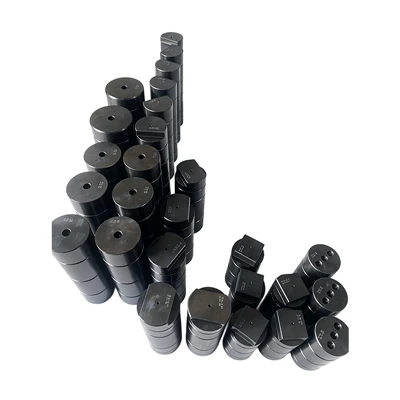
First off, why does the material even matter? I’ve had someone ask me once, “Can’t I just use the cheapest steel flange for every job?” Spoiler: that’s a fast track to leaks, breaks, and way more headaches later. Flanges need to handle whatever’s passing through the pipe—super hot steam, corrosive chemicals, pressure that could blow a pipe apart, even outdoor weather for buried pipelines. Pick the wrong material, and you’re looking at downtime that costs way more than a slightly pricetag flange.
Let’s start with the most common one: carbon steel. This is the workhorse of the flange world, and for good reason. It’s strong, cheap, and easy to shape, weld, and machine. Most of the carbon steel flanges we sell are made from ASTM A105—standard grade for general industrial use. A105 is great for low-pressure jobs, like water pipes, basic HVAC systems, or even some oil and gas lines that aren’t dealing with super harsh stuff. Wait, but carbon steel does have a downside: it rusts. If you’re using it in a place with moisture, or for piping that carries something acidic, you’ll need to coat it or go with something else. I always tell folks, “Carbon steel’s perfect for indoor, dry, low-stress jobs—just don’t stick it in a swamp or a chemical plant without prep.”
Next up, stainless steel. Oh, this is the go-to when corrosion is a big concern. I’ve sold more stainless steel flanges for food and beverage plants than you’d believe—they need to pass strict cleanliness checks, right? Stainless steel mixes iron with chromium (usually around 10-20%) which creates that thin, invisible layer on the surface that stops rust and corrosion. The two big grades we stock are 304 and 316. 304 is the workhorse stainless—great for food processing, pharmaceuticals, and mild chemicals. 316 is the fancy one; it has molybdenum added, so it handles saltwater, strong acids, and things like brine way better. If you’re working on a marine project, 316 non-negotiable. I learned that the hard way early on—we sold a guy 304 flanges for a boat’s water line, and a month later he was back, pissed, because they’d rusted out from seawater. Never again for me.
Then there’s alloy steel. This is the heavy hitter for high-pressure, high-temperature jobs. If you’re dealing with steam boilers, refinery pipelines that run at 800°F+, or pipelines carrying super hot gases, alloy steel is where it’s at. These are mixed with other elements like chromium, molybdenum, or vanadium to make them way stronger than carbon steel, and able to handle extreme heat without warping. The most common grade here is ASTM A182 F11 or F22—those are the ones we reach for when a client says, “This line runs at 1500 PSI and 900°F.” Alloy steel isn’t cheap, but it’s way cheaper than replacing a broken pipe in a refinery shutdown, trust me. I once had a refinery client tell me their downtime costs $100k an hour—they’d rather pay double for the right flange than deal with that.
Wait, what about other materials? Not every flange is metal, right? For some jobs, like low-pressure plumbing or even chemical processing with super corrosive fluids, we use non-metallic flanges. The big ones here are PVC, CPVC, and fiberglass-reinforced plastic (FRP). PVC flanges are super light, cheap, and great for cold water lines, irrigation, or low-pressure drains. But you can’t use them for hot stuff—they’ll melt. CPVC is a step up, handles hot water up to around 200°F, so that’s for water heaters or residential plumbing. FRP flanges are even more rugged, handle strong acids and high pressure, so they’re used in chemical plants where metal would corrode too fast. I always warn folks about non-metallic flanges, though: they’re not as strong as metal, so stick to the pressure rating. No one wants a plastic flange splitting open in a basement.
Oh, and don’t forget about specialty materials. I’ve had clients ask for titanium flanges for marine applications—super strong, super resistant to saltwater, but way pricier. Or bronze flanges for things like ship propeller lines, because bronze is good in water too. Even for some food-grade stuff, we have Hastelloy flanges for handling really strong acids that would eat through stainless steel. These are niche, but when you need ’em, you can’t use anything else.
How do I know which material to pick? As a flange supplier, I always ask clients a few questions first: what’s the piping system carrying? What’s the pressure and temperature? Is it indoors or outdoors? Any special requirements, like food safety or corrosion resistance? For example, if a plumber’s doing a residential water line, I’ll point them to carbon steel for main lines, or PVC for drains. If a food factory is upgrading their processing line, 304 stainless is the obvious pick. If a refinery is expanding their steam line, alloy steel is the only way. I never just sell a flange without talking through that—bad matches come back to bite both of us.
Wait, let’s clear up a common mix-up: flange types vs materials. People often say “slip-on flange” or “weld neck flange” and mix that up with material. The type is how you connect it (slip-on slips over the pipe, weld neck is stronger for high pressure), the material is what it’s made of. A weld neck can be carbon steel, stainless, alloy—all of the above. That’s a mistake I see newbies make all the time, so it’s good to spell that out.
Another thing: material standards. I always tell clients to check the ASTM ratings, like I mentioned earlier (A105 for carbon, A182 for alloy). Those are the industry standards that make sure the flange is actually going to hold up. I only stock flanges that meet those specs—no cheap knockoffs that cut corners on material quality. I had a client once who bought a cheap unrated flange from some random place, and it cracked on a low-pressure line. Turns out the steel was way thinner than it should be. Ever since then, I make sure every client knows I only sell flanges that meet the ASTM marks.
So, to wrap this up: there’s no one “best” flange material. It all depends on your job. Carbon steel for general use, stainless for corrosion, alloy for high heat/pressure, non-metallic for specific low-stress or corrosive jobs. As someone who’s been doing this for years, I’ve seen every material work for the right job, and every material fail for the wrong one.
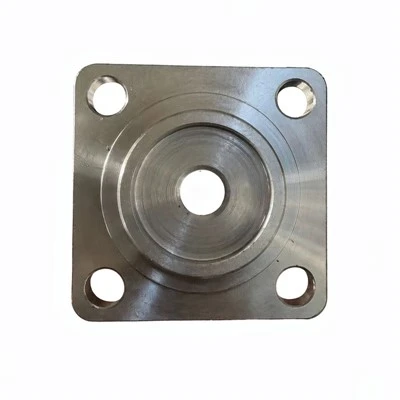
If you’re working on a project and not sure which flange material you need—whether it’s a small residential plumbing fix or a big industrial refinery build—hit me up. I don’t do pushy sales, I just give you the straight scoop on what’ll work for your system, no fluff, no overpriced stuff you don’t need. Let’s chat, figure out your requirements, and get you the right flanges without the hassle.
External Locking Device References:
- American Society for Testing and Materials (ASTM) A105 – Standard Specification for Forged Carbon Steel Flanges and Fittings for Piping Service
- American Society for Testing and Materials (ASTM) A182 – Standard Specification for Forged or Rolled Alloy and Stainless Steel Flanges, Forged Fittings, and Valves Parts for High-Temperature Service
- Flange Manufacturing Association (FMA) – Material Selection Guide for Industrial Flanges
Maoyu Mechanical Design and Manufacture Co., Ltd.
As one of the most professional flange manufacturers and suppliers in China, we are committed to providing high quality customized products with competitive price. We warmly welcome you to wholesale advanced flange made in China here from our factory. If you have any enquiry about quotation and free sample, please feel free to email us.
Address: No.12 Dongjie, Jingwei South Road, Yuci District, Jinzhong City, Shanxi Province
E-mail: quxingyu@maoyumachinery.com
WebSite: https://www.maoyumachinery.com/
