As an overhead line tower supplier, I get this question all the time—whether it’s from a utility engineer planning a new transmission line, a developer trying to scope rural electrification, or even a student curious about the hidden costs behind the steel structures that carry power across hundreds of miles. The truth is, there’s no one-size-fits-all answer. Building an overhead line tower isn’t like buying a prefabricated shed; it’s a custom project shaped by location, design specifications, material costs, and labor. Over the past 12 years in the tower supply business, I’ve worked on projects from small 11kV distribution lines in remote mountain villages to 500kV high-voltage transmission corridors connecting regional power grids. Each one has taught me that the “cost” isn’t just the steel bolted together—it’s every step from engineering to installation, and the variables that can shift a project’s budget by tens of thousands of dollars. Overhead Line Tower
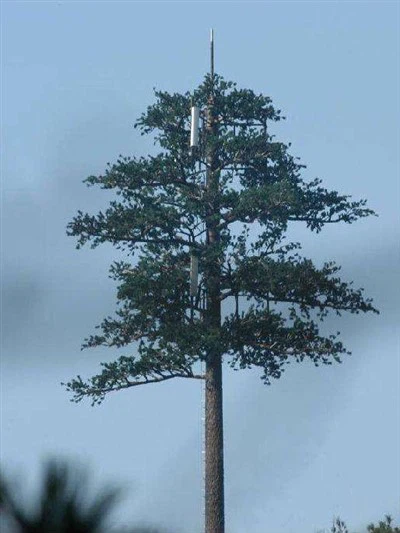
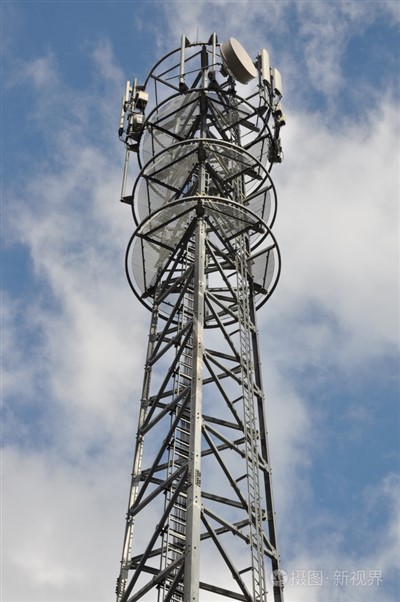
Let’s start with the basics: what even is an overhead line tower? These are vertical steel structures that support conductors, insulators, and hardware, lifting power lines high enough to clear terrain, roads, and other infrastructure. They come in a few main types—lattice towers, monopoles, and guyed towers—and each has different cost profiles. But before we get into per-tower prices, we need to break down the cost drivers that make every project unique.
First and foremost, design and engineering. You can’t order a tower without a detailed plan. For most transmission lines, utilities rely on standard designs to keep costs low, but sometimes site conditions demand custom work. For example, if a tower is going on a steep slope, we have to adjust the base design to prevent settlement, or if it’s crossing a wetland, we might use a helical pile foundation instead of a concrete pad. Engineering costs here aren’t just about drawing lines; they include load calculations (wind, ice, seismic activity), insulator clearance checks, and compliance with national grid codes. On standard distribution towers, engineering runs about 5-8% of the total tower cost, but for high-voltage towers in extreme terrain, that can jump to 15% or more. I remember a project we did in the Rockies a few years back: every tower had to be designed to withstand 120 mph winds and 2 inches of ice accumulation. The engineering for that line alone cost $120,000, and that was before we bought a single beam of steel.
Next up: materials. Steel is the backbone of every overhead line tower, and its price is the single biggest variable in a tower’s cost. For lattice towers, which are the most common for high-voltage lines, we use hot-dip galvanized steel to prevent corrosion—critical for towers near coastlines, salt flats, or humid tropical regions. Monopoles, which are solid steel tubes, require thicker material, so their steel cost is higher per ton than lattice. Guyed towers, used for very long spans over rivers or gorges, have additional guy wires and anchor blocks that add material cost too. Right now, as I write this, steel prices are around $650 per ton, but that’s volatile—during the 2022 energy crisis, steel prices spiked to $1,200 per ton, which added 40% to the cost of every tower we supplied. Let’s put that in concrete numbers: a standard 11kV distribution lattice tower for flat terrain weighs about 1,200 kg (2,645 lbs). At $650 per ton, that’s $780 in steel alone. A 220kV transmission lattice tower, which is taller and heavier, weighs around 5,000 kg (11,023 lbs), so steel costs jump to $3,250. A 500kV tower, which can be 100 feet tall or more, can weigh over 10,000 kg (22,046 lbs), pushing steel costs to $6,500 or more. But wait—materials don’t end at steel. You need insulators, hardware (bolts, connectors, clamps), and foundations. Foundations are a huge cost most people don’t see. For a standard tower on solid ground, a concrete foundation might weigh 3,000 kg, costing around $500 in materials. But if the ground is soft, or you need to excavate rock, that foundation cost can double or triple. I once had a project in a coastal area where we had to drive 10-foot concrete piles for every tower instead of pouring pads; foundation costs for that line were $12,000 per tower, compared to $3,000 for a standard site.
Then there’s transportation. A tower might weigh 5 tons, but it’s not something you can toss in a car. Lattice towers come in sections, usually 20-30 feet long, because they’re too big to transport whole. That means we need to ship them on flatbed trucks, and the cost depends on how far the project is from our manufacturing facility. If the project is within 100 miles, transportation is around $200-$300 per tower. But if it’s 500 miles away, that jumps to $1,500-$2,000. For remote projects—like a line in the Amazon, or a mountain site with no paved roads—we might have to break the tower sections down even more and use smaller trucks or even helicopters to move them. That’s when transportation costs can skyrocket to $5,000 or more per tower. A few years ago, we supplied towers for a line in northern Canada, and some sites were only accessible by ice roads in winter. We spent $7,000 just to get one tower section to the site. That’s a cost most buyers don’t account for in their initial budget.
Installation is another big chunk. Even if you have all the tower parts on site, putting them together isn’t easy. For small distribution towers, you can use a crane and a small crew, but for large transmission towers, you need heavy-lift cranes, experienced riggers, and sometimes even helicopters. Labor costs depend on location too—installing a tower in the U.S. is way more expensive than in a developing country, where local labor is cheaper. Let’s take that 11kV distribution tower again: installing it on flat ground might take two men a day, with a crane rental cost of $800. Installation cost would be around $1,500. For a 220kV transmission tower, which is taller and requires more complex rigging, installation might take a three-man crew with a crane for two days, costing $4,000-$5,000. For a 500kV tower in remote terrain, installation can cost $10,000 or more, especially if the site is hard to get to. I’ve seen projects where installation costs were higher than the cost of the tower itself. That’s a key point: when you’re budgeting for overhead line towers, don’t just look at the price of the steel structure—installation can eat up a huge portion of your total cost.
Wait, what about additional costs? There are always hidden ones. For example, right-of-way (ROW) acquisition. Before you even build a tower, you need permission to use the land it’s on, plus a corridor for the power line. In urban or suburban areas, ROW can be extremely expensive—sometimes tens of thousands of dollars per tower—because you have to negotiate with landowners, or even relocate structures. In rural areas, it’s cheaper, but you still have to survey the land, get permits, and sometimes clear vegetation. Then there are regulatory costs: environmental impact assessments, utility approvals, safety inspections. I’ve had a client who forgot to budget for environmental permits and ended up paying $20,000 in fees that weren’t part of their initial quote.
Let’s pull this all together with real examples from projects I’ve worked on. First, a small rural electrification project in central Mexico: 10 miles of 11kV distribution line, 12 towers, all on flat farmland. The total cost per tower worked out to: engineering ($500), steel ($850), foundation ($400), transportation ($300), installation ($1,400), ROW and permits ($200). Total: $3,650 per tower. That’s a straightforward project, low cost, low hassle.
Now a much bigger one: a 500kV transmission line across the Andes, connecting Peru’s hydroelectric dams to coastal cities. There were 80 towers, with sites ranging from flat desert to steep mountain slopes. Let’s take an average tower here: engineering ($2,500, since high-voltage codes are stricter), steel ($6,000 for the heavier, ice-resistant lattice), foundation ($10,000 because half the sites needed rock excavation or pile foundations), transportation ($3,000, with some sites using helicopter drops), installation ($8,000 for heavy-lift cranes in mountain areas), ROW and permits ($1,500, because some land was protected reserve). Total per tower here was around $31,000. That’s 8 times the cost of the rural distribution tower, and most of that difference came from terrain, voltage, and regulatory requirements.
You might be wondering: are there ways to reduce cost? As a supplier, I always tell clients to start with standard designs. Custom towers add a lot of cost, so working with engineers who use proven, code-compliant standard designs for your voltage and terrain will save money. Also, planning for transportation early—choosing routes with good access, or ordering towers in sections that are easy to move—can cut down on transportation costs. And don’t skip foundation design; skimping on foundations to save money now will lead to repairs later, which are way more expensive.
But let’s get back to the original question: the cost of building an overhead line tower. The short answer is: it ranges from under $3,000 for a small, low-voltage distribution tower on flat land to over $50,000 for a large, high-voltage tower in extreme terrain. The average for a standard 220kV transmission tower in a mid-sized city with good access is around $15,000–$20,000. But every project is different, and that’s why it’s impossible to give a one-size-fits-all number without knowing the details.
If you’re planning a new transmission or distribution line, you know that accuracy in budgeting is key. Underestimating tower costs can delay projects, stretch budgets, or even derail them entirely. That’s where a reliable overhead line tower supplier comes in: we don’t just sell steel structures. We work with you to break down every cost, from engineering to installation, and help you plan for hidden expenses so you don’t get caught off guard. Whether you’re a utility company with years of experience, a developer new to electrification, or a government agency planning rural energy access, we can provide custom quotes based on your specific project needs, including voltage, terrain, location, and timeline.
Don’t guess at your overhead line tower costs. Get in touch with us today to discuss your project, and we’ll walk you through every detail to make sure you have a clear, accurate budget.
Corrugated Steel Culvert References
- International Council on Large Electric Systems (CIGRE). (2021). “Transmission Line Tower Cost Analysis for Global Projects.” CIGRE Technical Report 692.
- World Bank Group. (2022). “Rural Electrification Infrastructure Cost Benchmark Report.” Energy Sector Management Assistance Program (ESMAP).
- American Society of Civil Engineers (ASCE). (2020). “Standard Practice for Structural Design of Overhead Line Towers.” ASCE 113-20.
- Steel Market Update. (2023). “Global Steel Price Forecast for Infrastructure Projects.” Steel Market Update Quarterly Bulletin.
Hebei Yifeng Steel Structure Co., Ltd.
As one of the most professional overhead line tower manufacturers and suppliers in China, we offer a wide range of products with superior quality. Please feel free to buy cost-efficient overhead line tower for sale here from our factory. Contact us for more details.
Address: Guangchuan Town Industrial Zone, Jing County, Hengshui City, Hebei Province
E-mail: hbyfgjg@163.com
WebSite: https://www.yf-powertowers.com/
