If you’ve ever worn an ECG electrode patch—whether for a quick heart checkup at a clinic, a 24-hour Holter monitor, or a wearable fitness tracker that logs your heart rhythm—you’ve probably wondered a tiny (or not-so-tiny) thing: do these little sticky patches actually need calibrating? As someone who’s been in the ECG electrode patch game for over 8 years, I get it. When you’re slapping a patch on your chest (or wrist, or even your forehead, depending on the use case) and expecting a accurate heart read, it’s easy to assume all the technical stuff happens behind the scenes. Let’s break this down, no stuffy jargon, just real talk about calibration, what our team actually does, and why it matters. ECG Electrode Patches
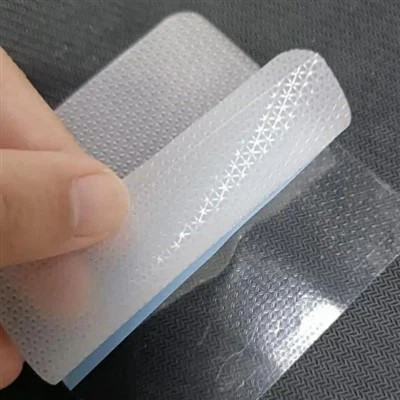
First, let’s get super clear on what an ECG electrode patch even is (for anyone who’s half-asleep right now). It’s not a fancy tech gadget, it’s a tiny, adhesive patch with a conductive gel layer that sticks to your skin. Its whole job is to pick up the tiny electrical signals your heart produces every time it beats. Those signals are minuscule—like, 1 millivolt or less tiny—so the patch has to turn that super weak signal into something a monitor or your phone can read. Now, calibration is basically the process of adjusting that patch to make sure it’s picking up that signal right, no static, no fuzz, no missed beats.
Wait, but do all patches need calibration? The short answer is: it depends. Let’s split this into two big categories because that’s where most people get confused. The first is clinical-grade ECG patches—you know, the ones used in hospitals, doctor’s offices, or for Holter monitors that track your heart for a day or two. The second is consumer-facing patches, like the ones in your Apple Watch, Fitbit, or at-home heart monitors.
For clinical-grade patches, here’s the thing: almost all of them go through a factory calibration before they ever leave our warehouse. But what does that even mean for you as a user? Let’s walk through how we make our clinical patches. Every batch of 10,000 or so patches gets tested in a controlled lab setting, where we simulate the electrical signals of a healthy heart, a slightly irregular heart, even a weak heart. We adjust the patch’s conductive gel and adhesive to make sure it’s picking up that signal without extra noise (like static from a wool sweater) or signal loss (like when a patch falls off mid-test). We also check that the patch can handle different skin types—oily skin, dry skin, sensitive skin, even skin that’s been prepped with alcohol wipes—because all that changes how the signal is picked up. So that’s factory calibration, and it’s non-negotiable for clinical use.
But hold on—does that mean you (the patient wearing the patch) ever have to calibrate it yourself? For 99% of standard clinical use cases, no. The doctor or nurse just has you prep your skin (wipe it with alcohol, shave a little hair if needed, that stuff) and slap the patch on. They might do a quick test at the start to make sure the signal is clear, but that’s just a check, not a re-calibration. Where you would need calibration is if the patch is part of a custom system for something super specific—like a patch designed for newborns with tiny chests, or a patch for patients with extremely dry skin that doesn’t hold conductive gel well. Those are rare cases, and we work directly with clinicians to customize calibration for those, but that’s not something you’d do at home.
Now, consumer-facing patches—this is where people start asking way more questions, and it’s where I’ve seen the most misconceptions. Take a Fitbit charge, or a smart ring that tracks ECG, or even those at-home ECG patches you can buy on Amazon. Do these need calibration? Let’s be real: most of these consumer devices do have some sort of internal calibration, but it’s not the same as what we do for clinical patches. The big difference here is that consumer ECG has to work for everyone, from a teen with perfectly clear skin to a dad who sweats through his workout to a grandma with wrinkled, dry skin. So the factory calibration is way more generalized, not tailored to every individual.
Wait, but here’s a secret a lot of consumer brands don’t tell you: some consumer patches do need a quick, one-time calibration when you first set up the device. For example, if you use a smartwatch’s ECG feature, the first time you enable it, it’ll walk you through putting your finger on the crown for 30 seconds— that’s calibration. It’s making sure the patch (which in this case, is the one on your wrist) is picking up your unique skin’s conductivity. That’s not a big process, but it’s necessary if you want the read to be accurate. If you skip that initial calibration, you might get a fuzzy signal or a false reading.
But let’s talk about the mistakes people make. I’ve had so many customers (both clinicians and regular people) ask us, “Can I calibrate my patch after I’ve worn it for 12 hours?” The answer here is almost always no. ECG patches use conductive gel, right? And over time, that gel dries out, gets smeared, or builds up dead skin and oil from your chest. That changes how the patch interacts with your skin, so any calibration done at the start of wear won’t work after a few hours. That’s why if you’re wearing a patch for a 24-hour monitor, if the signal starts looking weird, the first thing you check is if the patch is still stuck, and if not, you might have to replace it. No amount of mid-wear calibration can fix a patch that’s starting to lose its stick or dry out.
Now, let’s talk about why calibration matters so much, beyond just getting a pretty graph on a screen. If an ECG patch isn’t calibrated right, you can get false readings. Like, a false alarm that you’re having an irregular heartbeat when you’re totally fine, or missing a beat that’s actually there. For a clinician, that can mean ordering unnecessary tests, or missing a real problem. For a regular person with a smart watch, that can lead to unnecessary stress, or not seeking help when you actually do have a real rhythm issue. At our company, we test each patch’s calibration rigorously because we know that even a tiny signal error can have big consequences. For example, we use different conductive gel formulas for different patch types: our Holter monitor patches have a gel that stays consistent for 72 hours, so we calibrate for long-term wear, while our one-time clinic test patches have a gel optimized for 20-minute use, so calibration is tighter for that shorter window.
Wait, let’s address a common myth I hear all the time: “I should calibrate my ECG patch every time I put it on, just to be safe.” No, that’s not right. If you’re using a standard clinical patch that’s pre-calibrated at the factory, calibrating it yourself is unnecessary and can even mess up the signal. The patch is built to work with the monitor it’s paired with—you don’t need to adjust anything. For consumer patches, the initial one-time calibration is enough, because it’s tailored to your skin and the device’s capabilities. The only exception is if you switch up where you put the patch: like if you always wear your smart watch on your left wrist, but one day you wear it on your right, you might have to re-calibrate, because your right wrist’s skin conductivity is a little different.
Another thing I learned over the years is that calibration isn’t just about the patch—it’s about the pair. A patch isn’t just a standalone thing; it works with the monitor it’s connected to. That’s why when we supply patches to clinics, we don’t just send the patches—we send a note saying which monitor models they’re calibrated for. If a clinic uses a monitor from Brand A, our patches work with it, but if they switch to Brand B, we might need to do a quick calibration test to make sure the signal transfers right. That’s a big part of what our team does behind the scenes, stuff most customers never see.
Let’s get real about what happens when you skip factory calibration. A few years back, we had a customer who bought a cheap set of ECG patches from a no-name brand on the internet, used them for a 24-hour monitor, and ended up with a full report of “possible atrial fibrillation” that turned out to be just the patches not calibrated right. They switched to our patches, and the next monitor reading was perfect. That’s why investing in a properly calibrated patch isn’t just a box to check—it’s about accuracy. Cheap patches skip factory calibration to cut costs, so they’re way more likely to give bad readings.
Now, let’s talk about when you might need extra calibration. If you’re part of a study, or using a custom ECG system (like for athletes monitoring heart rate during training, or for people with rare skin conditions that make standard patches not work), we can do custom calibration. For example, we had a professional cycling team that wanted patches that would stay stuck and calibrated during multi-day races, when riders sweat nonstop. We worked with their coaches to adjust the adhesive and calibrate the patches for high sweat environments, so they could track their heart rate accurately without the patch falling off or giving fuzzy signals. That’s the kind of calibration we can do, but it’s only for specific use cases, not for regular everyday wear.
Wait, let’s wrap this up so it’s not confusing. Here’s a quick cheat sheet:
- Clinical ECG patches: Pre-calibrated at the factory, no user calibration needed. Just prep your skin, stick it on, do a quick initial signal check if your provider tells you to.
- Consumer ECG patches: One-time initial calibration when you first set up the device. Re-calibrate only if you switch the patch’s placement (wrist vs. ankle, for example) or if the device tells you to.
- Never calibrate a mid-wear patch: The gel and skin changes over time, so calibration done at the start won’t help, and it can mess up the signal.
Now, if you’re a clinician looking for reliable ECG electrode patches, or a brand needing custom calibrated patches for your products, our team is here to help. We don’t cut corners on calibration—every batch is tested to make sure it works for clinical, consumer, or custom use cases. We can walk you through which patches work for your needs, answer any questions you have about calibration, and make sure you get exactly what you need for accurate heart monitoring.

If you’re reading this and have questions about your current ECG patches, or want to source patches that are properly calibrated for your use, reach out to our team to chat through the details.
Medical Dressings References
- American Heart Association. (2022). ECG electrode placement and signal quality guidelines for clinical and consumer use.
- Journal of Medical Devices. (2021). Calibration standards for disposable ECG electrode patches in long-term monitoring applications.
- World Health Organization. (2020). Best practices for portable cardiac monitoring devices, including electrode calibration requirements.
- International Organization for Standardization (ISO). (2019). ISO 10993-10: Biological evaluation of medical devices – Part 10: Tests for irritation and delayed-type hypersensitivity, relevant to electrode-skin interface compatibility for ECG patches.
Shenzhen Omori Biological Technology Co., Ltd.
We’re well-known as one of the leading ECG electrode patches manufacturers and suppliers in China. We warmly welcome you to wholesale high quality ECG electrode patches made in China here from our factory. If you have any enquiry about customized service, please feel free to email us.
Address: Floor4, No43, Langkou Industrial park, Dalang Street, Longhua District, Shenzhen City, Guangdong Province, China
E-mail: wya@omorimed.com
WebSite: https://www.omorimed.com/
