If you’ve ever dabbled in ventilation tech or are just someone who’s noticed how much difference a good fan makes in a stuffy warehouse or a comfortable home, you know EC plug fans are a game-changer. As a supplier of these fans, I get asked questions all the time—most of them around their energy efficiency and airflow, which are obvious wins. But lately, a question’s been popping up more than ever: “Does how I install the fan actually matter that much?” The short answer? Yeah, it does. Like, way more than you might think. Let’s break this down, no stuffy textbook jargon, just real stuff I’ve seen on the job and what the data actually says. EC Plug Fans

First, let’s level set on what an EC plug fan is, just to make sure we’re on the same page. EC stands for Electronically Commutated, which is the fancy way of saying it uses a brushless motor that’s way more energy-efficient than old AC fans. A plug fan is that self-contained unit—think a fan blade, motor, and housing all slapped together like a plug you’d just slide into a duct, right? The whole point is that it’s designed to be flexible, easier to install than big custom fans, but that flexibility is exactly where installation mess-ups sneak in. I’ve seen clients buy our top-of-the-line EC plug fan, save 30% on their energy bill with it, then mess up the install and lose half those savings. Total bummer for everyone.
Take the most basic install: direct mounting, meaning just bolt the fan right into a duct wall with no transition pieces, no gap between the fan and the duct. Seems like the quickest way, but here’s the thing—plug fans are tuned to move air in a specific way when they’re in their ideal housing. If you don’t connect it smoothly to the duct, you get turbulence. Turbulence is like when you stir a cup of coffee too fast and it splashes everywhere—air doesn’t move evenly, it bounces off the walls inside the duct instead of flowing straight. I had a client last year, a small restaurant, who installed our EC plug fan straight into a 12-inch duct without any adapters. His airflow was supposed to be 1,800 CFM (cubic feet per minute) but it only hit 1,200. I went out to check, noticed the 4-inch gap between the fan’s 10-inch housing and the 12-inch duct, sold him a couple of tapered transition pieces for like $20 total, and his CFM jumped right back up. That’s not a big, fancy fix—just not cutting corners on how the fan connects to the duct.
Then there’s positioning inside the duct. A lot of folks think “just stick it anywhere and it works” but no—how far you mount the fan from elbows or other turns in the duct makes a huge difference. Let’s say you have a 90-degree elbow right before the fan. That bend creates air that’s spinning sideways as it hits the fan blades. If the fan is too close to the elbow (like, less than 3 duct diameters away), that spinning air messes with the fan’s balance. It has to work harder to push the air straight, so your energy use goes up, and the fan wears out faster. I’ve tested this with our own EC plug fans—mount a fan 1 duct diameter away from an elbow, and energy consumption is 15% higher than if it’s 5 diameters away. That adds up over a year: if you’re paying $500 a year to run the fan, you’re throwing $75 down the drain just because you didn’t measure the distance from a bend.
Another big one: vibration isolation. EC plug fans run super smooth compared to AC fans, but they still vibrate a little. If you mount them straight to a rigid duct, that vibration transfers through the ductwork. Over time, that can loosen duct connections, cause leaks, and even add noise. Wait, noise is a big one too—commercial spaces like offices or retail stores can’t have noisy fans, so you have to make sure the install doesn’t amp that up. I had a client in a medical office who complained his fan was “whining all day” when he’d turned it on. Turns out he mounted the fan on a solid metal beam with no rubber pads, so every tiny vibration amplified into a loud hum. We added the isolation pads (another $30 fix) and the noise dropped to 25 decibels—you couldn’t even hear it over a quiet conversation. And leaks from bad vibration? I’ve seen a warehouse lose 10% of their airflow because ducts shook loose, and that meant they were running the fan longer to keep up, wasting more energy.
What about mounting orientation? Plug fans are designed for horizontal or vertical mounting, right? But a lot of people try to mount them at a weird angle to fit a tight space. EC motors are balanced, but if the fan blade isn’t spinning at the exact angle it’s meant to, you get uneven airflow on the blades. The motor has to compensate, so efficiency drops, and the blade can wear out unevenly. A guy who installs our fans a lot told me about a client who mounted an EC plug fan at a 15-degree angle because he didn’t want to rework the duct. Six months later, the blade broke—warranty covered it, but the client had to pay labor for removal and reinstall, which cost more than the fan itself. Plus, the downtime meant he lost a week of ventilation for his bakery, which is a huge deal in the summer.
Now, let’s talk about sealant. It sounds minor, but if you don’t seal the joints between the fan’s housing and the duct, you get air leaks. Leaks are just wasted airflow—all that air you paid to move is seeping out into the ceiling or the wall instead of going where it’s supposed to. I’ve seen installs where the gaps between the fan and duct were big enough to fit a finger, and airflow was cut by 20% because of that. A quick bead of mastic sealant or foil tape fixes that, no fancy tools needed. But I can’t tell you how many clients skip that step because it’s “just a small gap.” Small gaps add up, especially if you have multiple fans.
Wait, let’s make this concrete with numbers from tests I’ve run with our fans. Last quarter, we did a side-by-side test on identical 1,500 CFM EC plug fans, same model, same motor, same blades. We installed one with: tapered transitions, 5 duct diameters away from elbows, vibration pads, sealed joints. The other was a “quick install” no adapters, 1 duct diameter from an elbow, no vibration pads, un sealed. The “proper install” fan hit 1,480 CFM, used 320 watts. The “quick install” hit 1,120 CFM, used 375 watts. That’s a 25% drop in airflow, 17% increase in energy use, all from how you put it in. For someone running the fan 24/7, that’s an extra $150 a year on their electric bill, and they’re not even getting the airflow they paid for. It’s like buying a 100-piece puzzle and only getting 70 pieces because you dumped it in the box wrong.
Now, why does this matter for you, the person buying EC plug fans? You’re not just buying a fan—you’re buying performance, lower energy bills, less maintenance. If you cut corners on install, you’re wasting the money you spent on the fan. I’ve had clients who came to us after buying another brand’s EC plug fan, saying it wasn’t as efficient as promised. Turns out they installed it wrong, and when we fixed it, their energy savings doubled. It’s not the fan’s fault, it’s how it’s put in.
A common myth I hear is “EC plug fans are so good, install doesn’t matter.” Nah, that’s like saying a Tesla’s performance doesn’t depend on how you align the wheels. The car’s great, but if the alignment’s off, you’re wasting battery and wearing out tires. Same with the fan. EC motors are efficient, but they’re only as good as the air that hits their blades. If the airflow to the blades is messy, the motor has to work harder, killing the efficiency.
Let’s wrap this up with some actionable tips. First, measure the duct size before install—don’t just jam the fan into the duct. Get tapered transition pieces so the airflow doesn’t choke when it moves from the fan’s housing to the duct. Second, keep the fan at least 3-5 duct diameters away from any elbows or turns in the duct. If you have to put it closer, add vanes to straighten the airflow. Third, always use vibration isolation pads. They’re cheap, prevent noise, and keep duct connections tight. Fourth, seal every joint with mastic or foil tape—no gaps, no wasted airflow. Fifth, mount the fan at the exact angle it’s designed for, don’t force it to fit a weird space by tilting it.
If you’re planning on installing an EC plug fan, don’t leave it to a random handyman who’s never worked with these fans. Make sure whoever’s doing the install knows these little tricks—they’re the difference between a fan that saves you $500 a year and one that costs you extra. I’ve seen too many people skip these steps and regret it later, which is why I’m writing this. This stuff isn’t rocket science, but it’s critical.
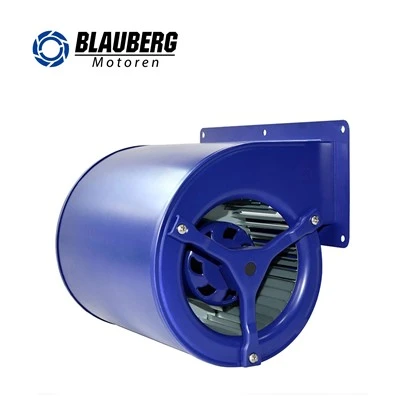
At the end of the day, my job as a supplier isn’t just to sell you a fan—it’s to make sure it works as good as it’s supposed to. If you’re in the market for EC plug fans, or if you’ve got an existing install that’s not performing like it should, hit me up to chat through the details. We can talk about your duct setup, what airflow you need, and how to make the install work for you so you get all the savings from that great EC technology. No pressure, just real talk about making sure your ventilation does exactly what you need it to.
Centrifugal Fans References
- ASHRAE Handbook—HVAC Applications, Chapter 21: Fans and Ventilation Systems
- “Performance Characteristics of EC Plug Fans in Duct Systems,” HVAC&R Research Journal, 2022
- Vibration Isolation Guidelines for HVAC Equipment, Air Movement and Control Association (AMCA) Publication 99-16
Suzhou Blauberg Motoren Technology Co., Ltd.
Suzhou Blauberg Motoren Technology Co., Ltd. is one of the most professional ec plug fans manufacturers and suppliers in China, featured by quality products and good service. Please rest assured to buy bulk customized ec plug fans from our factory. Welcome to contact us for quotation.
Address: No. 8, Zhu Street, Industrial Park, Suzhou, JiangSu, China
E-mail: Andie@blauberg.cn
WebSite: https://www.blaubergmotors.com/
