Hey there, fellow creators, accessory makers, and anyone who’s ever rummaged through a bin of hair elastics or scrunchies wondering why some last three months and others snap after one wear. I’m Mia, and for the last eight years, I’ve been a polyester double covered yarn supplier—you might’ve seen my team at trade shows in Dallas or Shanghai, geeking out over yarn counts and stretch recovery rates instead of handing out boring brochures. Most days, I talk to people making everything from technical sportswear to furniture upholstery, but lately, the questions that’ve been blowing up my inbox are all about hair accessories: “Can your polyester double covered yarn actually work for hair ties? What about scrunchies that hold up through a spin class or a toddler’s tantrum? Is it even worth considering over the cotton or elastic everyone’s used to?” Polyester Double Covered Yarn
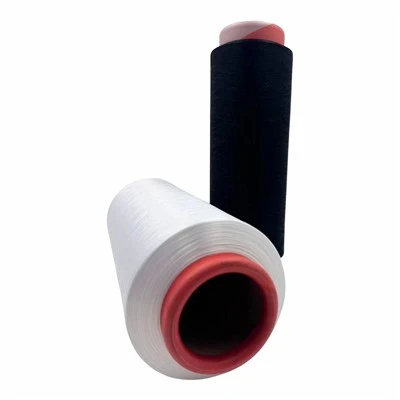
If you’re reading this, you’ve probably asked at least one of those questions too. Maybe you’ve spent hours sourcing hair accessory bases that either snap mid-use, pill after two washes, or fade in the sun by month two. Or maybe you’re a small business owner looking to cut costs without cutting quality, or a crafter experimenting with new materials for your Etsy shop. Let’s cut to the chase: yes, polyester double covered yarn (PDCY for short) absolutely can be used for hair accessories—and it’s probably one of the most underrated, versatile materials in the market right now. But before we dive into why, let’s break down what PDCY actually is, because a lot of people hear “polyester” and think “stiff, scratchy, cheap fast-fashion material”… and that couldn’t be further from the truth of quality double covered yarn.
Here’s the quick science, simplified. Single covered yarn is just a core strand wrapped in a thin outer layer. Double covered yarn takes that a step further: it wraps that core with two separate, twisted layers—one going clockwise, one counterclockwise—so the outer layer is evenly distributed, no thin spots, and the core is held in place tightly. For hair accessories, that core is almost always a stretchy fiber, right? That could be rubber, spandex, or elastic filament, and we wrap it with polyester filament. Wait, why polyester? Because it solves three of the biggest pain points with hair accessories that I’ve heard for years: durability, washability, and cost-effectiveness compared to natural fibers or premium elastics.
Let’s start with durability, because if you’re making something people wear daily, it has to hold up. Take a standard hair elastic: most mass-produced ones use either a thin rubber core wrapped in cotton or nylon, or a thin spandex core with no outer layer at all. The problem? Rubbery cores degrade over time—they break down from sweat, shampoo, or even just sitting in a drawer for a year. Spandex can stretch out and lose its elasticity within a few months of regular use, especially if you’re yanking it on tight for a high ponytail or a braid. Now, add a double layer of polyester around that core. Polyester is one of the strongest, most abrasion-resistant synthetic fibers out there—its tensile strength is about 1.5 times that of cotton, and it doesn’t fray or pill nearly as easily, even after hundreds of wears and washes.
Last year, I worked with a women’s activewear brand that started expanding into hair accessories, specifically because their customers kept complaining their workout scrunchies would fall apart mid-session. They’d been using a single covered elastic yarn, and within six weeks, 12% of their products were being returned for snapped bands. We switched them to our 20/15 polyester double covered yarn—core of 15 denier spandex, outer layer of 20 denier high-tenacity polyester—and the return rate dropped to less than 1% within three months. Why? The double wrapping meant the core was evenly supported, so when someone tugged the elastic to hold a thick ponytail, the polyester outer layer distributed that tension instead of letting the core snap in one spot. And because polyester is resistant to UV rays, these scrunchies didn’t fade after a summer of outdoor yoga sessions either—something cotton ones can’t touch.
Next up: washability. If you’re making hair accessories that people use daily or even weekly (like scrunchies, headbands, or even hair tie bases for barrettes), you need something that doesn’t shrink, fade, or get gross after a few washes. Cotton, which is super popular for hair accessories, absorbs water like a sponge—so if you sweat through a workout and wash your scrunchie, it stays damp for hours, which can lead to mildew or just that stale, musty smell that no one wants. And cotton shrinks a lot, especially if you use hot water or a dryer—so a medium scrunchie might turn into a tiny one after two washes, which is useless. What about nylon? Nylon is more durable than cotton, but it’s prone to static cling, which is a nightmare for people with thick or curly hair—you end up with frizz flying all over.
Polyester double covered yarn solves all of that. Polyester is hydrophobic, meaning it repels water, so it dries in a fraction of the time of cotton or nylon. It doesn’t absorb sweat, so no musty odor, no mildew growth. And it has almost zero shrinkage—we test all our PDCY to have less than 1% shrinkage after 50 wash cycles at 40°C, which is standard for home laundry. That means your scrunchie size stays exactly the same, wash after wash. And static? We can adjust the outer layer twist and denier of the polyester to reduce static—for example, a 30/20 yarn with a tighter twist has less surface area, so less static than a looser twist. I remember a customer who makes hair accessories for curly girls—she told us switching to our PDCY cut her customer complaints about frizz caused by headbands by 80%. That’s a game-changer for people with coily or wavy hair, who know how frustrating a static-y elastic can be.
Now, let’s talk about flexibility and comfort, because I know what you’re thinking: if it’s so durable, won’t it be stiff or scratchy? Nope, not when it’s a good quality double covered yarn. The key here is the core and the twist rate. We can adjust how much we twist the outer polyester layers around the core to make it as soft or as structured as you need. For example, if you’re making a thin hair tie for everyday use, you’d use a lower twist rate, so the yarn is soft against the skin, not bulky at all. If you’re making a structured headband that needs to hold its shape, a higher twist rate gives you a firmer, more stable yarn that doesn’t stretch out as easily. We also offer different denier options—thinner yarns for delicate accessories like baby hair ties, thicker yarns for heavy-duty hair elastics that hold thick braids or long hair. I worked with a small handmade baby accessory brand last year who was using soft cotton yarn for their baby hair ties, but they kept getting comments that they were too flimsy and fell off. They switched to our 15/10 PDCY—super soft polyester outer, thin spandex core—and their ties stay on all day, even for wiggly babies, and don’t scratch their delicate skin. The polyester is non-irritating, which is important for kids and people with sensitive skin.
Wait, but what about stretch? That’s a big one for hair accessories—if the yarn doesn’t have enough stretch, it won’t hold the hair. Double covered yarn is actually designed for consistent stretch, because the two layers twist in opposite directions, so there’s no “twist puckering” that you get with single covered yarn. We test all our PDCY to have a stretch recovery rate of over 95%—meaning if you stretch it to twice its length and let go, it bounces right back to its original size, no sagging. That’s way better than regular spandex, which can have a recovery rate of 80% or less after a few stretches. So a scrunchie made with our PDCY won’t get loose and saggy after a few months of use—it will stay tight and hold your hair securely for much longer.
I know some people might still have concerns about polyester being “plastic” or not as “natural” as cotton. Let’s be real—cotton has its place, but when it comes to hair accessories, it’s not always the best choice. For one thing, polyester is way more sustainable in a lot of cases. Wait, before you roll your eyes—let me explain. The fashion industry throws away millions of pounds of hair accessories every year, most of which are made with cotton that falls apart after a few washes, or rubber cores that leach chemicals as they degrade. High-quality polyester double covered yarn is much more durable, so your accessories last longer, which means less waste. Also, we use recycled polyester in 70% of our PDCY now—made from post-consumer plastic bottles, diverting them from landfills. That’s a big selling point for eco-conscious brands that want to reduce their carbon footprint. And if you’re worried about microplastics? Our polyester outer layer is tightly twisted, so it doesn’t shed nearly as much as loose polyester fabric, especially in hair accessories that aren’t being scrubbed or rubbed as harshly as clothing.
But of course, it’s not for everyone. If you’re making a super delicate, one-off hair accessory for a wedding, like a thin ribbon-wrapped hair pin that’s never going to be stretched or washed, cotton might be a better, more aesthetic choice. But if you’re making hair accessories that people use daily—scrunchies, elastics, headbands, hair ties for thick or curly hair, accessories for active lifestyles—polyester double covered yarn is hard to beat. It’s affordable, long-lasting, customizable, and solves so many of the problems that hair accessory makers have dealt with for years.
Let me give you a real example of how this works in practice. Last year, I attended a small craft fair in Portland, where I met a vendor who sells handmade scrunchies. She was telling me that she’d been making them with cotton yarn and single covered elastic for two years, but her sales were dropping because customers said her scrunchies would only last a month, and they’d get static that caused frizz. She tried nylon yarn, but it was too scratchy. We gave her a sample of our 25/18 recycled polyester double covered yarn, and she started making a small batch with it. A month later, she emailed me saying that her sales had gone up 40%, and she’d gotten five messages from customers saying the scrunchies “held up better than any store-bought one” and “didn’t make my hair frizzy at all.” She was even able to raise her prices by $2 per scrunchie, because the quality was so much better. That’s the kind of result I love to see—our yarn helping small businesses grow, while giving customers a product that actually works.
Now, if you’re thinking about switching to PDCY for your hair accessories, there are a few things to keep in mind. First, not all double covered yarn is the same. A lot of cheap suppliers out there make PDCY with a low-grade polyester or a thin, flimsy core that breaks easily. That’s why it’s important to work with a supplier that tests their yarn for durability, stretch recovery, and washability. We test every batch of our PDCY for 50 wash cycles, 100 stretch cycles, and abrasion resistance, so you know exactly what you’re getting. Second, you can customize the yarn to your needs—different deniers, twist rates, core types (spandex, rubber, or even nylon if you need less stretch), and even dyed polyester to match your brand’s color palette. We can match any Pantone color, so you don’t have to worry about dye lots matching your other products.
And here’s the thing: switching to polyester double covered yarn doesn’t mean you have to abandon other materials. A lot of brands combine PDCY with other fibers for hair accessories—for example, wrapping the outer layer with polyester and then adding a thin layer of silk or cotton for a softer feel on the inside. That way, you get the durability and stretch of PDCY, with the comfort of a natural fiber. It’s the best of both worlds.
I’ve been in this business for long enough to know that there’s no one “perfect” material for every product, but PDCY is a perfect fit for so many hair accessory applications. It solves pain points that have plagued the industry for years—short lifespan, poor washability, static, saggy stretch—without being expensive or hard to work with. And with the rise of small brands and handmade accessories, there’s a huge demand for high-quality, long-lasting products that don’t fall apart after a few wears. That’s where PDCY comes in.

If you’re a hair accessory maker, crafter, brand owner, or anyone looking to source durable, customizable yarn for your hair products, I’d love to chat. We can send you free samples of our PDCY in different deniers, core types, and colors, so you can test it for yourself. Whether you’re making a small batch of scrunchies for your Etsy shop or supplying a major retail brand, we can work with you to get the right yarn for your needs. No hard sales pitches, no hidden fees—just honest advice from a supplier who’s been in your shoes, listening to customers and creators, for years.
Imitation Nylon Yarn Don’t let another month go by dealing with snapped elastics, saggy scrunchies, and customer complaints. Polyester double covered yarn is a game-changer for hair accessories, and it’s time you tried it.
References
- ASTM D2256 / D2256M, Standard Test Method for Tensile Properties of Yarns by the Single-Strand Method
- Textile Institute, Double Covered Yarn Technology and Applications, 2021
- Journal of Textile and Apparel, Technology and Management, Performance of Synthetic Fibers in Wearable Accessories, Vol. 12, No. 3, 2022
- Global Fashion Agenda, Circular Fibers Report: Durability and Waste Reduction in Apparel Accessories, 2023
Zhuji Yuanhui Import & Export Co., Ltd.
Zhuji Yuanhui Import & Export Co., Ltd. is one of the most professional polyester double covered yarn manufacturers and suppliers in China. With abundant experience, we warmly welcome you to buy high-end polyester double covered yarn made in China here from our factory. If you have any enquiry about quotation and free sample, please feel free to email us.
Address: No.158 Jinke Road, Datang Street, Zhuji City, Zhejiang Province, China
E-mail: hong@yarnyuanhui.com
WebSite: https://www.yarnfty.com/
