If you’ve ever walked onto a construction site, a machine shop, or even a small auto repair garage, you’ve seen bolts and nuts—small, unassuming fasteners that hold almost everything together. As a bolt and nut supplier who’s spent the last 12 years guiding builders, mechanics, and DIYers through every step of their projects, I can tell you that the right fastener means nothing without the right tools to install, remove, and care for it. I’ve seen new handymen ruin a $500 bolt by using a cheap wrench, and I’ve watched veteran engineers delay a critical assembly because they grabbed the wrong socket. This post isn’t just a list of tools—it’s the practical, hard-earned advice I wish every first-time builder had before grabbing their first fastener. Bolt and Nut
Let’s start with the most fundamental tools, the ones that are non-negotiable for nearly every bolt and nut task. First up: wrenches, and not just any wrenches. Open-end wrenches are the workhorses here—they’re lightweight, easy to stow in a toolbox, and perfect for quick access to bolts in tight spots where sockets won’t fit. But don’t skip on box-end wrenches, the closed, loop-shaped cousins of open-end wrenches. Box ends grip six sides of a fastener (not just two, like open ends), which prevents slipping and stripping the bolt’s corners. For me, the sweet spot is a set of combination wrenches, with an open end on one side and a box end on the other. It’s the versatility I reach for daily, whether I’m helping a homeowner fix a backyard gate or a structural engineer adjust a steel beam at a job site.
Next are sockets, and this is where a lot of people go wrong. A standard socket set isn’t just a collection of metal pieces—it’s tailored to the drive size, and that’s a detail I stress to every customer who walks into our showroom. The three most common drive sizes are 1/4-inch for small, fast bolts (think bicycle parts or small engine assemblies), 3/8-inch for general-purpose tasks (car wheels, furniture assembly), and 1/2-inch for heavy-duty bolts (bridge construction, large industrial machinery). I always recommend a 6-point socket over a 12-point one for most jobs. Six-point sockets distribute force evenly across a bolt’s six sides, drastically reducing the risk of rounding or stripping corners, especially on high-torque tasks. I keep a full set of 6-point sockets in both standard and metric sizes in my truck, even on days I’m not meeting clients—you never know when you’ll need to fix a loose railing or adjust a trailer hitch on the side of the road.
Now, what about when a bolt is stuck? Rust, corrosion, or over-tightening can turn a routine task into a battle, and that’s where sockets with extensions and swivel joints come in. Extensions add length, letting you reach bolts deep inside a hole or in a recessed area—like the bolts holding the transmission on a lawnmower. Swivel joints, also called universal joints, let you angle the socket, which is critical for bolts that aren’t perfectly aligned with your wrench. But my favorite tool for stuck bolts? A breaker bar. Unlike a standard ratchet, which is designed for repeated, light turns, a breaker bar is a long, rigid handle that delivers sudden, powerful torque to break loose a stubborn bolt. I once had a customer call me panicking because he’d spent three hours trying to remove a rusted bolt holding his truck’s axle, only to hand me a 18-inch breaker bar that freed it in 10 seconds.
Moving beyond basic hand tools, power tools have revolutionized how we work with bolts and nuts, and they’re a must-have for any project bigger than assembling a bookshelf. Cordless impact wrenches are the game-changer here—they deliver high rotational force without the kickback or bulk of an air-powered wrench, and modern lithium-ion batteries mean you can use them all day without recharging. I recommend checking the torque rating for your impact wrench: a 150 ft-lb model works for most home and automotive tasks, while a 1,000 ft-lb+ model is reserved for heavy industrial or construction work. Cordless drills with hex chuck adapters are also useful, especially for pre-drilling holes before installing large bolts—this prevents wood or metal from splitting, which ruins fasteners faster than almost any mistake.
For precision work, though, you can’t beat torque wrenches. This is a tool that separates amateurs from professionals, and I can’t emphasize that enough. Over-tightening a bolt can snap it or warp the material it’s holding together (like a car’s wheel hub), while under-tightening can lead to catastrophic failure (I’ve seen a garage door fall off its tracks because a technician forgot to torque the bolts to specification). Torque wrenches let you set a specific amount of force, so you know a bolt is tight enough without going too far. There are click-style torque wrenches for general use, which make a distinct “click” when you reach your set torque value, and digital torque wrenches for high-precision tasks, which display torque on a screen and often have a calibration setting—critical for aerospace, medical, or automotive engine work. We regularly recommend torque wrench calibration services to our commercial customers, because a wrenches that’s off by even 5 ft-lbs can lead to major issues down the line.
Now, the tools that people often overlook but save more projects than any wrench or socket: bolt-specific accessories. First, bolt extractors. Even with the best tools, mistakes happen—you can strip a bolt’s corner, or a bolt can snap off flush with a surface. Bolt extractors are tapered, fluted tools that grip the inside of a snapped or stripped bolt, letting you drill it out and remove it without damaging the surrounding material. I keep a set of extractors in three sizes in my toolbox, and I’ve used them on everything from small plumbing bolts to large industrial fasteners.
Thread chasers are another unsung hero. Over time, bolts and nuts get dirt, rust, and debris in their threads, or threads can get damaged when a bolt is cross-threaded. A thread chaser is a tool that looks like a nut with internal cutting threads—you twist it onto a damaged bolt or into a nut, and it cleans and reshapes the threads, making the fastener usable again. This is far cheaper than replacing an entire bolt or expensive part, and it’s a skill that takes only a few minutes to learn. We give a small thread chaser with every bulk order of bolts and nuts for our commercial customers, because it’s the little extra that keeps projects moving.
Rust penetrants, like WD-40 or PB Blaster, aren’t tools, but they’re as essential as any wrench. A quick spray of penetrant on a rusted bolt, left for 10 to 15 minutes, can break down corrosion and make freeing a bolt far easier than prying or hammering on it. I always tell customers not to wait until a bolt is stuck to use penetrant—spraying it on new bolts or nuts during assembly prevents corrosion from taking hold in the first place.
Safety tools, too, can’t be ignored. Working with bolts and nuts might seem low-risk, but broken bolts can fly, power tools can slip, and over-tightened bolts can snap and injure you. Safety goggles are non-negotiable, even for small tasks— I’ve had a customer come back to our store with a cut on their cheek from a shard of a snapped bolt, and they told me they hadn’t worn goggles because it was “just a quick fix.” Gloves are also important, not just for grip, but to protect your hands from sharp bolt edges or hot metal when working on car engines. For heavy-duty construction work, impact-resistant gloves can prevent blisters and cuts during long days of turning wrenches or using impact guns.
Over the 12 years I’ve been in this business, I’ve seen so many customers buy a fancy set of wrenches and skimp on the small, practical tools that make a real difference. A $5 thread chaser is worth more than a $100 socket set if you can’t get a stripped bolt out. A breaker bar is better than a bulky impact wrench for a tight spot in a closet. The key is matching the tool to the job, not the other way around. Whether you’re a DIY homeowner fixing a leaky pipe, a mechanic rebuilding an engine, or a structural engineer overseeing a commercial building, the right tools don’t just make work easier—they make it safe and reliable.
If you’re working on a project and aren’t sure which bolts or tools you need, or if you need advice on matching fasteners to your specific task, we’re here to help. Our team has years of experience working with everything from small fasteners for furniture to heavy-duty bolts for construction and industrial applications, and we can guide you to the right products and tools for your needs. Feel free to reach out to us to discuss your project in detail.
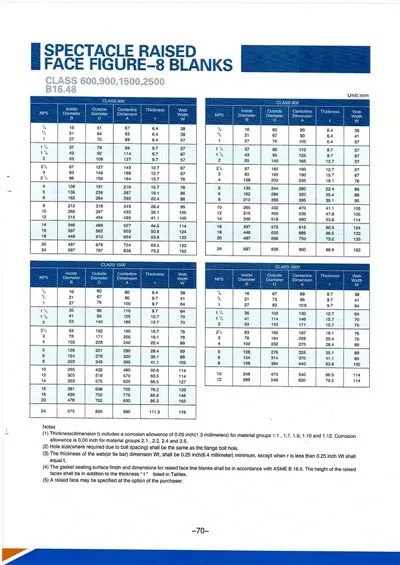
Ansi B16.48 Flange References:
- National Association of Home Builders. (2021). "Fastener Installation Best Practices for Residential Construction." Construction Safety Manual.
- Society of Automotive Engineers. (2019). "Torque Specification and Fastener Reliability in Automotive Assembly." SAE International Journal of Materials and Manufacturing.
- American National Standards Institute. (2020). "Tool Standards for Hand and Power Tools Used in Fastener Installation." ANSI B107 Series.
- Machinery’s Handbook. (31st ed.). Industrial Press Inc.
Shanxi Xinshunda Flange Manufacturing Co., Ltd.
As one of the most professional bolt and nut manufacturers and suppliers in China, we also support customized service with competitive price. We warmly welcome you to wholesale high quality bolt and nut for sale here from our factory. For quotation, contact us now.
Address: Zhunagli Industrial Zone,jinchang Town,dingxiang,shanxi,china
E-mail: sales01@xinflange.com
WebSite: https://www.xinflange.com/
