If you’re in the industrial heating space, you’ve probably heard that well furnaces are workhorses for everything from metal heat treatment to advanced material processing. As a supplier who’s spent over a decade equipping labs and production facilities with these systems, I get asked all the time: “What are the different models, and which one is right for my operation?” The answer isn’t one-size-fits-all—different well furnace models are built for specific applications, temperature ranges, and throughput needs. Let’s break them down, with real-world insight I’ve gained from working with engineers, lab managers, and production supervisors every day. Well Furnace
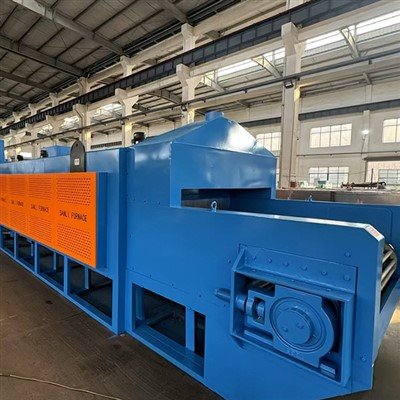
First, let’s start with a quick primer to set the stage. A well furnace gets its name from the deep, cylindrical “well” at its core—this vertical chamber holds your workload, whether it’s a batch of small metal parts, ceramic samples, or even specialized materials like lithium-ion battery precursors. Unlike box furnaces, which heat from all sides and can have uneven temperatures at depth, well furnaces use conduction and radiant heat from the inner walls of the well to maintain consistent temperatures across the entire load. That uniformity is why they’re non-negotiable for processes like annealing, brazing, sintering, and hardening—small temperature fluctuations can ruin parts or materials, leading to wasted time and money.
Now, let’s dive into the most common models we supply, organized by their use cases and technical specs. I’ll walk through each with the pros, cons, and typical applications we see in our customer base.
1. Bench-Top Lab Well Furnaces
If you’re a university research lab, a small R&D team, or a low-volume production facility, bench-top well furnaces are the workhorse of the lab. These are compact, table-sized units, usually with well depths ranging from 12 to 24 inches, and maximum temperatures between 1100°C (2012°F) and 1700°C (3092°F)—perfect for testing new materials or small-batch prototype parts.
What makes these stand out? They’re designed for flexibility and ease of use, not high-volume throughput. We often sell them to teams that need to run small, controlled tests without taking up floor space. For example, a materials science lab might use one to test the sintering behavior of a new ceramic composite, or a medical device startup might run small batches of stainless steel parts for prototype implants.
The tradeoff? They’re not built for heavy, high-volume loads. Their wells are smaller, so you can’t process hundreds of parts at once. Also, their temperature stability is excellent for lab work, but not suited for 24/7 production runs. That said, if you’re just starting out or need a unit for R&D, this is usually the first place we steer customers. I remember a customer last year, a startup working on next-gen battery electrodes, who bought two of these to run side-by-side tests on different coating formulations—they fit perfectly in their 10×10 lab space, and the temperature accuracy let them get consistent results without overinvesting in large equipment.
2. Floor-Standing Production Well Furnaces
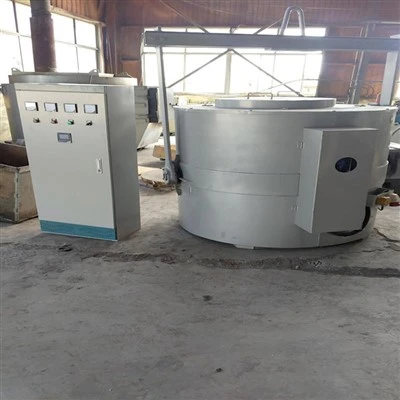
For mid-to-large volume manufacturing, floor-standing well furnaces are where most our repeat customers land. These are larger, free-standing units, with well depths from 3 feet to 10 feet, and temperature ranges that go up to 1800°C (3272°F) for most standard models, with custom versions hitting 2000°C (3632°F) for specialized processes.
What’s different here is throughput and durability. Unlike bench-top units, these are built for 24/7 operation, with reinforced insulation, heavy-duty heating elements, and integrated control systems that can store hundreds of process recipes. That’s critical for manufacturing: if you’re running hundreds of metal fasteners, automotive components, or aerospace parts, you don’t want to adjust the temperature every shift. These systems can hold ±5°C (9°F) uniformity across the entire well, even with a full load of parts moving in or out.
We often see these used for processes like aluminum annealing, which requires slow, consistent heating to remove internal stress from castings, or brazing small precision parts for electronics. A automotive parts manufacturer in Detroit has been using one of our 6-foot floor-standing well furnaces for three years now to heat-treat valve stems for truck engines—they process 2,000 parts a day, and the furnace has never missed a production deadline. The key here is that these units balance size, temperature control, and uptime, making them ideal for mid-scale production facilities.
One thing to note: floor-standing models can be customized. We’ve added automated load/unload systems to some of these units for customers who don’t want to handle parts manually, and adjusted the well diameter from 12 inches to 2 feet to fit specific part sizes. That flexibility is why they’re so popular for manufacturers with slightly unique needs.
3. Vacuum Well Furnaces
If you’re working with reactive materials—like titanium alloys, specialty ceramics, or thin films—standard atmospheric well furnaces won’t cut it. That’s where vacuum well furnaces come in. These sealed systems pull a high vacuum (usually 10^-5 to 10^-7 torr) inside the well chamber, eliminating oxygen and other contaminants that can react with your material at high temperatures.
Temperature ranges here are a bit lower than standard models, topping out at around 1700°C (3092°F), but that’s more than enough for processes like vacuum sintering of carbide tools, brazing of heat exchangers, or degassing materials to remove impurities. The biggest benefit is purity: a customer in the aerospace industry was struggling with titanium parts that were developing surface oxidation during heat treatment, which made them unfit for aircraft use. When they switched to a vacuum well furnace, the defect rate dropped from 8% to less than 0.5%—a massive cost savings for their production line.
Vacuum well furnaces do have higher operating costs, though. They require regular maintenance of vacuum pumps, and the initial purchase price is 20-30% higher than a standard floor-standing model. But for applications where contamination is a dealbreaker, they’re absolutely necessary. We’ve also started offering inert gas versions of these, which fill the chamber with argon or nitrogen instead of pulling a vacuum—great for materials that can’t handle high vacuum but still need a non-reactive atmosphere.
4. Controlled Atmosphere Well Furnaces
Not all processes need a full vacuum—some just need an environment that’s free of oxygen, but can handle small amounts of other gases. That’s where controlled atmosphere well furnaces fill the gap. These systems let you regulate the mix of gases inside the well: common options include nitrogen, hydrogen, forming gas (95% nitrogen, 5% hydrogen), or even carbon-rich atmospheres for carburizing steel parts.
Carburizing is a perfect example: you want to add carbon to the surface of low-carbon steel to make it hard, while keeping the core tough. A controlled atmosphere well furnace can pump in natural gas or propane during heating, creating a carbon-rich environment that diffuses into the steel’s surface. We sell a lot of these to tool and die shops that make drill bits, punches, and other wear-resistant parts.
Another use case is annealing copper: copper oxidizes easily in air, so a controlled nitrogen atmosphere prevents that, resulting in smooth, tarnish-free parts. The key advantage here is that they’re more affordable than vacuum furnaces, and easier to maintain for regular production runs. They also have faster cycle times than vacuum systems, since you don’t have to wait for the chamber to pull a full vacuum—ideal for high-volume jobs.
5. Large-Capacity Well Furnaces (Custom Order)
For industries like forging, heat treating large structural steel components, or processing bulk ceramic materials, even 10-foot floor-standing well furnaces can be too small. That’s where custom large-capacity well furnaces come in. We’ve built units with well depths up to 20 feet and diameters up to 4 feet, designed to hold entire batches of large parts like turbine blades, ship propeller shafts, or even pre-cast concrete molds for high-temperature testing.
These are rarely off-the-shelf; each one is engineered to a customer’s exact specifications. One customer, a power plant manufacturer, needed to heat-treat 15-foot steam turbine casings. We worked with their engineering team to design a well large enough to fit the casing, with heating elements spaced evenly around the diameter to ensure uniform heat across such a large, irregular part. The tradeoff here is lead time—these can take 12-16 weeks to build, vs. 4-6 weeks for off-the-shelf floor-standing models—but for unique, large-scale applications, there’s no alternative.
We’ve also had requests for custom temperature ranges, including ultra-high-temperature models that go up to 2200°C (3992°F) for processing advanced ceramic matrix composites used in hypersonic vehicles. That’s the beauty of working with a supplier that offers custom units—we can adapt to your needs, not the other way around.
Now, a few things I always tell customers when they’re choosing a model, because it’s easy to get caught up in specs and miss the big picture. First, match the model to your workload, not just your budget. A bench-top furnace for 100 part batches a week will break down in months, while a floor-standing unit will last 20+ years if maintained properly. Second, think about process recipes: if you’re running multiple different heat treatments, look for a furnace with a user-friendly control system that lets you save and switch between recipes. Third, factor in maintenance: vacuum and controlled atmosphere furnaces need more regular upkeep than standard atmospheric models, so make sure you have the in-house resources (or a service partner) to handle that.
At the end of the day, well furnaces aren’t one-size-fits-all. The model that works for a university lab isn’t the same one that works for a 24/7 automotive plant, or a aerospace shop handling sensitive materials. After over a decade in this business, I’ve learned that the best choice comes down to three questions: what are you processing, what temperature and atmosphere do you need, and how much volume do you run?
Quenching Furnace If you’re still unsure which model is right for your operation, we’re here to help. We’ve worked with everything from small startups to Fortune 500 manufacturers, and we can walk you through the pros and cons of each option, even help you design a custom unit if your needs are unique. Whether you’re looking for a bench-top lab furnace, a production-grade floor-standing model, or a specialized vacuum or controlled atmosphere system, we can provide the equipment and support to meet your heating needs. Reach out to our team to discuss your project, and we’ll make sure you get the right well furnace for your application.
References
- Technical Guide to Industrial Furnaces, Association for Iron and Steel Technology, 2022.
- Heat Treatment of Materials, ASM International, 2019.
- Vacuum Furnace Technology and Applications, Pergamon Press, 2020.
- Industrial Heating Equipment Specifications, National Heating and Air Conditioning Association, 2021.
Danyang Dingfeng Industrial Furnace Co., Ltd.
Danyang Dingfeng Industrial Furnace Co., Ltd. is one of the most experienced well furnace manufacturers and suppliers in China, also supports customized service with low price. Please feel free to wholesale high quality well furnace made in China here from our factory. For pricelist, contact us now.
Address: Lizhuang Economic Development Zone, Danyang City
E-mail: saleszk@dffurnace.com
WebSite: https://www.dffurnace.com/
