Hey there! Let’s cut to the chase—if you’re staring at your analog radio thinking, “Why the hell am I picking up a weird station that sounds like it’s broadcasting from a 1970s warehouse party next door… or something totally unrecognizable?” you’re not alone. As a guy who’s been in the analog radio supply game for over a decade, I’ve fielded this question from everyone from weekend campers to old-timers dusting off their grandma’s portable set. It’s not a glitch, it’s not a ghost—9 times out of 10, it’s just how analog radio works. Let’s break this down like I’m explaining it to my cousin who still uses a flip phone. Analog Radio
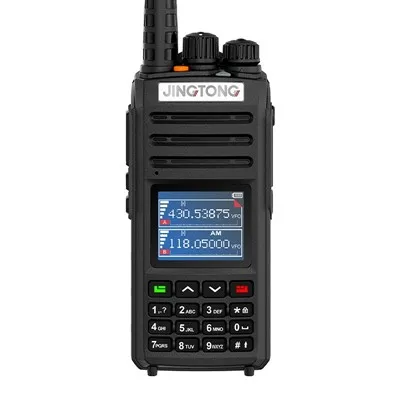
First off, let’s refresh what analog radio actually is, quick. Unlike digital radios that lock into a specific frequency like a mailbox with your name on it, analog is way more of a open mic. It picks up any electromagnetic signal hanging around the airwaves—no bouncer, no filter. That weird station? It’s not “radio” in the formal sense. It could be a CB radio operator, a two-way walkie-talkie your neighbor’s kid uses for Minecraft marathons, even a old amateur ham radio enthusiast testing gear late at night. We’ve all been there: you turn your radio to a frequency you know should be playing classic rock, and instead you hear some guy yelling about a “4×4 stuck in the mud” or a group of teens planning a meetup. That’s just shared bandwidth. The lower the frequency band (AM, especially), the more crowded it is. AM radio signals bounce off the ionosphere at night, right? So in daytime, your local AM station is nice and clear, but after dark, those signals skip 100+ miles and grab a bunch of random stuff along the way. I’ve seen it: a guy in Chicago picks up a station from Des Moines at 2 a.m., and in between, you get the stray CB signal from a truck driver passing through Indiana. It’s the radio equivalent of a party crasher.
Next up, antenna issues—this is the big one, and it’s 90% of the time the culprit. Let’s be real: most people just use the cheap, little wire antenna that came with their radio. That’s like trying to stream Netflix with a old router that’s hiding behind the couch. If your antenna is too short, has kinks, or is positioned near a bunch of metal junk (think your laptop, a microwave, a stack of old aluminum cans in the garage), it’s going to pick up interference like crazy. We recently had a customer who swore his radio was “broken” because he was picking up a Spanish TV station (yes, TV transmitters leak into analog radio frequencies) on his portable AM set. Turned out he had his radio sitting next to a 55-inch smart TV. Once he moved it 10 feet away, that weird station vanished. Another common hack: if you’re in a rural area, a longer external antenna (the kind we supply as an add-on for off-grid use) will make way less noise and way more actual stations. No more crickets or random signals when you’re camping.
Then there’s frequency drift. Analog radios aren’t perfect—they’re mechanical, after all. The tuning dial might be a little off, especially if your radio’s a few years old or has been jostled around (I’m looking at you, guys who drop their radios in hiking backpacks). That tiny shift means you’re not actually on the exact frequency your favorite station uses. So instead, you land on a adjacent channel where another station or interference is hanging out. It’s like trying to park in spot 17, but you’re in 17.5, and the car next to you is blaring music. How do you fix this? Twist the tuning dial ever so slightly. If that doesn’t work, clean the dial’s contacts (a little rubbing alcohol on a q-tip works) — grime buildup can make the tuning feel loose and drift more. We get tons of folks buying replacement tuning knobs from us because their old one wears out, and boom, their weird stations disappear almost immediately.
Wait, what about electrical interference from nearby devices? Microwaves, Wi-Fi routers, power lines, even those LED string lights you put up for Christmas—all of these emit electromagnetic signals that analog radio sucks up like a sponge. A friend of mine who runs a workshop told me his radio would pick up a weird buzzing station (turns out it was a old factory’s emergency buzzer!) every time the warehouse lights turned on. Power lines are a huge one, especially in older neighborhoods. The hum you hear sometimes? That’s not a station—that’s the power grid’s 60Hz signal leaking into your radio. If you’re stuck near power lines, shielding your radio with metal (a baking sheet works in a pinch) or using a shielded antenna will cut that interference down. We sell shielded coaxial antennas for exactly this reason—they’re worth every penny if you live in a home built before 1980.
Now, let’s talk about the weirdest one: atmospheric conditions. Analog radio is heavily affected by the weather. Thunderstorms (even ones 50 miles away) create static, but they can also reflect radio signals so strongly that you pick up stations that are hundreds of miles away. I once picked up a college radio station from Boston on my radio in New Jersey during a rainstorm—total weirdo, but it’s physics. Also, solar flares! The sun spews out charged particles that mess with the ionosphere, which can make radio signals bounce all over the place. During solar maximum years (every 11 years, roughly), we get way more customer complaints about weird stations—folks are picking up international stations they’ve never heard of, or random signals from far away. It’s not your radio, it’s the sun being extra dramatic.
But here’s the thing: some of those “weird” stations are actually legal, but just not the ones you’re used to. Amateur radio (ham) operators, for example, broadcast on frequencies that overlap with commercial radio bands. They’re usually talking about emergency prep, hobby stuff, or even just chatting with other hams across the country. CB radio has specific channels too, and sometimes they leak into AM frequencies. We love this stuff, honestly—part of why we sell analog radios is the charm of that open airwaves vibe. It’s not a bug, it’s a feature for the people who dig that stuff.
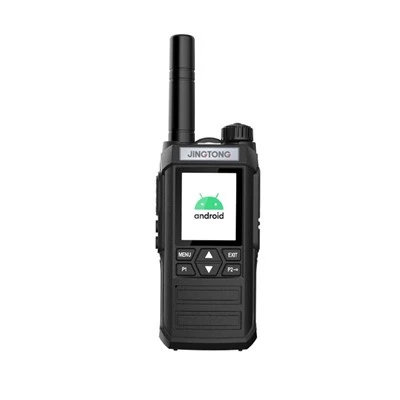
If you’re tired of the weird stations, though, there are easy fixes you can do. First, move your radio away from any devices with motors, screens, or power cords. Second, check your antenna—if it’s a internal one, extend it all the way; if it’s external, try pointing it towards a clear area (no big trees or buildings blocking it). Third, retune your dial super carefully—small adjustments make a big difference. And if that still doesn’t work? We’ve got replacement parts, add-on antennas, and even portable analog radios built for low-interference use. For off-grid folks, campers, anyone who doesn’t want to deal with digital radio’s crappy compression, our radios are built to minimize stray signals but still work with what’s out there.
3 Watt Walkie Talkie At the end of the day, analog radio’s quirkiness is part of its charm. Yeah, sometimes you get a weird station, but that’s way cooler than digital radio always being the same, smooth signal. It’s like driving a vintage car—you get a little engine noise, but that’s the fun of it. If you’ve tried all the hacks and still can’t shake the weird stations, or you’re looking for a new analog radio that’s built to handle different environments, hit us up to talk procurement. We can help you pick the right model, add the right antenna, or even troubleshoot your current setup. No sales pitches, just real talk from people who’ve been in the game longer than most tech trends.
References
- National Association of Broadcasters. (2022). Analog Radio Signal Propagation & Interference Guide.
- Federal Communications Commission. (2021). Amateur Radio Frequency Allocations and Overlap Zones.
- Institute of Electrical and Electronics Engineers. (2020). Electromagnetic Interference Sources in Consumer Electronics.
- World Radio and Television Handbook. (2023). Analog Radio Tuning and Antenna Best Practices.
- NASA. (2021). Solar Activity Effects on Radio Frequency Propagation.
Jingtong (Quanzhou) Electronics Co., Ltd.
We are one of the most professional analog radio manufacturers and suppliers in China, specialized in providing high quality customized service. We warmly welcome you to buy durable analog radio made in China here from our factory. For price consultation, contact us.
Address: No.288, Si Huang Industry Zone, Xia Mei Town, Nan An, Quanzhou, Fujian province, China 362302
E-mail: jtdjj@jtdjj.com
WebSite: https://www.jteradio.com/
