Hey folks, it’s Jake from your go-to alloy cast iron parts supplier, and let’s cut to the chase—no corporate jargon, no stuffy tech manual vibes. If you’ve ever ordered parts from a random foundry and ended up with something that cracks mid-job, or wears out way faster than it should, you know quality testing isn’t just a box we tick. It’s the whole reason I stay up way too late double-checking things. Today I’m pulling back the curtain on exactly how we test every alloy cast iron part that leaves our shop—no fancy acronyms thrown around just to sound smart, and yes, I’ll even explain what each step actually means for you. Alloy Cast Iron Parts
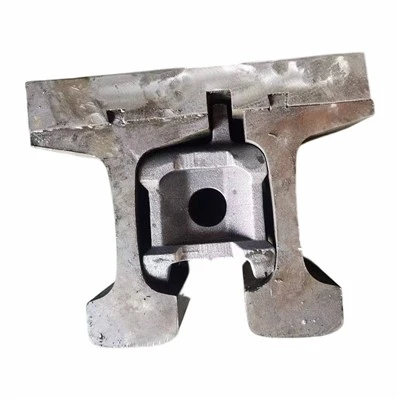
First, let’s get on the same page: alloy cast iron isn’t your basic stove-top cast iron. We’re talking parts with extra elements—like chromium, nickel, molybdenum—mixed in to make ‘em tougher, more corrosion-resistant, able to handle crazy heat or pressure. But those alloys only work if the mix is right. Skip the testing, and you could end up with a part that’s fine on paper but falls apart when you bolt it on your machine. That’s why every single part here goes through way more checks than just “does it look good on a shelf.”
Let’s start with the very first step, before we even pour the metal. Wait, yeah—testing doesn’t begin when the part is done, it starts with the raw materials. I swear, this is where 90% of bad parts come from. If your iron scrap has random steel mixed in, or your alloy pellets have too much silicon, that throw’s off the whole mix. We send every batch of pig iron, scrap, and alloying elements to a third-party lab within an hour of it hitting our yard. They run a quick spark test first, actually—you know, the thing where you grind a metal sample and look at the sparks? Bright, long sparks mean too much carbon, short, red sparks mean low carbon. But we back that up with a spectrometer test, which is way more accurate. It zaps a tiny sample and tells us exactly how much of every element is in there—down to a fraction of a percent. If it doesn’t match our spec? We send it right back to the supplier, no exceptions. I once had a batch of chromium pellets show up with 10% less than we ordered, and we sent ‘em back same day. Saved us from a whole month of bad parts.
Next, when we actually pour the metal into molds, we take a “witness sample” every single time. That’s a little block of cast iron we pour at the exact same temp as the parts being made, same mix, same mold material. Why? Because we need to test how the metal actually performs, not just what the spec sheet says. If the pour temp is off by even 50 degrees, the whole part will be porous, like a sponge—weak enough to crack when you put torque on it. We test the witness samples a few different ways, starting with dimensional checks. Wait, but not just “is it the right size”—we use a coordinate measuring machine (CMM) for critical parts, like gears or pump housings. It scans every single edge, hole, and curve to within a thousandth of an inch. Yeah, a thousandth of an inch. That’s thinner than a human hair. If a hole is even a tiny bit off, it won’t line up with your bolts, and you’re stuck wasting time sanding it down. We’ve had a CMM catch a mis-machined hole on a set of hydraulic cylinder parts last quarter—caught it before we shipped, saved our customer a whole day of downtime. No one likes being the reason a production line stops, trust me.
Then there’s the hard stuff: mechanical testing, to make sure the part doesn’t break when you need it. First up is the tensile test. We pull a tiny piece of the witness sample (or a cut-off part, if it’s scrapped) in a machine that cranks on it with more and more force until it snaps. It measures two things: how much force it takes to break, and how far it stretches before snapping. Alloy cast iron’s supposed to be strong, not bendy, right? If our test shows it stretches too much before breaking, that means we got too much nickel in the mix, and the part won’t hold up under heavy load. If it breaks too easily, we add a touch more manganese to harden it up. We also do the impact test, which is super practical for parts that get hit, like engine blocks or gear housings. We take a notched sample and whack it with a heavy pendulum—how much energy it takes to snap the sample tells us how tough the part is. If it snaps into two pieces with almost no force? That’s brittle, perfect for nothing. We had a batch of cast iron brake calipers fail this test once, traced it to a mold that was too cold when we poured—we adjusted the furnace temp and never had that problem again.
Corrosion and heat resistance matter too, depending on what you’re using the part for. If you’re making parts for a food processing plant, or a marine engine, they’re gonna get exposed to moisture, salt, or chemicals. We run salt spray tests for those parts—we blast ‘em with a salty mist for hundreds of hours (sometimes days, depending on the spec) and check for rust or pitting. If a part for a water pump starts corroding after a week, that’s a warranty claim we don’t need. For parts that handle high heat, like exhaust manifolds or furnace parts, we do a thermal shock test. We heat the sample up to 1500 degrees F, then quench it in ice water—super fast temperature change, like slamming a hot pan into cold water. If it cracks, we know the alloy mix is off, or the cooling process after casting was wrong. That’s a way better test than just letting it sit in a hot oven for a month, right? We catch issues in a day, not a month.
Wait, can’t forget about hidden defects! Even if all the chemistry and mechanical tests pass, a part might have tiny cracks or bubbles inside that you can’t see. Those are the worst because they pop up mid-use, like a time bomb. So we do non-destructive testing (NDT) for every critical part. The main ones we use: ultrasonic testing, where we send sound waves through the part—if there’s a bubble or crack, the sound bounces back differently, and the machine picks it up. Then there’s magnetic particle testing for parts that are magnetic, like most alloy cast irons. We magnetize the part, spray tiny iron particles on it, and if there’s a crack, the particles line up along it, super easy to spot. We also do pressure testing for parts that hold fluid or gas—like pipes, valves, or hydraulic parts. We fill ‘em with water (or air, for low-pressure parts) and crank up the pressure way higher than they’ll ever see in use, hold it for 10 minutes, and check for leaks. I once had a valve part pass every other test, but pressure testing caught a tiny internal bubble that would’ve made it leak under 100 psi. Saved our customer from a leak that could’ve flooded their workshop.
Let’s be real though—testing doesn’t mean jack if we don’t track every step. We log every single batch, every test result, every adjustment we made, in our system. If a customer calls up saying they had an issue with a part, we can pull up exactly what raw materials went into it, the pour temp, the test results from that batch, all in 2 minutes. No more “we don’t know what happened” excuses. That transparency matters more than any fancy test, if you ask me.
Now, I know some of you might be thinking: “This all sounds great, but is there a way to just… skip some steps to save money?” Let me tell you, I’ve had clients ask that before. They say “the parts are cheaper from your competitor, why pay more?” Here’s the thing: if a supplier skips a few tests, that cost gets passed to you when the part breaks. You’re down a machine, paying labor to replace it, maybe losing a whole batch of product because your line stopped. We recently had a client switch to a cheaper supplier for a set of pump impellers—they saved $200 total, but the impellers cracked after 2 weeks, costing them $12,000 in downtime and repairs. That’s a no-brainer for us.
At the end of the day, my job isn’t just to send you a cast iron part. It’s to send you a part that works when you need it, doesn’t fail unexpectedly, and saves you money in the long run. All that testing? It’s not extra work for us—it’s peace of mind for you.

If you’re looking for alloy cast iron parts that actually hold up, whether it’s gears, housings, valves, or something custom, hit us up to chat about your needs. We don’t do one-size-fits-all, and we’re happy to walk through any of these tests with you, no tech degree required. Let’s build something that works for your operations, not against ‘em.
Alloy Cast Iron Parts References
ASM International. (2019). Cast Iron Quality Testing and Evaluation. ASM Handbook, Volume 15: Forming and Forging, 1027–1042.
Davis, J. R. (Ed.). (2000). Alloy Cast Irons: Properties and Design. ASM International.
American Foundry Society. (2021). Quality Control in Casting Operations. AFS Casting Fundamentals Series, 4th Edition.
Sangroove (Jiangsu) Machinery Co., Ltd.
Sangroove (Jiangsu) Machinery Co., Ltd. is one of the most professional alloy cast iron parts manufacturers and suppliers in China, also supports customized service with low price. Please feel free to wholesale cheap alloy cast iron parts in stock here from our factory. Also, pricelist is available.
Address: No.789, Hengyang South Road, Jinhu County, Huai’an City, Jiangsu Province
E-mail: quote@sangroove.com
WebSite: https://www.sangoh.com/
