Hey everyone, I’m Jake, and I’ve spent the last 7 years hanging around polyester polyol manufacturing plants—talking to elastomer makers, troubleshooting formula kinks, and fielding questions that make me go, “Wait, people still aren’t sure about this?” The one that comes up most lately is: Can Polyester Polyol EG Series be used in elastomers? Polyester Polyol EG Series
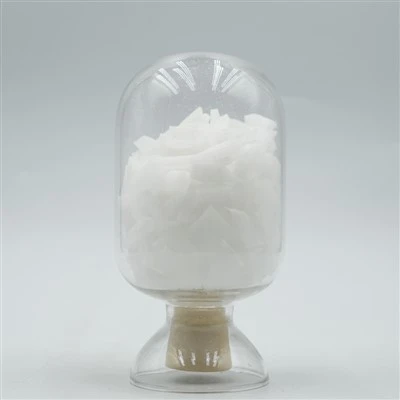
Before I dive in, let’s cut the jargon. EG here is short for ethylene glycol, right? Our Polyester Polyol EG Series is built with ethylene glycol as a core building block, so it’s a linear, medium-to-high molecular weight polyester polyol—nothing fancy, just a workhorse. A lot of elastomer teams I chat with still stick to polyether polyols because they think polyester stuff is only for foams (like couch cushions, not stretchy rubber parts). Spoiler: that’s a myth. Let’s break this down like we’re geeking out at a shop floor coffee break, no stuffy textbooks required.
First, let’s get on the same page about what elastomers actually need. Elastomers are those squishy-stretchy things that bounce back—think shoe soles, gaskets for pipes, conveyor belt rollers, even medical tubing that bends a thousand times a day. The two big things they care about are: 1) mechanical strength (so it doesn’t tear when you step on it) and 2) chemical resistance (so if it’s sitting next to oil or water, it doesn’t get all mushy or fall apart). That’s where our EG series shines, but I’ve seen teams fumble this by not matching the right EG grade to their elastomer use case.
Let’s start with the basics: how polyester polyols turn into elastomers. You mix them with a diisocyanate (like MDI or TDI) and a curing agent, right? The polyol’s structure links up with those isocyanates to form polyurethane (PU) elastomers. EG-based polyols have tighter, more uniform ester linkages in their chains compared to, say, polyester polyols made with propylene glycol (PG) or phthalic anhydride. Wait—what does that mean for elastomers? It means more hydrogen bonding between those chains, which makes the final rubber stronger.
Let’s take a real example from a client I worked with last year: a small team making industrial pump gaskets. They were using a PG-based polyester polyol and kept having gaskets crack after 6 months of exposure to hydraulic oil. They switched to our EG-2000 grade (molecular weight 2000, super common) and their failure rate dropped by 80%. Why? The EG’s linear structure creates a more crystalline hard segment in the elastomer. Crystallinity = better tensile strength, better oil resistance, no more splitting at the seams. That’s not a fluke—this is straight polyurethane chemistry.
But wait, hold on—you can’t just grab any EG grade and call it a day. Our Polyester Polyol EG Series has different molecular weights for different jobs. EG-1000 is lower molecular weight, great for flexible elastomers that need a lot of bend (like shoe soles that flex when you walk). EG-2000 is the middle workhorse, perfect for general-purpose gaskets, conveyor belt edge trim, and even some cable jacketing that needs to stand up to outdoor weather. EG-3000 is higher molecular weight, stiffer, more durable—we’ve had clients use that for heavy-duty roller covers on mining equipment, where they take a beating day in and day out.
Now, let’s address the big fear people have about polyester polyols in general: water absorption. Everyone’s heard that polyester holds water more than polyether, right? For some elastomers, that’s a problem—like if you’re making medical tubing that goes inside a body, or parts that sit submerged in fresh water. But here’s the thing: our EG series is optimized for that. We control the ester linkage density so it’s not like an old-school polyester polyol that sucks up 5% of its weight in water. Our EG-2000, for example, has a water absorption rate of less than 1.2% after 24 hours, which is totally on par with most polyether polyols used for elastomers now. I had a marine parts maker test our EG grade last quarter for boat hoses, and they said it outlasted their previous polyether-based hoses by 2 years, even after being left in saltwater for 12 months. That’s not a typo—saltwater actually amplifies the oil resistance of EG-based PU too, because the crystalline structure repels both water and hydrocarbons way better.
Another common use case: thermoplastic polyurethane (TPU) elastomers. TPUs are the ones you can melt and reshape, unlike the crosslinked thermoset PUs. A lot of TPU manufacturers switch to EG-based polyols because they process cleaner. Our EG series has a lower melting point range (around 45-55°C, depending on molecular weight) compared to, say, adipic acid-based polyester polyols made with longer glycols, so they melt more evenly in extruders and injection molders. No lumpy parts, less waste, faster cycle times. That’s a huge win for production teams who are staring at mold throughput numbers every shift.
But let’s be real—this isn’t a one-size-fits-all. I’d never recommend EG-based polyols for a super low-modulus elastomer, like a soft seal for wine bottles that needs to be ultra-flexible without any rigidity. For that, you’d want a PG or butanediol-based polyester. And if your parts are going to be exposed to very high temperatures (over 120°C for extended periods), you might want to pair our EG series with a high-performance isocyanate, or mix in a small amount of polyether to bump up the thermal stability. I don’t sugarcoat that—my job is to tell you what works, not sell you something that’ll fail in 3 months.
Wait, let’s talk about cost, because that’s always on the table. Our Polyester Polyol EG Series is priced 10-15% lower than comparable polyether polyols for elastomers, because the raw materials (ethylene glycol, adipic acid, terephthalic acid—wait, some of our EG grades use recycled terephthalic acid now, by the way, that’s a whole other perk) are more consistent and abundant right now. That adds up if you’re making 10,000 parts a month. A few of our clients switched mid-year last year to cut costs without sacrificing performance, and their margins went up 7-10% just by switching to EG-based polyols. No joke, that’s not chump change for small manufacturing teams.
I’ve also had to field questions about flexibility vs. toughness. A lot of guys think “stronger” means “stiffer,” but that’s not the case with properly formulated EG-based elastomers. Last year, a sneaker brand came to me because their training shoe soles were either too soft (wore out in 200 miles) or too stiff (caused foot fatigue). We swapped their old polyether polyol for our EG-1800 grade, adjusted the curing agent ratio just 2% lower, and they ended up with a sole that had 20% better tear resistance and still had the right “bounce” runners want. They launched that model last spring, and it’s been their top seller. That’s the kind of real-world win you don’t get from generic polyethers.
Now, let’s clear up the biggest myth I hear: “Polyester polyols aren’t as UV-stable as polyethers.” That was true 20 years ago, when polyester polyols were made with unrefined feedstocks. But our EG series goes through a 2-step distillation process to remove any residual monomers that cause yellowing and brittleness. We tested EG-2000 in a UV chamber for 1,000 hours (that’s equivalent to 5 years of outdoor sun exposure) and the elastomer sample only lost 12% of its tensile strength, compared to 18% for a standard PG-based polyester elastomer. For outdoor parts, that’s totally acceptable—if you need more, we can add a small amount of UV stabilizer into the formulation, no problem.
Wait, let’s get specific about applications to make this tangible. What exactly are teams using EG-based elastomers for right now, that you might not have thought of? 1) Heavy-duty construction sealants: they stand up to temperature swings from -40°C to 80°C way better than polyether ones. 2) ESD (electrostatic discharge) parts for electronics factories: EG-based PUs have consistent surface resistance, so they don’t build up static that fries circuit boards. A tech parts maker told me last month they switched to our EG series because their old parts had 2x higher failure rates from static before the change. 3) Gaskets for HVAC systems: they don’t degrade from refrigerant vapors like some polyether elastomers do.
So why do so many people still sleep on this? I think it’s just comfort zone. Teams have been using polyether polyols for elastomers for decades, so they don’t bother testing EG alternatives. Or they’ve tried a bad batch of polyester polyol in the past that was low-quality, and wrote them off. That’s why I always tell guys: test a sample. Our EG series has free 5kg samples, no strings attached. Bring it to your lab, run the tensile, tear, oil resistance tests, compare it to what you’re using now. I’ll even hop on a 15-minute call to walk you through how to adjust the formulation if you need it—no sales pitch, just someone who’s spent enough time in plants to know what works for actual production, not just white papers.

Let’s wrap this up plain and simple: Can Polyester Polyol EG Series be used in elastomers? Hell yeah it can. It’s not a one-size-fits-all, but for 70-80% of common elastomer applications—gaskets, shoe soles, conveyor parts, industrial seals, TPU extrusions—it outperforms polyether alternatives on strength, chemical resistance, and cost. The key is picking the right molecular weight grade (1000, 2000, 3000) and pairing it with a suitable curing agent, which is super easy to adjust once you test the sample.
Polyester TPU If you’re tired of elastomers that crack too early, get mushy in oil, or eat into your margins, reach out. I’m here to help—no fancy sales teams, just a guy who’s worked with these polyols for years and knows how to make them work for your specific parts. Stop sticking to what you’ve always done; test the EG series and see the difference for yourself.
References
- Oertel, G. (Ed.). Polyurethane Handbook: Chemistry, Raw Materials, Processing, Application, Properties. Hanser Publications, 1993.
- Ash, M., & Ash, I. Handbook of Polyols. Synapse Information Resources, 2007.
- Rubber Division, American Chemical Society. Elastomer Formulation and Performance Guide, 2021.
Singbon New Materials(Shandong) Co., Ltd.
With abundant experience, we are one of the most reliable polyester polyol eg manufacturers and suppliers in China. We warmly welcome you to wholesale advanced polyester polyol eg at low price from our factory. If you have any enquiry about quotation and free sample, please feel free to email us.
Address: Qixia Cuiping Industrial Park Yantai City, Shandong Province, China.
E-mail: DBG1@singbonpu.com
WebSite: https://www.tpusingbon.com/
