If you’ve ever walked through a metal fabrication shop, watched a mold maker tweak a die, or seen a aerospace technician drill precise, deep holes in a turbine blade, you’ve probably used a U drill. As a supplier who’s spent the last 12 years working directly with machinists, mold makers, and production managers, I can tell you that U drills aren’t one-size-fits-all. Choosing the wrong type doesn’t just slow down a job—it can lead to scrap parts, broken tools, and hours of lost productivity. In this post, I’m breaking down the most common and critical types of U drills, how they work, and when to pick each one, based on what I’ve learned from talking to hundreds of operators on the shop floor. U Drills
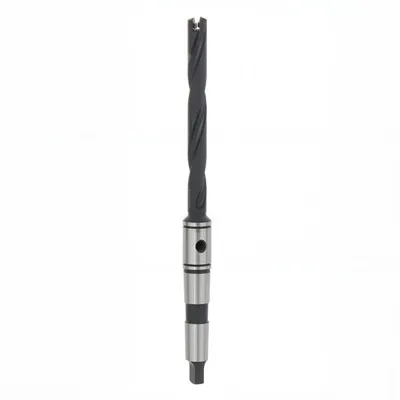
First, let’s start with a quick refresher: what makes a U drill different from a standard twist drill? Unlike twist drills, which are solid steel with flutes cut straight into the body, U drills (also called indexable insert drills or deep hole drills) use replaceable carbide inserts mounted on a steel or steel-alloy body. That design isn’t just a cost-saver—it solves two huge problems: twist drills can’t handle very deep holes without wandering (drilling off-center), and solid carbide drills are too expensive to throw away when only the tip is worn. U drills cut cleaner, run cooler, and let shops swap out inserts in minutes instead of pulling a whole drill and regrinding it. But not all U drills are built the same. Here are the types you’ll encounter most often.
Standard Length U Drills (aka “Short” or “Jobber Length” U Drills)
If you’re drilling holes three times the drill’s diameter or less (for example, a 10mm drill making a 30mm deep hole), this is your go-to. These are the most common U drills you’ll find in our warehouse because they work for 70% of general machining jobs. I see these used for everything from drilling mounting holes in steel brackets to adding holes to plastic mold components for water lines.
What makes them standard? Their length-to-diameter (L/D) ratio tops out at 3:1, which is short enough that they don’t need extra guidance to stay on target. Most have two or four carbide inserts: two for drilling smaller diameters, four for larger ones (16mm and up). The inserts are shaped for smooth cutting and are coated with titanium nitride (TiN) or titanium carbonitride (TiCN) to resist wear from steel, aluminum, or even cast iron.
I once worked with a small fabrication shop that was using solid twist drills for all their bracket work. They were breaking two drills a day on average, and each regrind cost them $15. When we switched them to standard U drills, their drill breakage dropped to less than one a week, and the insert cost per hole was almost 40% lower. That’s the kind of on-the-job win we see all the time with standard U drills.
Deep Hole U Drills (L/D Ratios of 4:1 to 10:1)
Now we get to the jobs that twist drills simply can’t handle reliably. Deep hole U drills are designed for holes that are four to ten times the drill’s diameter deep. For example, a 20mm deep hole drill making a 160mm deep hole in a mold core for a plastic bottle is a deep hole application.
What sets these apart? They have longer, reinforced bodies to stop them from flexing as they drill deeper, and most have internal coolant holes that run all the way through the drill body. The coolant doesn’t just cool the insert—it flushes chips out of the hole as you drill. If chips get stuck, they can grab the drill and break it, or scratch the inside of the hole, which ruins the part. Deep hole U drills eliminate that problem with the high-pressure coolant flow.
I remember a job a customer brought us last year: they had to drill a 50mm diameter hole 350mm deep in a high-strength steel block for a hydraulic cylinder. Their old twist drill took three tries to get the hole right, and they had to rework the part. We supplied them with a deep hole U drill with a 7:1 L/D ratio, and they finished the hole in one pass in 20 minutes. Before, it had taken them over two hours per hole. That’s the power of matching the drill type to the depth.
Micro U Drills (For Small Diameter Holes)
You might not think of U drills as small, but micro U drills are a game-changer for jobs that need precise tiny holes—think 1mm to 6mm diameter holes. These are used in medical device manufacturing (drilling holes in stents or surgical tools), electronics (drilling vias in circuit boards or small connectors), and small mold making (pin holes for plastic parts).
Solid carbide micro drills break all the time because they’re so thin, but micro U drills use a tiny insert that’s replaceable, so you don’t have to throw the whole drill away when the tip wears. The body is small and rigid, so it doesn’t wander even in soft materials like copper or hard materials like titanium. A lot of our micro U drill customers are in the medical space, where hole precision is non-negotiable—even a 0.01mm deviation can make a part unusable. These drills deliver that level of accuracy, and the replaceable inserts mean they save a ton of money over solid micro drills.
Indexable Insert U Drills (For Large Diameter Holes, 16mm and Up)
If you need to drill a hole bigger than 16mm, an indexable insert U drill is the way to go. These drills use multiple carbide inserts (usually three or four) instead of one, so they can cut a full circle in one pass. That’s a huge time-saver compared to drilling multiple smaller holes and enlarging them, which would take twice as long.
What’s nice about these is that the inserts are modular—if one insert wears, you only swap that one out, not the whole drill. The bodies are made to last for thousands of holes, so the upfront cost is spread out over a lot of uses. I see these used in heavy equipment manufacturing, where they drill large holes in steel frames for axles or mounting points, and in energy, where they drill holes in pipe for oil and gas applications.
One of our construction equipment customers was drilling 25mm holes in high-strength steel for 50-ton crane frames. They were using a process of center drilling, then drilling a 12mm hole, then enlarging to 20mm, then to 25mm. It took 15 minutes per hole. When they switched to an indexable insert U drill, they did it in 3 minutes per hole, with a cleaner, more accurate hole that required less secondary machining. That kind of speed is why these are a staple in high-volume production shops.
Specialized U Drills For Hard or Exotic Materials
Not all jobs are in mild steel or aluminum. Some parts are made of hard alloy steel, stainless steel, titanium, or even Inconel (a high-temperature alloy used in aerospace). For these, standard U drills don’t have the heat resistance or insert coating to handle the material. That’s where specialized U drills come in.
For example, hard material U drills have inserts made of extra-tough carbide, often with a coating like diamond-like carbon (DLC) or cermet, that can withstand the extreme heat from drilling hard steel. I worked with a turbine manufacturer a while back that was drilling holes in Inconel for jet engine parts. Their original drill wore out after 10 holes, but a specialized U drill we supplied lasted over 100 holes, because the insert was designed to resist the high heat and abrasion of Inconel.
There are also U drills for stainless steel, which is gummy and tends to stick to cutting tools. These have inserts with sharp edges and a special chip breaker that breaks up the long, stringy chips that come from stainless steel. Without that chip breaker, chips would wrap around the drill and break it.
How To Choose The Right U Drill For Your Job
Over the years, I’ve learned that the most common mistake operators make is picking a drill based on price alone, not the job requirements. Here’s a quick checklist I give to every customer who comes to us:
- What’s the hole diameter? Smaller than 16mm? Use a micro or standard U drill. Larger than 16mm? Indexable insert.
- How deep is the hole? 3x diameter or less? Standard length. 4-10x? Deep hole.
- What material are you drilling? Mild steel/aluminum? Standard insert. Hard steel/stainless/exotic? Specialized.
- Do you have high-pressure coolant? If you’re drilling deeper than 5x diameter, you’ll need a drill with internal coolant holes to flush chips.
I always tell people: it’s better to spend $50 extra on the right drill than $500 on scrap parts and broken tools because you picked the wrong one.
At the end of the day, U drills aren’t just pieces of metal with sharp edges—they’re tools that make machinists’ jobs easier and shops more profitable. As a U drill supplier, I’ve seen every type of job, from small medical parts to large construction equipment, and matching the right drill to the job is what we do best.
If you’re tired of broken drills, scrap parts, or slow production times, we can help you pick the right U drill for your specific application. Whether you’re a one-person shop needing a few standard drills or a large production facility needing bulk specialized U drills, we have the expertise to point you in the right direction. Reach out to discuss your project, and we’ll make sure you get the tool that fits your needs, not just the cheapest one on the market.
Milling Cutter Holders References:
- Machining Data Handbook, 4th Edition
- ISO Standard for Cutting Tools, Indexable Inserts, and Drill Bodies, ISO 13399
- American Machine Tools Association (AMTA) Report on Deep Hole Machining Efficiency, 2022
- University of California, Berkeley, Machining Research Lab: Performance of U Drills in Exotic Materials, 2021
Small Craftsman (Shandong) Machine & Tools Co., Ltd.
Small Craftsman (Shandong) Machine & Tools Co., Ltd. is one of the most experienced u drills manufacturers and suppliers in China, also supports customized service with low price. Please feel free to buy bulk high quality u drills in stock here from our factory. Contact us for pricelist.
Address: No.9 Quanxin Rd., Sishui Economic Developing Zone, Jining, Shandong, China.
E-mail: 6196@ocutchina.com
WebSite: https://www.ocutooling.com/
