Hey guys, let’s talk about something that’s probably on every fabricator, metal worker, and DIYer’s mind when they reach for an aluminum oxide flap disc: that weird, almost magic-like way it doesn’t dull halfway through a job. No, it’s not witchcraft—it’s the self-sharpening ability, and as someone who’s been supplying these discs for years, I get why so many folks glaze over the science and just stick to what works for them. But understanding how this works will save you so much time, money, and frustration, trust me. Aluminum Oxide Flap Disc
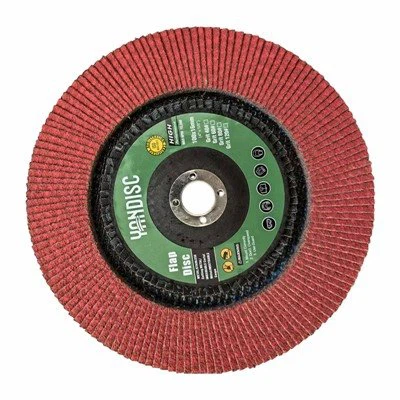
First, let’s start with the basics: what even IS an aluminum oxide flap disc? For the uninitiated (no judgment—we’ve all been there when a new tool arrives), it’s a circular abrasive tool made of hundreds of little “flaps” of aluminum oxide grain, glued to a fiber or fiberglass backing. Unlike a sanding disc, which is a solid sheet of abrasive, these flaps lay flat and flexible, so they contour to weird shapes—like curved metal pipes, welds on a bike frame, or the inside of a rusty truck bumper. That flexibility is part of the self-sharpening thing, but let’s not jump ahead.
Aluminum oxide itself is the workhorse of abrasives for a reason. It’s not the sharpest mineral out there (that’s diamond), but it’s tough as nails—way tougher than silica or garnet, which dull super fast when you’re grinding metal. When you use a regular sanding disc, the abrasive grains just stay in place until they break down or get clogged with metal dust, and then you’re sanding with a blunt, grainy mess. But the self-sharpening trick here is built into how those flaps and grains interact under pressure.
Let’s break it down step by step. When you press the flap disc against a workpiece (say, a steel weld you’re grinding flat), the hard aluminum oxide grains on the surface of each flap take the brunt of the friction. The workpiece is harder than the grains? Wait, no—wait, steel is around 5-6 on the Mohs scale, aluminum oxide is 9. Yeah, so the grains are definitely harder. But friction still wears them down, right? Instead of just grinding flat, though, each grain is a tiny, irregular little chunk (not perfect cubes—nature hates perfect shapes, which is how we get the sharp edges in the first place). As the dulled top of a grain wears down, the part of the grain under it that’s still sharp starts to get exposed. And because the flaps are flexible, they can flex a little as you move the disc, so the dull grain isn’t just sitting there scraping—it gets pushed off, or the flap twists just enough to flip a new, sharp edge of another grain into contact with the workpiece. That’s the “self-sharpening” part in a nutshell, but there’s way more nuance to it that makes our discs (and good ones, generally) work way better than cheap ones.
Wait, let’s talk about flap construction because that’s a huge factor a lot of buyers miss. Cheap flap discs use glue that’s too weak, or they cram too many flaps on too thin a backing, so when you put pressure on them, the flaps flatten completely and don’t flex. If a flap can’t flex, the dulled grains don’t get pushed off—you’re sanding with the blunt end of the grain the whole time, and the disc dulls in 5 minutes. But good quality aluminum oxide flap discs (which is what we supply) use a specific resin bond for the flaps, usually a thermoset resin that’s strong but flexible enough to give a little. That flexibility is non-negotiable for self-sharpening. If the bond is too stiff, the flaps don’t move. If it’s too soft, they fall apart before the grains have a chance to wear. The sweet spot is what we’ve spent years perfecting, honestly—balancing the resin, the density of the flaps, and the size of the aluminum oxide grain itself.
Grain size matters a lot too. Coarse grains (like 36 or 40 grit) are bigger, have more sharp edges, and self-sharpen faster because they’re taking deeper cuts, so the friction wears them down quicker. Fine grit (like 120 or 180) self-sharpens slower, but that’s okay because fine grit is for finishing, not heavy grinding. The aluminum oxide we use isn’t just regular milled aluminum oxide, either—we grade it to get consistent grain shape, so every grain has that irregular, sharp fracture line. If the grains are rounded from bad manufacturing, they won’t have the initial sharp edge to start with, and they’ll dull right away. That’s a common mistake buyers make: buying cheap discs because they’re a buck cheaper, only to have them die halfway through a project and waste time swapping discs every 10 minutes. I’ve seen guys blow a whole weekend job because they used a no-name disc instead of a quality one—total headache.
Another thing people don’t talk about is chip clearing. When you grind metal, you get tiny chips of metal and abrasive dust that build up between the grains. If that gets clogged, it acts like a cushion, so the grains aren’t touching the workpiece anymore—you’re just sanding with dust. Good self-sharpening discs have a open coat structure, meaning the grains are spaced out a little, not crammed together. That lets the metal chips escape instead of getting stuck, so the grains keep cutting sharp. Cheap discs have a closed coat, where every square inch is packed with grains, so they clog fast and lose that self-sharpening ability. That’s why our discs have a slight texture that doesn’t trap dust—we design the grain spacing to match the application, whether it’s grinding steel, aluminum, or even wood for specialty projects.
Wait, let’s test this with a real example, not just theory. Last month, a guy came to us complaining that his old flap disc dulled when he was grinding a thick weld on a structural steel beam for a bridge. He was using a 60 grit disc, pressing really hard to get through the weld fast. He switched to one of our 60 grit aluminum oxide flap discs, and he said he didn’t have to press anywhere near as hard, and it lasted twice as long. Why? Because the self-sharpening was doing the work instead of him. When he presses too hard on a cheap disc, it just smushes the flaps flat, so no new grains are exposed. With our disc, the flex lets the grains rotate a little, so each new edge is sharp before the old one is completely worn. Less pressure = less fatigue for the tool motor too, which is a bonus.
Oh, and let’s clear up a myth: self-sharpening doesn’t mean the disc will never dull. That’s impossible. It just means it dulls way slower, and when it does, it’s gradual, not sudden. A cheap disc will go from cutting great to useless in 2 minutes. A good aluminum oxide flap disc will start cutting a little slower after 45 minutes of heavy use, and you can still get decent results out of it for another 15 or 20 minutes. That’s the value right there—you’re not buying a disc that dies right when you need it most.
Now, how does this tie into what we do as suppliers? We don’t just grab any aluminum oxide grain and slap it on a disc. We test every batch of grain to make sure the fracture sharpness is consistent, the resin bond is rated for high heat (because grinding generates a lot of heat, and cheap resin will melt or break down, ruining the self-sharpening), and the flap count is perfect for the backing size. For example, our 7-inch flap discs have 120 flaps, not 100 like some brands. More flaps mean more sharp edges, and the spacing between them is just right for chip clearing. We also offer different types of backing: fiberglass for heavy duty grinding, fiber for lighter finishing, even paper for really tight spaces. The self-sharpening works with all of these, as long as the flap construction is solid.
Wait, another common question: can I make my self-sharpening disc last longer and work better? Yeah, a few simple tips. First, use the right grit for the job. Don’t use a 36 grit for finishing a weld—that’s overkill, and it’ll wear the grains too fast. Second, don’t press too hard. Let the disc do the work. If you’re grinding and it’s not cutting, you’re either using the wrong grit or the disc is cheap. Third, angle the disc correctly. Most people hold it at a 15-20 degree angle to the workpiece, not straight on. That angle lets the flaps flex and expose new grains, instead of just scraping with the flat surface of the flaps. If you hold it straight on, you’ll flatten the flaps, kill the flex, and the self-sharpening stops.
I’ve been in this industry for 12 years, and the number one thing I hear from customers who switch to our discs is how much time they save. A guy who does custom metal work used to go through 10 discs a week; now he goes through 4. That’s not just saving money on supplies—it’s not having to stop mid-job to swap discs, which keeps projects on track. For a contractor, that’s huge because time is literally money.
Let me wrap this up so it’s not just a tech lecture. The self-sharpening ability of a quality aluminum oxide flap disc is a combo of three main things: tough, sharp aluminum oxide grains that fracture into new edges when worn, flexible flap construction that lets those new edges make contact, and open grain spacing that prevents clogging so the grains keep cutting. Cheap discs skip one or more of these, so they dull fast. As a supplier, we focus on nailing all three because we know how frustrating it is to have a tool fail when you need it.

If you’re in the market for aluminum oxide flap discs for your work, whether it’s a small DIY project or heavy industrial grinding, don’t waste money on no-name brands that cut corners. We’ve got discs for every application, all built with that self-sharpening science that makes the job go smoother. If you want to chat about what grit or backing is right for your project, reach out to us to discuss your specific needs.
Aluminum Oxide Flap Disc References:
- Shaw, M. C. (1996). Principles of Abrasive Processing. Oxford University Press.
- Rowe, W. B. (2014). Principles of Modern Grinding Technology. William Andrew Publishing.
- Manufacturing Practices for Abrasive Products. (2021). Abrasive Technology Association.
Henan Yandisc Hardware Tools Co., Ltd.
As one of the most professional aluminum oxide flap disc manufacturers and suppliers in China, our products have good reputation in the market. Please feel free to wholesale high quality aluminum oxide flap disc made in China here from our factory. Customized orders are welcome.
Address: Zinan Road, High-tech Industrial Development Zone, Zhengzhou, Henan, China
E-mail: info@yandisc.com
WebSite: https://www.yandisc.com/
