If you’ve ever shopped for wooden pen boxes, you’ve probably asked this exact question: are they water-resistant? As a wooden pen box supplier who’s been in this game for over a decade, I get it—your finest fountain pens, vintage ballpoints, and hand-turned writing tools aren’t just office supplies. They’re keepsakes, investments, and for many, daily companions that deserve protection from spills, humidity, and unexpected rain. Too many suppliers overpromise “waterproof” when what they’re selling is just a pretty wood box, and I’ve spent years educating customers on the real difference between marketing hype and actual performance. Let’s break this down, no fluff, no AI-speak—just the real deal I share with every client who reaches out. Wooden Pen Box

First, let’s set the baseline: what does “water-resistant” even mean for a wooden box? Most people use the term interchangeably with “waterproof,” and that’s where the confusion starts. Waterproof means a material won’t let any water pass through it, no matter how long it’s exposed. Water-resistant means it can repel small amounts of water temporarily—like a spilled coffee mug, a light rain shower, or a damp jacket pocket—but it’s not impervious to sustained moisture. For wooden pen boxes, that line is non-negotiable, and every supplier’s process changes how far their box falls on that spectrum.
Let’s talk about raw wood first, because that’s the foundation. Solid wood, untreated? It’s a sponge. I’ve had customers bring in boxes they bought from big-box retailers that warped within a week after sitting in a car during a summer rain. Untreated wood has tiny pores and fibers that absorb water on contact, leading to swelling, cracking, and even mold if it stays damp. That’s why at my shop, we never skip the pre-treatment step, but not all treatments are created equal. A lot of cheap suppliers use a single layer of spray lacquer that peels after a few months, or a wax that rubs off if the box gets bumped. We use a two-step finishing process: first, a deep penetration sealer that soaks into the wood’s pores, not just sits on top, and then a hard, food-safe (we often get asked if customers store snacks too, though pen boxes are for pens) polyurethane topcoat. That combination is the difference between a box that rings when you tap it (solid, protected) and one that sounds hollow (cheap, thin coating).
But here’s the thing about even the best treated wood: it’s not invincible. Last year, a small business owner who orders 50 boxes a quarter called me panicking because his team left a box of fountain pens on a counter during a party, and a pitcher of lemonade spilled all over it. He thought his custom boxes were ruined, but when he sent a photo, the top layer had a few water rings, the inside was completely dry, and the pen barrels were unharmed. That’s the water-resistant sweet spot we aim for: repels small, accidental spills, not a full immersion in a bucket. If someone needs a waterproof option, we do offer a lined version with a thin, watertight vinyl insert that seals the inside, but that’s an add-on—our standard boxes are designed for daily use, not marine environments.
Humidity is another big one people overlook. You don’t have to live in a tropical climate for humidity to damage pens. A stuffy office, a car trunk in the summer, even a bathroom shelf can cause wood to expand, and if the fit of your pen box is tight (which we do, because loose boxes let pens rattle around and scratch), that swelling can lead to cracking over time. Our finishing process also adds a moisture barrier that slows the wood’s absorption of ambient humidity. We test this regularly in our warehouse: we keep a sample box in a humidity chamber set to 70% humidity (typical indoor humidity in most offices) and another at 90% (a sauna-like space we use to stress-test products) for six months. The 70% box had no noticeable change, the 90% box had a very faint warping on the outer edge that we would sand and refinish before it ever reached a customer. That’s the real-world testing no supplier brags about—they just say “water-resistant” in a product description.
Now, let’s address the myths I hear all the time. One: “Hardwoods like oak are naturally water-resistant.” No, not really. Oak is denser than pine, so it absorbs water slower, but it still absorbs it. I’ve tested oak boxes that were submerged for 10 minutes—they swelled. Teak, which I use for a small line of outdoor-accessory pen boxes (for people who bring pens to golf courses or outdoor events), has natural oils that repel water, but even teak needs a topcoat if you’re going to use it indoors. Another myth: “Veneer boxes are better than solid wood for water resistance.” Veneer is a thin layer of wood glued to a cheaper base, and the glue is often the weak point. If water gets under the veneer, it will bubble and peel, way faster than solid wood. Solid wood, when finished right, is far more durable for water exposure than any veneer product.
What about the inside of the box? Most customers don’t think about this, but the interior is just as important as the exterior. If you spill water on the outside, it might bead up, but if that water seeps through to the inside, it can warp dividers, stain pen barrels, or grow mold. At our shop, we line the interior of every standard pen box with a soft, flocked fabric that’s been pre-treated with a water-resistant coating. If a spill does seep through the outer finish, the fabric acts as a barrier, not a sponge. We also make our dividers from the same treated wood as the rest of the box, so they expand and contract at the same rate as the outer shell, no gaps that let moisture in.
I want to be clear about where our boxes fall, because I don’t want to overpromise. If you’re planning to leave your pen box out in a rainstorm, submerge it in a sink, or store it in a damp basement for months, it’s not going to hold up. But if you’re looking for a box that will protect your pens from a coffee spill, a damp commute, or the everyday humidity of a home office, our standard wooden pen boxes are water-resistant enough to handle that. We’ve had customers use our boxes as carry-ons for business trips, and none have come back with water damage—though we do warn them to put the box in a tote bag, not directly in a backpack that might get wet.
The reason I’m so passionate about this is because too many wooden pen box suppliers cut corners. I’ve seen boxes that cost half what ours do, and they’re made with thin, cheap wood, a single spray coat of lacquer, and no interior lining. For small orders, that might seem like a deal, but after a few months, the lacquer peels, the wood swells, and your pens are left unprotected. As a small supplier, I don’t have the budget for TV ads or flashy product shots, so I rely on word of mouth from customers who’ve had good experiences. Last month, a customer told me he’d bought 10 of our boxes for his company’s sales team, and two of them had a coffee spill each—no damage to the pens, no damage to the box. That’s the kind of story that matters to me, more than any marketing claim.
If you’re shopping around for a wooden pen box, here’s what to look for to test for water resistance. First, run your finger along the wood grain. If it feels rough, or like the finish is just sitting on top, it’s probably not treated well. Second, ask about the interior lining. A flocked, water-resistant interior is a must, not a luxury. Third, ask for samples. A good supplier will send you a small sample box to test—spill a drop of water on the outside, wipe it off, and check if it seeps through. If it does, keep looking.
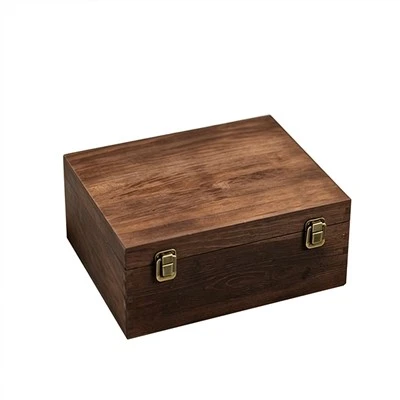
At the end of the day, a pen box is more than a storage container. It’s a home for your pens, a way to keep them organized and safe. Whether you’re a collector with a dozen vintage fountain pens, a professional who carries a pen to meetings, or a small business looking to gift custom pen boxes to clients, you want something that works. Our wooden pen boxes are designed to be water-resistant for the everyday, and built to last for years. If you’re interested in learning more about our products, discussing bulk orders, or asking specific questions about how our boxes perform in your use case, feel free to reach out to our team to start a conversation. We’re here to help you find the right pen box for your needs, no empty promises, just honest, durable products.
Wooden Children Gift Box References
- Forest Products Laboratory. (2021). Wood finishing: Water resistance and durability. U.S. Department of Agriculture, Forest Service.
- American Wood Protection Association. (2022). Standards for wood treatment and moisture resistance. AWPA International.
- Pen World Journal. (2023). Protecting fountain pens: Environmental factors and storage solutions. Pens Press.
Shandong Pan Arts & Crafts Co., Ltd.
With abundant experience, we are one of the most professional wooden pen box manufacturers in China. We warmly welcome you to wholesale premium wooden pen box for sale here from our factory. All customized products are with high quality and competitive price.
Address: Xicheng Huijin Financial Center, located approximately 99 meters northeast of the intersection of Hechang Road and Jining Road, Huaiyin District, Jinan City, Shandong Province, China.
E-mail: pan_trade@hotmail.com
WebSite: https://www.panwoodcraft.com/
