If you’ve ever twisted open a water bottle, a prescription pill bottle, a jar of condiments, or even a tube of lip balm, you’ve used a 38mm plastic cap—most likely without giving the manufacturing process a second thought. For anyone in the packaging industry, though, the tool behind that cap isn’t just a hunk of steel or aluminum; it’s a 38mm plastic cap injection mold, a specialized piece of equipment that’s the backbone of countless everyday products. As a supplier of these molds, I get asked all the time: what is a 38mm plastic cap injection mold actually used for? The short answer is that it’s the machine that turns raw plastic resin into consistent, functional caps that seal, protect, and brand everything from pharmaceuticals to household goods. But the full story is a little more layered, and it ties directly to why 38mm is such a common standard, and why the mold that makes these caps matters more than most people realize. Plastic Cap Injection Molds
First, let’s start with the basics: what exactly is a 38mm cap? The “38mm” refers to the outer diameter of the cap’s opening, measured in millimeters, that threads onto a matching neck on a container. That measurement isn’t arbitrary. 38mm is a sweet spot for packaging across multiple sectors: it’s wide enough to accommodate products that need easy access (like protein powders, cough syrup, or salad dressing) but not so large that it adds unnecessary material cost or takes up excessive shelf space. It’s also a widely adopted standard in North America and many parts of Europe, which means molders can use a single mold design to produce caps for hundreds of different brands without retooling every time a new product launches. For context, you’ll find 38mm caps on everything from 16-oz plastic water bottles (though some of those use smaller 28mm or 33mm sizes) to 1-pound jars of peanut butter, pediatric prescription bottles, and even industrial lubricant containers. If a container’s neck is 38mm, the cap that seals it is made by a 38mm plastic cap injection mold.
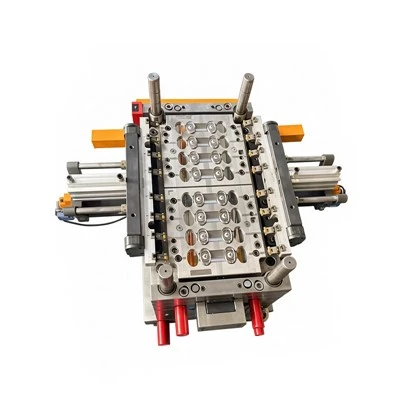
So, how does that mold do its job? Injection molding works by heating raw plastic resin (usually polypropylene, HDPE, or LDPE, depending on the cap’s required flexibility, durability, or chemical resistance) until it’s molten, then forcing that melted plastic into the mold’s cavity—a precision-machined space that’s shaped exactly like the desired cap. For a 38mm cap, that cavity includes the internal threads that screw onto the container neck, a gasket or seal ring to prevent leaks, and sometimes even space for branding details like a logo or product information molded right into the cap’s top or side walls. The “mold” itself is a two-part tool: the core, which forms the inside of the cap, and the cavity, which forms the outside. For high-volume production (and let’s be honest, cap production is almost always high-volume), a single 38mm injection mold can have anywhere from 4 to 32 cavities—meaning it can produce 4 to 32 caps every single molding cycle. That speed is non-negotiable; a major beverage brand might need hundreds of millions of caps a year, so the mold has to be precise enough to avoid defects but durable enough to run 24/7 for months at a time.
Now, let’s break down the specific industries that rely on 38mm plastic cap injection molds, because that’s where the “what is it used for?” question really gets concrete. The first and largest sector is pharmaceuticals and personal care. Prescription pill bottles, over-the-counter medicine bottles, and even many skincare product jars use 38mm caps for a simple reason: that size is large enough to make child-resistant caps easy for adults to twist open, but too wide for small children to manipulate safely. Child-resistant caps (also called CR caps) require special features—like a push-and-turn mechanism, or a locking ring—that have to be machined directly into the 38mm mold. I’ve worked with several pharma clients who come to us specifically for molds that can produce CR 38mm caps, because a defect in that cap can mean a product is non-compliant with FDA regulations, or even a safety risk. For personal care, 38mm caps are common on shampoo bottles, conditioner containers, and body wash jars—they’re sized right for easy grip, and the mold can be customized with a variety of top finishes: smooth, textured, flip-top, or even a dispensing nozzle for liquids that need controlled flow.
Next is the food and beverage industry, which is the other big user of 38mm cap molds. Think about a jar of pickles, a bottle of salad dressing, a 2-liter bottle of sports drink, or a container of baby formula—all of those often use 38mm caps. For food packaging, the mold has to be precision-machined to ensure a hermetic seal; even a tiny gap between the cap and container neck can let air in, spoiling the product. Many food brands also want tamper-evident bands on their caps, that thin plastic ring that stays on the container when you twist the cap off. That band is molded right into the 38mm cap, so the mold has to include features to create that breakaway ring, without it being so fragile that it falls off during shipping. I’ve had clients in the condiment industry tell me that a bad batch of tamper-evident caps cost them $50,000 in product recalls last year—so the quality of the 38mm mold isn’t just about cost, it’s about protecting a brand’s reputation and bottom line.
Household and industrial products are another key market. Laundry detergent bottles, dish soap containers, paint cans, and small industrial chemical jugs often use 38mm caps, especially for products that need to be sealed tightly to prevent leaks. For these, the mold can be made to produce caps with different levels of durability—for example, a cap for a heavy-duty cleaning product needs to be thicker and more resistant to harsh chemicals than a cap for a bottle of dish soap. Some of our industrial clients also use 38mm molds to produce caps with specialized features, like a pour spout for motor oil, or a wide opening for mixing small amounts of chemicals. The versatility of the 38mm size is a big part of why it’s so widely used; one mold can be adapted for dozens of different product types, as long as the container neck is 38mm.
It’s worth noting that not all 38mm injection molds are the same. A mold for a child-resistant pharmaceutical cap is very different from a mold for a flip-top beverage cap, or a mold for an industrial chemical cap. That’s why, as a supplier, we don’t sell a one-size-fits-all mold—we work with each client to understand their specific needs: what type of plastic they’re using, what features the cap needs (tamper-evident, child-resistant, flip-top, dispensing), how many caps they need to produce per hour, and what their budget is. For example, a small craft beverage brand might only need a 4-cavity mold, which is more affordable and easier to set up for a limited production run, while a major national food brand will need a 24 or 32-cavity mold that can run 24 hours a day for years without wearing out.
One common misconception I hear is that a 38mm cap is just a cap—so any mold can make it. That couldn’t be further from the truth. A low-quality mold, made with cheap steel or poorly machined cavities, will produce caps with inconsistent thread sizes, rough edges, or faulty seals. Those defects lead to product waste, recalls, and unhappy customers. A high-quality 38mm plastic cap injection mold, on the other hand, is machined to tight tolerances—usually within 0.005 millimeters—to ensure every cap is identical, no matter how many thousands are produced. It’s also designed for durability: we use pre-hardened tool steel for our molds, which can withstand high pressure and high temperatures from the molten plastic, so a well-made mold can last for 1 to 3 million cycles before needing repairs. That longevity is a big selling point for clients, because it means they don’t have to invest in a new mold every few months.
Another use for 38mm molds? Custom branding. Many brands want their caps to stand out on store shelves, so they add logos, product names, or even color to the cap. The mold can be customized to include engraved text or logos, so the branding is molded directly into the cap during production—no extra steps, no labels that can peel off. For example, a craft juice brand might use a mold that has their logo engraved on the top of each 38mm cap, making their product instantly recognizable on a shelf full of generic bottles. Some molds also have features for two-color caps, where the top of the cap is a different color than the side, all produced in one molding cycle—no secondary painting or labeling needed.
Let’s also talk about sustainability, because that’s a big priority for a lot of clients these days. More and more brands are switching to lighter-weight caps to reduce plastic waste, and 38mm molds can be designed to produce thinner, lighter caps without sacrificing strength or seal quality. A good mold will optimize the wall thickness of the cap, so it uses less plastic, which cuts down on material costs and reduces the product’s carbon footprint. We’ve worked with several clients who switched to our lightweight 38mm mold designs and reduced their cap material usage by 15%—a big win for both their budget and the environment.
So, to circle back to the original question: what is a 38mm plastic cap injection mold used for? It’s the unsung hero of packaging manufacturing, turning plastic resin into the caps that protect our food, medicine, and household goods, that ensure products stay fresh, that prevent spills, and that keep children safe. It’s used in pharmaceuticals to make child-resistant caps, in food and beverage to make tamper-evident seals, in household products to make durable, leak-proof caps, and even in custom branding to help products stand out. As a supplier, I’ve seen first-hand how a good mold can make a client’s production run smoother, reduce defects, and help their brand succeed.

If you’re in the packaging industry, a molder looking to upgrade your mold equipment, or a brand launching a new product and need a custom 38mm cap solution, I’m here to help. Every project is different, and I take the time to understand your specific needs before recommending a mold that works for your production volume, budget, and product requirements. There’s no one-size-fits-all solution for 38mm cap molds, and I’m committed to providing quality, durable molds that stand the test of time. Don’t hesitate to reach out to discuss your upcoming projects or learn more about how our molds can support your operations.
Medical Injection Mold References
Rosato, D. V., & Rosato, M. G. (2000). Injection Molding Handbook. Kluwer Academic Publishers.
Peterson, R. T. (2017). Plastic Packaging: Principles and Practice. Wiley.
FDA. (2021). Child-Resistant Packaging Requirements for Human Drugs. U.S. Food and Drug Administration.
European Plastic Converters Association. (2022). Packaging Standards for Closure Sizes in Food and Beverage. European Plastics Industry Confederation.
Taizhou Koni Mould Co., Ltd.
As one of the most professional plastic cap injection molds manufacturers and suppliers in China, we also support customized service. Please feel free to wholesale high quality plastic cap injection molds made in China here from our factory. For pricelist, contact us now.
Address: No. 97 Jinju Road, Chengjiang Subdistrict, Huangyan District, Taizhou City, Zhejiang Province
E-mail: kn@kenimould.com
WebSite: https://www.kenimouid.com/
