If you’re in the market for a freight elevator, chances are you’re focused on capacity, speed, and how it fits your warehouse, manufacturing plant, or retail distribution center. But here’s something that’s easy to overlook until it causes a problem: safety standards. As a freight elevator supplier that’s been working with these systems for over 12 years, I’ve seen firsthand how skipping or cutting corners on compliance doesn’t just risk fines—it risks lives and costly downtime. Today, I’m breaking down the key safety standards that govern freight elevators, and why they matter for anyone investing in this equipment. Freight Elevator
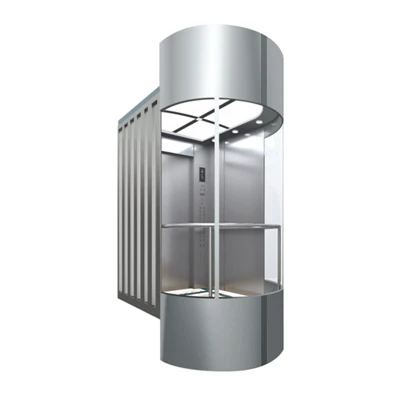
First, it’s important to distinguish freight elevators from passenger elevators. They’re built for heavy loads—think pallets of goods, forklifts, or large machinery—and that rugged design means their safety standards are tailored to handle far more stress than what a passenger elevator would face. Two of the most widely adopted global frameworks come from the International Organization for Standardization (ISO) and national regulatory bodies, but I’ll also cover regional standards that impact most of our North American and international clients.
Let’s start with ISO standards, because they’re the baseline for many countries that don’t have their own dedicated elevator regulatory bodies. The core standard for freight elevators is ISO 14798:2006, which specifically addresses lifts for goods, with or without attendant access. What makes this standard unique is that it focuses on risk assessment across every component of the elevator, not just individual parts. For example, ISO 14798 requires that the elevator’s braking system must be able to hold 125% of its rated load at any floor, not just the midpoint. That’s a non-negotiable for us—we test every unit we ship to ensure it meets that threshold, because we’ve heard too many horror stories of under-sized brakes failing when a forklift loaded with 110% of the rated weight hits the top of a shaft. Another key ISO standard is ISO 8100-1, which covers general safety rules for all lifts, including requirements for door interlocks, emergency stop buttons, and clearance between the car and hoistway walls. For freight elevators, the clearance gap is strictly limited to 100 millimeters (about 4 inches) to prevent forklift forks or pallet edges from catching, a detail that’s easy to cut if you’re trying to reduce costs, but one we never skip.
In North America, the dominant standard comes from the American Society of Mechanical Engineers (ASME) in their ASME A17.1 standard, also known as the Safety Code for Elevators and Escalators. Most U.S. states and Canadian provinces adopt this code as law, so any freight elevator sold or installed in this region has to comply with it. A big part of A17.1 that’s specific to freight elevators is the requirement for fire service mode. If a fire breaks out in a building, the elevator has to automatically recall to the ground floor, open its doors, and shut down to be used as a rescue or evacuation tool for people unable to use stairs—something we test during every pre-installation inspection. Another critical A17.1 rule is load testing. Unlike passenger elevators, which are tested at 125% of rated capacity once, freight elevators have to undergo periodic load tests every five years, and after any major repair to the hoist, cables, or car. We partner with third-party inspectors to handle these tests for our clients, because skipping or rushing them can lead to catastrophic failure. For Canadian clients, we also follow the Canadian Standards Association (CSA)’s CSA B44 standard, which aligns closely with ASME A17.1 but adds a few extra rules for cold-climate environments—like thicker insulation for hoistways in northern regions to prevent hydraulic fluid from thickening and causing slow, unresponsive operation in winter.
For our clients in Europe, the key standard is the European Norms (EN) series, specifically EN 81-20 and EN 81-50. EN 81-20 covers safety rules for passenger and freight lifts, while EN 81-50 focuses on the design and construction of lift components. A unique requirement in EN standards is the need for overload protection that’s 10% more sensitive than other regions. If a freight elevator exceeds its rated load by just 10%, the system will automatically shut down and prevent the doors from closing—no exceptions. This is a game-changer for warehouses where forklift operators might misjudge a pallet’s weight; we’ve had clients tell us that this feature has prevented multiple overload-related breakdowns since switching to our EN-compliant models. Also, EU law requires all elevators manufactured after 2020 to carry a CE marking, which means they’ve been independently verified to meet EN standards. We make sure every unit we export to Europe has this marking on file, because without it, our clients can’t get their elevators permitted for installation.
Now, it’s not just about following the standard at installation. Ongoing maintenance and compliance are equally important, and that’s something we emphasize with every client that buys a freight elevator from us. A common mistake we see is that a company will install a compliant elevator, then skip regular maintenance because they think the equipment will “just work.” But standards like ASME A17.1 and ISO 14798 outline mandatory maintenance schedules: for example, weekly checks of door interlocks, monthly tests of emergency brakes, and annual load testing. Last year, we worked with a small manufacturing client who had been operating their freight elevator without a maintenance plan for three years. Their door interlock had worn out, and one day, a pallet of parts shifted mid-lift, the doors opened unexpectedly, and the pallet fell into the hoistway. The damage? Over $20,000 in lost goods, plus two weeks of downtime while we repaired the shaft. That’s a cost no one wants to deal with, and it could have been avoided by following the maintenance requirements laid out in the standard.
Another often-overlooked safety standard for freight elevators is accessibility for personnel. Wait, you might be thinking—freight elevators are for goods, not people. But many warehouses require workers to ride the elevator to move between floors, especially during busy shifts. Standards like ASME A17.1 and EN 81-20 have rules for minimum car size, handrails, and lighting to ensure workers can ride safely. For example, ASME A17.1 requires a minimum car depth of 1.4 meters (4.6 feet) for freight elevators with a capacity under 2,000 kg, which is enough space for a worker to stand away from pallets and keep a hand on a handrail. We design our standard models to exceed these minimums, because we’ve learned that even if a client doesn’t initially plan for personnel transport, they often end up needing it—and retrofitting a non-compliant elevator later is far more expensive than building it right the first time.
Let’s talk about customizations, because every client’s needs are different, and we build our elevators to meet those needs while staying within standards. For a client in a cold storage warehouse (temperatures as low as -20°C), we have to adapt standard components to meet ISO 14798’s low-temperature requirements. The hoist cables have to be coated to prevent brittleness, the hydraulic fluid has to be rated for cold environments, and the car doors have to have extra insulation to prevent condensation. For a high-rise retail distribution center, we build freight elevators with faster door operation (0.8 seconds instead of the standard 1.2) while still complying with ASME A17.1’s rule that door opening and closing speeds can’t exceed 0.5 meters per second. We work with each client to map their specific use case against the relevant standards, so they don’t have to compromise on safety or efficiency.
A big question we get from prospective clients is: “What if I buy an elevator that doesn’t meet these standards?” The short answer is, you’re taking on massive risk. In the U.S., OSHA (Occupational Safety and Health Administration) can fine companies up to $15,625 per serious violation for operating a non-compliant elevator, and up to $156,259 per willful violation. Beyond fines, the risk of injury or death is real—between 2018 and 2022, OSHA reported 12 fatalities related to freight elevator failures in warehousing and manufacturing, most of which were tied to non-compliant equipment or skipped maintenance. As a supplier, we refuse to sell elevators that don’t meet all applicable standards, because our reputation depends on keeping our clients’ teams safe. At the end of the day, a freight elevator is a long-term investment—our clients keep our elevators in operation for 20 years or more, so the safety has to hold up over that time.
If you’re planning to install a new freight elevator, or replace an old one, don’t just focus on capacity and price. Make sure you’re asking your supplier about the specific standards their units comply with, and confirm that they can provide documentation of compliance, testing, and maintenance schedules. At our company, we’re here to walk you through every step: from choosing the right model for your space, to ensuring it meets all local and international safety standards, to setting up a maintenance plan that keeps your elevator compliant for years to come. We’ve worked with warehouses, manufacturing plants, and retail distribution centers across the globe, and we know that safety isn’t an afterthought—it’s the foundation of a reliable freight elevator.

If you’re ready to talk through your freight elevator needs, connect with our team to start a conversation. We’ll help you design a system that’s safe, efficient, and built to last.
Car Elevator References
ISO 14798:2006, Lifts (Elevators) – Safety Rules for the Design and Construction of Goods Lifts, With or Without an Attendant
ASME A17.1-2020, Safety Code for Elevators and Escalators
EN 81-20:2020, Safety Rules for the Construction and Installation of Lifts – Passenger and Goods Passenger Lifts – Part 20: Passenger Lifts and Goods Lifts
CSA B44-21, Safety Code for Elevators and Escalators, Canadian Standards Association
OSHA 29 CFR 1910.66, Powered Platforms, Elevated Work Platforms, and Ladders – Elevators
Fuji Express Elevator Co., Ltd.
As one of the most professional freight elevator manufacturers and suppliers in China, we’re featured by quality products and good service. Please rest assured to buy custom made freight elevator at competitive price from our factory. Contact us for more details.
Address: No.7 Nanxiehe, Fuqiang Village, Dongqian Subdistrict, Nanxun District, Huzhou City, Zhejiang Province
E-mail: vivi@fujilift-tech.com
WebSite: https://www.fujilift-tech.com/
