If you’ve ever stood next to a working farm tractor—say, at a harvest demo, or a local auction, or even just waiting for one to pull out of a field at sunrise—you’ve probably noticed that deep, steady rumble that feels like it vibrates in your bones. That’s not just noise. That’s a diesel engine, the beating heart of every farm tractor you see pulling plows, hauling grain bins, or powering hay balers. For the team here, we don’t just sell these tractors or their engines; we watch them run 12-hour days in dusty fields, through freezing winter months, and over rocky dirt that would turn car engines to scrap. That’s why we think explaining how these workhorses are built is more than just a science lesson—it’s the reason farmers can count on their gear, year in and year out. Farm Tractor
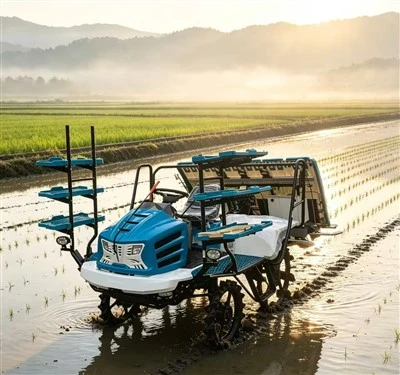
Let’s start with the basics that set farm tractor diesel engines apart from the gas engines in your pickup truck or lawnmower. Gas engines mix fuel and air first, then squirt that mix into a cylinder and spark it with a glow plug or spark plug to ignite it. Diesel engines do something counterintuitive: they only let clean, compressed air into the cylinder, then squirt diesel fuel directly into that super-pressurized air. The compression heats the air so much—we’re talking 500 to 1,000 degrees Fahrenheit, depending on the engine model—that the fuel ignites instantly, no spark needed. That difference is why diesel engines get way better fuel efficiency for the heavy, constant work farm tractors do, and why they produce more torque, the twisting force that lets you pull a 10-ton plow without sputtering to a stop.
The process starts with the engine’s core: the cylinder block, which is a heavy, cast-iron frame lined with four, six, or sometimes eight cylinders. Each cylinder has a piston inside it that moves up and down, connected to a crankshaft that turns that up-and-down motion into rotational power. The crankshaft is mounted in the bottom of the block, lubricated all the time by pressurized oil, so it doesn’t wear out from friction. Above the cylinders sits the cylinder head, a separate metal piece bolted tight to the block with hundreds of pounds of force to seal the combustion chamber, where all the power happens.
On top of that cylinder head are two sets of valves: intake valves and exhaust valves. When the engine is running, these valves open and close in perfect sync, timed by a camshaft connected to the crankshaft by a metal belt or gear (no chain here, usually, because tractors need those gears to hold up under constant heavy load). Let’s walk through the four steps, or strokes, that make the engine run—this is where the magic happens.
First is the intake stroke. As the piston moves down from the top of the cylinder, the intake valve opens, and a steady stream of clean, filtered air is pulled into the cylinder. We can’t stress the air filter enough here. Farm fields are full of dust, chaff, and small debris, and if even a tiny grain of that gets into a cylinder, it can scratch the piston or cylinder wall, leading to leaks or even a full engine failure. That’s why every tractor diesel engine we sell comes with a high-capacity air filter, and we always remind farmers to check and change those filters before harvest—save that maintenance, and you’re looking at thousands of dollars in repairs.
Next is the compression stroke. The intake valve closes, and the piston moves back up, compressing that trapped air to a tiny fraction of its original size. The compression ratio for a tractor diesel engine is usually between 16:1 and 22:1—way higher than gas engines, which top out around 12:1. That high compression is what heats the air so hot that diesel fuel will ignite without a spark. This is also why tractors can idle for hours without using much fuel: when you leave the engine running between tasks, the compression cycle is slow, but steady.
Third is the power stroke, the one that actually moves the tractor. Right as the piston reaches the very top of the cylinder (called top dead center), a high-pressure fuel injector squirts a precise, fine mist of diesel fuel into the compressed, super-hot air. The fuel ignites immediately, creating a small explosion that pushes the piston back down with massive force. This is where torque is generated— that downward push on the piston turns the crankshaft, which then powers the tractor’s wheels or whatever implement it’s hooked to. For tractors designed to pull heavy loads, we often use multi-stage fuel injection: a small pre-injection of fuel a split second before the main blast, which softens the explosion so the engine doesn’t shake apart when pulling a 20-foot plow through hard soil. That’s a small detail, but it’s one that makes our tractors stand up to the work that smaller models can’t.
Finally, there’s the exhaust stroke. The piston moves back up again, opening the exhaust valve, and pushes the leftover, burned gases out of the cylinder, through the exhaust manifold, and into the exhaust system. These days, most modern tractor diesel engines also have after-treatment systems here, which are a big change from the engines we sold 20 years ago. Back then, we’d just vent exhaust straight into the air, but new regulations require systems to reduce emissions: a diesel oxidation converter that breaks down harmful compounds, a diesel particulate filter that catches tiny soot particles, and a selective catalytic reduction system that uses diesel exhaust fluid (DEF) to turn nitrogen oxides into harmless nitrogen and water. We know DEF can be an extra thing for farmers to keep track of, but it’s non-negotiable—plus, our engines are calibrated to use DEF efficiently, so you don’t go through it any faster than you need to.
Of course, none of these four strokes would work without all the supporting systems that keep the engine running smoothly, especially in the harsh conditions farms throw at them. Let’s start with the fuel system. Tractor diesel engines don’t use the simple carburetors you might see on old lawn tractors—they use a high-pressure common rail (HPCR) fuel system, which is the standard now for new models. A high-pressure pump sends fuel to a central rail that feeds all the injectors, each of which is controlled by the engine’s electronic control unit (ECU), a small computer that adjusts when and how much fuel is squirted, based on load, speed, and temperature. This is why a modern tractor can idle quietly at 800 RPM for hours, or rev up to 2,500 RPM to haul a heavy load up a hill, all while using fuel more efficiently than older engines. We’ve had farmers tell us that switching to our HPCR engines cut their fuel bills by 15% during harvest, which is a huge saving when you’re burning 20 gallons an hour in a big tractor.
Then there’s the cooling system, critical because diesel engines run very hot from those compressed explosions. Most tractors use a liquid cooling system: a mix of water and coolant that circulates through passages in the cylinder block and head, absorbing heat, then flows to a radiator at the front of the tractor, where a big fan blows air over the radiator to cool the liquid down. In winter, farmers might add a coolant with antifreeze to keep the system from freezing, and in summer, they might flush it to prevent overheating. We always install extra-large radiators on our tractors because working in dusty, hot fields means the radiator can get clogged with chaff, and a small radiator won’t keep up with the heat on a 90-degree day.
Lubrication is another make-or-break system. Every moving part in the engine—pistons, crankshaft, valves, injectors—needs oil to keep it from rubbing and wearing out. The oil pump circulates oil through tiny passages, spraying it on the cylinder walls to lubricate the pistons, and creating a thin film around the crankshaft bearings. We recommend using heavy-duty, high-detergent oil for our engines, because farm dust and the byproducts of diesel combustion can get into the oil, and detergent additives clean those contaminants out before they cause damage. Regular oil changes are non-negotiable, too—we tell farmers to change the oil every 200 to 300 hours of use, which is way more often than a car, but necessary for engines that run nonstop through planting and harvest.
A lot of people ask us why diesel engines are still the go-to for tractors, when electric tractors are starting to pop up. Sure, electric is great for small, light tasks, but let’s get real: when you need a tractor that can pull a 10-ton grain cart across a muddy field at harvest, or run a hay baler for 12 hours straight, diesel is still the only thing that has the energy density to do that work without constant recharging. A 100-gallon tank of diesel can power a tractor all day, while a battery big enough to do that would weigh 10,000 pounds or more—way too heavy for a tractor, which needs to be light enough to maneuver in tight spaces without compacting soil. The torque from diesel engines is another big plus: electric motors have torque, but it’s instant, which can make a tractor lurch when pulling heavy loads, while diesel torque builds steadily as you need it, giving the driver smooth control.
That said, we’ve made sure our diesel engines are as clean and efficient as possible, because we know farmers care about both their bottom line and the environment. We test every engine we sell in real field conditions, not just in a lab, so we know they hold up to dust, mud, and extreme temperatures. We also offer different power options, from small 4-cylinder engines for mid-sized tractors that do general farm work, to 6-cylinder engines for large, high-horsepower tractors that handle big harvest operations.
At the end of the day, a farm tractor diesel engine isn’t just a piece of machinery—it’s a partner. It’s the thing that gets a farmer’s crops planted when the soil is dry enough, harvested before a storm hits, and moved to market on time. We don’t just sell engines; we stand behind them, with maintenance guides, replacement parts, and support for farmers who need it, no matter where they’re working.

If you’re in the market for a new tractor or replacement diesel engine for your farm, or you just have questions about how these engines work for heavy farm tasks, we’d love to hear from you. Our team has years of experience working with farmers, and we can help you find the right engine for your specific needs, whether you’re running a small family farm or a large commercial operation. There’s no one-size-fits-all when it comes to farm gear, and we’re here to make sure you get exactly what you need to keep your fields running smoothly.
Rice Transplanter References
Diesel Technology Forum. (2022). How Diesel Engines Work.
Society of Automotive Engineers (SAE). (2021). Heavy-Duty Diesel Engine Performance for Agricultural Applications.
US Department of Agriculture (USDA). (2020). Agricultural Tractor Engine Maintenance and Emission Guidelines.
Huzhou Liangyi Agro Machinery Co., Ltd.
As one of the most professional farm tractor manufacturers and suppliers in China, we have world-leading production equipment and strong manufacturing capabilities. Please rest assured to wholesale advanced farm tractor from our factory. Contact us for more cheap products.
Address: High-Tech Industrial Zone, Huzhou City, Zhejiang Province, China
E-mail: Liangyi_agro@126.Com
WebSite: https://www.cnliangyi-agro.com/
