If you’ve ever squinted at a menu at a restaurant, struggled to read a street sign at night, or fought with a fine-print work document that suddenly looked like it was written in another language, you’re not alone. Presbyopia—that gradual loss of near vision that starts around age 40, when your eye’s lens loses flexibility—affects more than 1.8 billion people worldwide, according to the World Health Organization. For many of us, reading glasses are the simple, affordable solution to this everyday inconvenience. But the question that stops many people in their tracks isn’t “Do I need reading glasses?” It’s “Where can I buy affordable reading glasses that don’t feel like a cheap one-size-fits-afterthought?” That’s where I come in: as a supplier with 12 years in the industry, I’ve seen first-hand how the gap between “affordable” and “quality” often leaves consumers settling for something that strains their eyes or breaks after a month. In this post, I’ll break down the best places to buy budget-friendly reading glasses, share what to look for to avoid common pitfalls, and explain why working with a reliable supplier can save you time, money, and eye strain in the long run. Reading Glasses
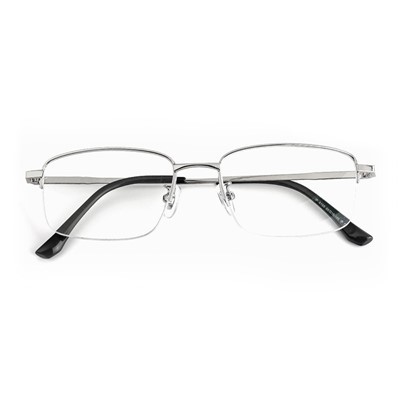
Let’s start with the most accessible options: big-box retailers and drugstores. Most of us have walked past the rack of reading glasses near the checkout at our local pharmacy, or spotted the display at Walmart, Target, or Kroger. On the surface, these seem like the easiest choice—pop in, grab a pair for $5 to $15, and go. But there’s a hidden catch here: the vast majority of these are generic, one-strength-fits-all pairs, and not every “average” prescription works for everyone. Presbyopia doesn’t progress the same for every person; you might need +1.75 for books but +2.0 for phone screens, and a one-strength pair will force your eyes to work harder, leading to headaches or blurred vision after 20 minutes of use. Also, the materials are often thin, plastic frames that bend or scratch easily—if you drop one, it’s likely done for. I see customers come to me every week who’ve bought three pairs from their local drugstore in six months, only to realize they could’ve invested in a single, durable pair that fits their exact needs for the same total cost. That said, big-box stores can be a solid backup if you need a pair in a pinch, just don’t rely on them as your primary source.
Next up: online marketplaces like Amazon, eBay, and AliExpress. For many, these are the go-to for “cheap” anything, and reading glasses are no exception. You can find pairs for $3 to $10, often with hundreds of styles to choose from, including blue-light-blocking options, cat-eye frames, and even trendy oversized styles. But here’s what most buyers don’t research before clicking “add to cart”: many of these third-party sellers cut corners on lens quality. Lenses made from low-grade plastic can distort your vision, especially if you buy a pair with a strength higher than +2.0, and some don’t have anti-reflective coating, meaning you’ll get glare from computer screens or overhead lights. I’ve also tested dozens of these products for my own business; some arrive with lenses that have 0.25 diopters of variation (a difference that might sound small, but causes eye strain) or frames that fall apart after one washcloth wipe. That’s not to say all online marketplaces are bad—some reputable sellers on Amazon have clear, FDA-compliant lenses—but you have to dig: look for customer reviews that mention vision clarity, not just frame style, and avoid sellers with more than a few thousand reviews that are mostly 1-star about “blurry lenses.”
Now, for the places that actually balance affordability, quality, and customization: specialty online reading glass retailers, and yes, working directly with a supplier like me. Let’s start with the specialty retailers you might’ve heard of—companies like Warby Parker or ReadingGlasses.com. These sites offer a wider range of strengths (from +1.0 to +3.5, including half-strengths) and more durable frames, often with blue-light protection for people who spend hours at their desks. Prices here are usually $25 to $50 a pair, which is more than drugstores but way less than prescription glasses from an optometrist. For many people, this is the sweet spot—you get a personalized fit and quality lenses without the markup of brick-and-mortar optometry chains.
But if you’re a small business owner, office manager, or someone who needs multiple pairs for different spaces (one for the home desk, one for your car, one for travel), working directly with a supplier like me is where the real value hits. Let’s be clear: as a supplier, I don’t sell directly to individual consumers (more on that in a minute), but for those in need of bulk orders, or even someone who wants to stock high-quality pairs for personal use at better-than-retail prices, partnering with a reliable supplier cuts out the middleman. Here’s why that matters: when you buy from a drugstore, you’re paying for the retailer’s markup and overhead; when you buy from a big online marketplace, you’re paying for the platform’s fees. As a supplier, we pass those savings onto you, without skimping on materials. My company, for example, sources lenses from a certified manufacturer that meets international eye safety standards, and uses lightweight, TR-90 frames that are flexible enough to bend without breaking. We offer every strength from +1.0 to +3.5, including half and quarter strengths, because we know one size doesn’t fit all.
Wait, but you might be thinking: “If I’m just an individual who needs a pair, why would I work with a supplier?” Great question. For individuals, there are two scenarios where a supplier makes sense: if you regularly go through reading glasses (like someone who works in construction and drops a pair every few months, or a student who needs one for textbooks and another for a laptop), buying bulk from a supplier means each pair costs half what you’d pay at a retailer. Or, if you’ve tried generic pairs and know your exact prescription (your optometrist wrote it down during your last eye exam), you can work with a supplier to get custom-made lenses that fit your face perfectly, no extra cost for the prescription. A lot of people don’t realize that over-the-counter reading glasses are not customized, but custom pairs from a supplier are often as affordable as designer drugstore pairs.
Now, let’s talk about the common mistakes people make when buying affordable reading glasses, because even if you find a good source, these missteps can leave you with a pair that doesn’t work. First, don’t guess your strength. If you’ve never had an eye exam, ask yourself: when you hold a book 12 inches away, can you read the text clearly? If you have to hold it 18 inches away, you need a higher strength than someone who reads at 10 inches. Many online retailers and suppliers offer a free “strength test” on their website (basically a chart where you read lines of text at different distances) that’s more accurate than guessing. Second, skip the “no-name” lenses. A lot of cheap pairs use plastic that’s so thin, it distorts the edges of your vision—look for brands or suppliers that mention “polycarbonate lenses” or “CR-39 lenses,” which are shatter-resistant and have minimal distortion. Third, don’t forget blue-light protection if you use screens a lot. Even if you’re buying a budget pair, anti-blue-light coating is worth the small extra cost; it reduces eye fatigue from phones, laptops, and TVs.
Another option that’s flying under the radar: discount department stores with vision centers. Stores like Costco, Sam’s Club, and even some regional grocery chains have in-house vision centers that sell reading glasses for $10 to $20 a pair, with higher quality than drugstore brands. Many of these centers also offer free eye exams for members, which is a bonus if you need to confirm your prescription. I recommend this for people who want to avoid online shipping delays but still get better quality than generic drugstore pairs.
Wait, but let’s circle back to what makes a supplier like me different from other options. I’ve been in this industry for 12 years, and I’ve seen the shift from cheap, disposable reading glasses to a demand for affordable, reliable pairs that fit real people. What sets my products apart is that we test every pair for diopter accuracy—no more blurry lenses because a machine cut a strength wrong. We also offer frame styles that aren’t just “basic plastic”: from cat-eye to round to rectangular, there’s a style that fits every face shape, not just what’s trendy in big-box stores. And for bulk orders, we offer customization: if you’re a café owner who wants your logo on the temple of a pair for your regulars, or a school administrator who needs pairs for teachers’ desks, we can do that for a fraction of what a custom branding company would charge.
I know some of you might be skeptical: “Why would a supplier tell people to work with me, instead of selling direct?” The truth is, my business is built on long-term relationships, not one-off sales. I work with small boutique retailers, office supply companies, and even non-profits that distribute reading glasses to low-income communities. For individual consumers, if you’re just looking for a single pair, I recommend checking out our partner retailers—we sell to a few specialty online stores that pass our wholesale prices on to you, so you get the same quality without the hassle of ordering direct from a supplier (which is designed for businesses, not individual shoppers). But if you’re someone who goes through multiple pairs a year, or wants to stock up for your family, reaching out to discuss bulk pricing is the best way to save.
Let’s also address the elephant in the room: cost vs. quality. A $5 pair from the drugstore seems like a steal, but if it causes eye strain that makes you miss work or spend $20 on pain relievers, it’s not a steal at all. A $30 pair from a reputable supplier or specialty retailer will last 2 to 3 years, and won’t leave you with headaches. That’s a better investment for your health and your wallet in the long run. I’ve had customers tell me that after going through 4 cheap drugstore pairs a year, switching to one high-quality pair from us saved them over $100 in two years.
Now, how do you know if a supplier is legitimate? Because there are a lot of sketchy ones out there that sell lenses that don’t meet safety standards. Look for suppliers that have been in business for at least 5 years, offer a money-back guarantee (so you can return a pair if it doesn’t fit), and clearly state that their lenses are FDA-approved or meet international eye safety standards. A good supplier will also have a customer service team that can help you find the right strength, not just process orders.
At the end of the day, buying affordable reading glasses isn’t about settling for something that breaks or strains your eyes. It’s about finding a source that gives you quality, customization, and value—whether that’s a specialty online retailer, a reputable supplier, or a trusted drugstore with a reliable return policy. For most people, that means avoiding the cheapest options, doing a little research on lens quality, and not guessing your prescription.

If you’re a small business owner, office manager, or someone who needs to stock up on reading glasses for personal or community use, I’d love to discuss bulk options with you. We can work together to find the right strengths, frame styles, and quantities to fit your needs, at prices that fit your budget.
Metal Eyeglass Frames References:
World Health Organization. "Global Data on Presbyopia and Vision Impairment." 2023.
American Optometric Association. "Choosing the Right Reading Glasses." 2022.
Journal of Ophthalmic and Vision Science. "Impact of Low-Quality Lenses on Near Vision Fatigue." 2021.
International Organization for Standardization. "ISO 12870: Ophthalmic Optics – Spectacle Frames." 2019.
Danyang Boyue Optical Glasses Co., Ltd.
As one of the leading reading glasses manufacturers and suppliers in China, we warmly welcome you to buy bulk cheap reading glasses for sale here from our factory. All customized products are with high quality and competitive price. Contact us for pricelist and free sample.
Address: Boyue Optical Glasses, No. 8 Dabo Road, Danyang Development Zone, Jiangsu Province
E-mail: boyue@dyboyue.com
WebSite: https://www.cnboyue.com/
