Hey everyone, CA Land Transport Refrigerated Container
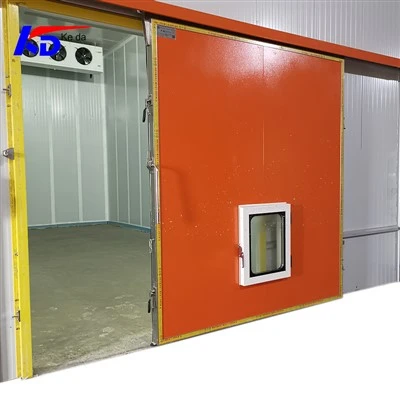
If you’ve ever shipped perishables—think fresh berries, artisanal cheese, or even specialty pharmaceuticals—across California by land, you know how big a deal temperature control is. As someone who’s been supplying CA land transport refrigerated containers for over a decade, I get so many questions from shippers, logistics managers, and even small business owners who aren’t totally sure how the little temperature sensors in these units actually work. Most people just see “it keeps things cold” but have no clue why a random sensor isn’t keeping their avocados at exactly 38°F instead of 52°F (yikes, that’s how you get spoiled fruit). Let me break this down like I would over a coffee at a California truck stop—no stuffy engineering jargon, I promise.
First, let’s set the scene. California land transport refrigerated containers aren’t those big, ocean-going boxes you see at ports. These are road-ready, mounted on 18-wheelers or straight trucks, built for short-to-medium hauls across the state—like from the Central Valley farms to LA grocery stores, or Nor Cal craft breweries to So Cal distributors. They’re smaller, more maneuverable, and way more tuned to the weird temperature swings we get here: 100°F in the Central Valley at noon, 50°F in the Coast Range at night, even random heat spikes in the summer that can mess with any temperature-sensitive cargo.
The star of the show here is that unassuming temperature sensor—usually tucked in a little plastic housing somewhere near the middle of the container, not right next to the vent where cold air blasts out. Wait, why not right by the vent? Because if you stuck it right where the cold air comes pouring out, it’d read way colder than the actual average temp of the whole load. Imagine standing next to a space heater in a room—you’d think the whole room is hot, but it’s actually warm in one spot, cool everywhere else. Same idea here. Our team never locates sensors in dead spots either—like right next to a stack of frozen meat—because that would give a false reading too. We stick ’em where they get a mix of the air circulating through the entire container, so they’re reading the real temp of your cargo, not just a corner that’s been sitting cold all morning.
Now, what’s inside that tiny sensor? It’s not magic, I swear. Most of the ones we use (I’ve tested like a hundred different brands over the years) are NTC thermistors—wait, don’t zone out! An NTC thermistor is just a resistor where the electrical resistance changes when the temp changes. Super simple. When it’s cold, resistance goes up; warm, resistance goes down. The container’s control unit (that big digital screen in the driver’s cab, or the app we sync for fleet managers) sends a tiny electrical current through the sensor wire. The control unit measures how much current comes back, crunches the number, and converts it to a temp reading you can see.
But wait, that’s not all. These sensors aren’t just sitting there reading temps—they’re working with the refrigeration unit nonstop. Like, every 10 seconds, that sensor is sending a signal. If the temp dips below the set point (say, 36°F for frozen strawberries), the refrigeration unit kicks off the cooling cycle. If it gets a little too warm (like 39°F), it cranks up the fans to circulate cold air faster, or maybe adjusts the compressor to run a little harder. The coolest part? The sensors can also pick up humidity, which is super important for cargo like leafy greens—too dry and they wilt, too wet and mold grows. The good ones (the ones we supply) have a built-in humidity sensor too, so you don’t just get temp control, you get your desired RH too.
Here’s a thing most shippers don’t know: calibration. Like, a year from now, that same sensor might be off by a degree or two, and no one notices until your cargo is ruined. That’s why our team does a free calibration check on every container when we deliver it, and we also include a yearly tune-up for all the sensors. Last year, a small produce distributor in Fresco had a sensor that was off by 3°F—they thought their lettuce was being kept at 34°F, but it was actually 37°F. That might not sound like much, but after a 6-hour drive to San Diego, that lettuce was starting to get slimy. We swapped out the sensor, calibrated it, and their next load was perfect. They’ve been a repeat customer ever since.
Now, let’s talk about the unique California stuff. The weather here is weird—we’ve got mountain passes where temps drop suddenly, coastal areas where salt air can corrode sensor parts, even construction zones where trucks bounce around like crazy. The sensors we use are sealed tight, so salt, dust, or rain doesn’t get in and mess up the resistance. They’re also shock-resistant—they’ve been tested on bumpy Central Valley roads, I-5, even the winding roads up to Lake Tahoe, so they don’t break when the truck hits a pothole or goes over a speed bump. We once had a client ship wine from Napa to LA during a heatwave—108°F in the Valley, 85°F on the I-405—and the sensor kept reading exactly 55°F the whole way. No spoilage, no complaints. That’s the kind of reliability we build into every unit.
Another common question: why do some sensors have two wires, and some have four? The four-wire ones are the good ones, the ones we prefer. They eliminate “lead resistance”—the tiny bit of resistance from the wire that connects the sensor to the control unit. If you only have two wires, the control unit is measuring both the sensor’s resistance and the wire’s resistance, which can give a slightly wrong reading, especially if the wire gets old or stretched. Four-wire sensors run a separate current for the wire itself, so they only measure the sensor’s resistance. It’s a small detail, but it makes a huge difference for temperature accuracy. We splurge on those four-wire sensors for all our CA land transport refrigerated containers—no cutting corners there.
What about when a sensor goes bad? It happens, even with the best ones. Maybe a wire gets pulled loose, or something weird gets inside. The control unit will send an alert—either a red light on the cab screen, or a push notification on the fleet manager’s phone. Our team has a 24/7 support line for that kind of thing. Last quarter, a fleet owner in LA had a sensor go out at 2 a.m. on a Friday, with a load of frozen seafood heading to San Francisco. We dispatched a local tech to swap the sensor in 45 minutes, so they didn’t have to waste the whole load. That’s the kind of service we’re all about—shippers can’t wait around for a broken sensor to be fixed, especially with perishables.
Wait, let’s clear up a myth I hear all the time: the container’s refrigeration unit is the only thing keeping your cargo cold. No way—if the sensor is broken, the unit doesn’t know when to turn on or off. I had a customer a few years back who thought his container was working, but the sensor had completely failed, so the refrigeration unit never turned on. When he opened the door in Oakland, his load of fresh peaches was warm and mushy. The sensor was the problem, not the unit. That’s why we train every single customer on how to check the sensor reading daily, and what to do if it looks off. We even have a free 10-minute video we send with every container—no boring manuals, just a quick walkthrough of how the sensor works, how to calibrate it, and who to call if something’s wrong.
Now, if you’re a shipper reading this—whether you’re a small craft bakery shipping custom cakes, a big farm shipping citrus, or a pharmaceutical company shipping temperature-sensitive meds—you might be thinking, “Okay, so how do I make sure my CA land transport refrigerated container has a good sensor?” It all comes down to the supplier. Look for a supplier that uses high-quality NTC thermistors with four wires, seals the sensors to handle California’s unique weather, offers calibration and 24/7 support, and doesn’t cut corners on parts. We’ve been doing this for years, and we’ve tested every sensor on the market to make sure ours work in the weirdest California conditions.
If you’ve ever had a shipment go bad because of a temperature sensor issue, you know how frustrating it is—money wasted, late deliveries, upset customers. That’s why we don’t just sell containers; we make sure every sensor is working right before it leaves our yard, and we stand behind our support team to fix anything fast.
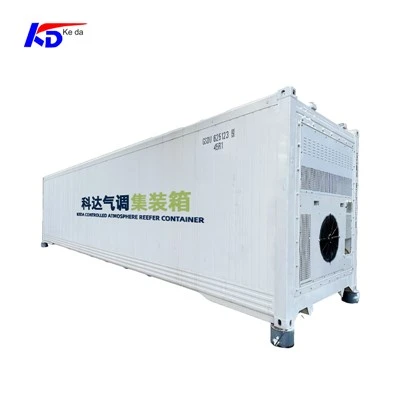
If you’re in the market for CA land transport refrigerated containers, or you just want to learn more about how our sensors keep your perishables safe, hit us up to chat. We’re not just here to sell you a box—we’re here to make sure your cargo arrives in perfect condition, no matter what California weather throws at you. Don’t hesitate to reach out to discuss your specific shipping needs, whether it’s short hauls between Southern California farms or longer runs up to Northern California distribution centers.
Ozone Sterilizer References:
- ASHRAE Handbook: Refrigeration Systems and Applications
- California Air Resources Board: Guidelines for Temperature-Controlled Freight Transport
- Thermon Sensors Technical Manual: NTC Thermistor Operation and Calibration
- National Refrigerated Transporters Association: Land Transport Sensor Best Practices
Yantai Keda Zhixian International Trade Co., Ltd.
As one of the leading manufacturers and suppliers of ca land transport refrigerated container in China, we have world-leading production equipment and strong manufacturing capabilities. Please feel free to buy high-grade ca land transport refrigerated container for sale here from our factory.
Address: No.18-2, Wuhan St, Yantai ETDZ, Yantai, Shandong, China
E-mail: ytkeda2026@163.com
WebSite: https://www.kedacastorage.com/
